
Key Takeaways: UBS analysts see Trump's threatened 50 percent tariff on Canadian autos as leverage to restart trade talks, not a settled policy.
Key Takeaways: UBS analysts see Trump's threatened 50 percent tariff on Canadian autos as leverage to restart trade talks, not a settled policy.
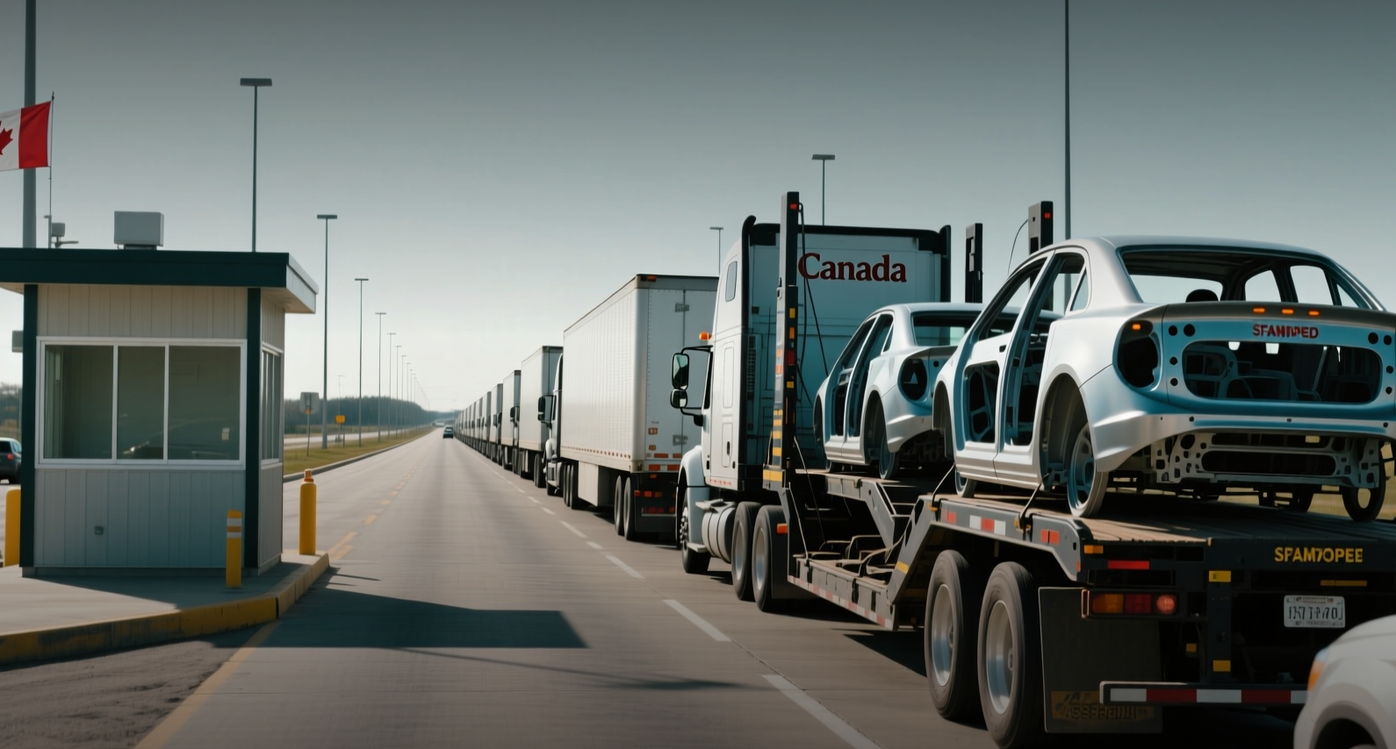
UBS analysts view Trump's threatened 50 percent tariffs on Canadian autos and auto parts as a negotiating lever, not settled policy, with the Jan. 1, 2027 start date designed to force talks back to the table.
"The January 1, 2027 start date functions as pressure to restart trade talks rather than a firm commitment," UBS analysts wrote in a note Tuesday, arguing the impact would fall unevenly across automakers rather than hit the industry as a whole.
The threat follows 50 percent U.S. tariffs on more than 550 Canadian goods — from honey and hockey sticks to cement and wine — that took effect Aug. 22, covering roughly $20 billion of the $381.92 billion Canada shipped to the U.S. last year. Trump invoked Section 338 of the Tariff Act of 1930, a Depression-era provision never previously used, to justify the levies. Canada's Prime Minister Mark Carney has promised dollar-for-dollar retaliation beginning Sept. 8, targeting U.S. steel, dairy, appliances, agricultural equipment, pulp and paper, and electronics.
The stakes for the auto sector are substantial. Michigan alone imports more than $950 million worth of auto parts from Canada each month, with about 60 percent destined for state manufacturing plants. Importers currently pay roughly $20 million monthly in tariffs on auto parts; at 50 percent, that figure would jump to $500 million, according to Jason Miller, a supply chain management professor at Michigan State University.
Trump announced the auto tariff escalation in an Aug. 24 Truth Social post, accusing Canada of "ripping off" the U.S. for years and pointing to what he called "ridiculously high" tariffs on American farm exports. "Build in the U.S. and there are ZERO TARIFFS," he wrote. "WE DON'T NEED CANADA, THEY NEED US!"
The president's latest move builds on a baseline 25 percent tariff on imported automobiles and auto parts imposed last year, with Canada's steel tariff already at 50 percent. The new round of 50 percent tariffs that went into effect Aug. 22 applies to just over 5 percent of Canadian exports to the U.S., excluding energy, potash, fish, and critical minerals. Carney said about $28 billion worth of goods would be tariffed.
Ontario Premier Doug Ford has threatened to slap a surcharge on electricity his province supplies to U.S. border states, saying "everything is on the table." Trump responded by warning that "the consequences for Canada will be far WORSE" if the province follows through. Treasury Secretary Scott Bessent said the U.S. offered Canada "quite a good deal last week" that Carney rejected, while Vice President JD Vance accused Canada of serving as a "backdoor for Chinese goods."
Carney, who rose to power on an anti-Trump platform, suspended trade negotiations over the weekend and ordered Canada's negotiators home. He said Canada would match Trump's tariffs "dollar for dollar," with details of the countermeasures expected in the coming days. The retaliatory list targets U.S. steel, dairy, appliances, agricultural equipment, pulp and paper, and electronics — sectors that would feel the pinch across the industrial Midwest and Northeast.
The threatened escalation has rattled Michigan's auto supply chain. Dale Hadel, CEO of Sterling Heights-based wheel manufacturer CITIC Dicastal, said his company's aluminum wheels — all of which use Canadian aluminum — face direct exposure. "It's hard for me to see that this is a one-sided relationship," Hadel said. Workers outside a Stellantis stamping plant on Mound Road expressed concern about potential layoffs, while auto industry expert Alex Austin warned that consumer pullback could lead to plant shutdowns or furloughs.
The last time Washington and Ottawa faced a similar impasse, the USMCA framework provided a path to de-escalation. Whether that precedent holds depends on whether both sides return to negotiations before the January deadline — and whether Carney's promised retaliation on Sept. 8 triggers another round of escalation. UBS's framing suggests the market may be pricing in a resolution before the auto tariff deadline, but the uneven impact across automakers means some companies with heavier Canadian manufacturing footprints face greater exposure than others.
This article is for informational purposes only and does not constitute investment advice.
