
Key Takeaways: Syracuse University's 1.5% budget deficit marks the first time a brand-name private institution has been pushed into the red by the Trump administration's visa crackdown.
Key Takeaways: Syracuse University's 1.5% budget deficit marks the first time a brand-name private institution has been pushed into the red by the Trump administration's visa crackdown.
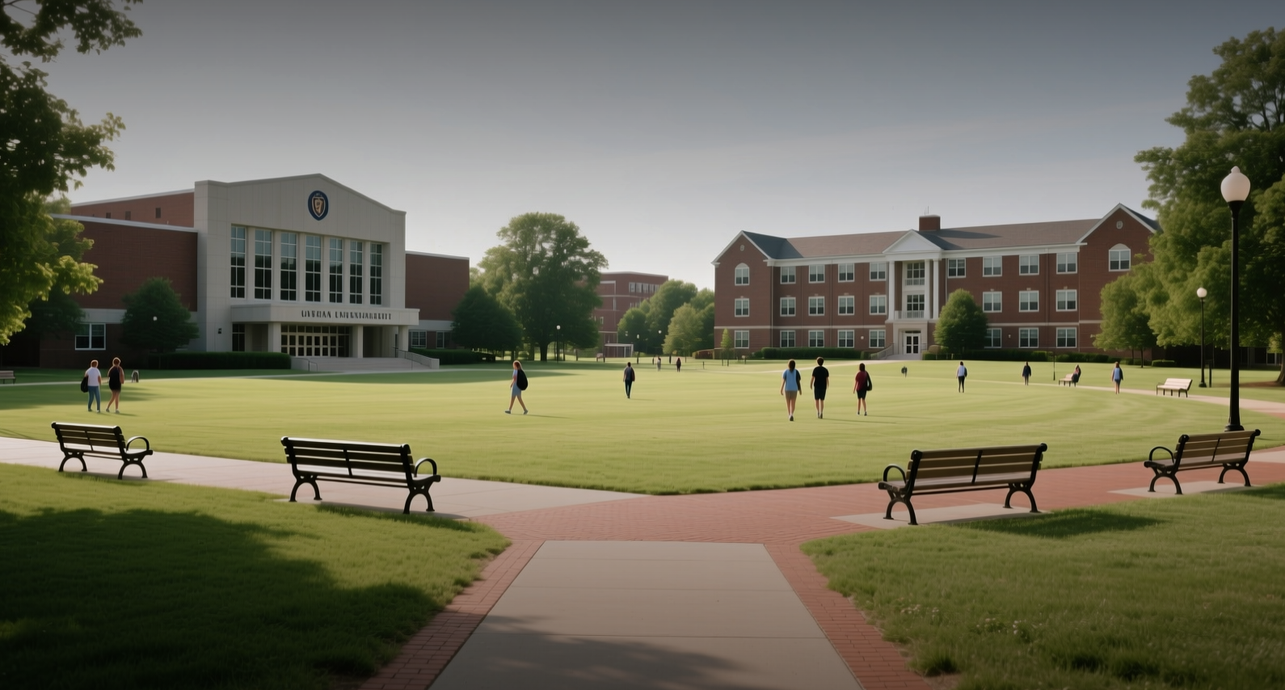
Syracuse University opened the fall semester with a 1.5% budget deficit after international enrollment fell by half, the clearest sign yet that Trump administration visa restrictions are pushing financial distress up the higher-education food chain.
"The stream of students willing to pay something closer to full price is drying up," said Robert Kelchen, a professor at the University of Tennessee who specializes in education finances. "Even if they're not terribly concerned about how much it costs, they know that they can shop around and get a better deal."
The school, which began classes Aug. 24, issued $458 million in bonds last year to build new dormitories, and S&P Global revised its AA-minus credit outlook from stable to negative. Tuition has climbed to $69,180 for the 2026-27 academic year from $40,458 in 2013-14, while total cost of attendance reaches $98,544. The university has eliminated 93 academic programs, including child therapy and Middle Eastern studies, and offered emergency merit aid packages of up to $200,000 after the May 1 commitment deadline to fill its freshman class.
The crisis extends well beyond Syracuse. Arizona's public universities face more than $80 million in combined revenue losses this year, and NAFSA estimates the U.S. will see 111,000 fewer international students, costing billions in tuition and living expenses. With the 18-to-24-year-old population declining and AI-driven job market shifts raising questions about the return on a four-year degree, mid-sized private universities face a structural squeeze that bond markets are beginning to price.
Syracuse's problems are both structural and self-inflicted. The school ranks in the late 70s in the U.S. News & World Report for 2026, down about 10 places from 2024, while rivals Boston University, Northeastern and New York University have held steady. Only 21 percent of Syracuse undergraduates pay full tuition without scholarships, compared with 40 to 58 percent at its competitors, forcing the school to spread its financial-aid budget across a broader pool.
The Department of Homeland Security announced in July a rule limiting F-visa and J-visa holders to four years in the U.S., and recently tightened internship conditions for international students. The changes have deterred students from India and China, the two largest source markets, where visa appointment delays have compounded the problem.
"More students are getting stuck or turned away in the visa application process than ever before," said Fanta Aw, executive director of NAFSA. "If they're having problems getting visas, in addition to the numbers already having dropped, you know that that is a perfect storm."
Arizona State University projects a decline of roughly 3,000 international students this fall, while the University of Arizona expects a drop of more than 5 percent. Northern Arizona University, with a much smaller international community, anticipates a 45 percent decline. International applications to U.S. schools fell 9 percent this year, according to the Common App.
Syracuse's $458 million debt issuance to build new dorms near its main campus came at a precarious moment. The school's $2.5 billion endowment is small relative to its size, and S&P's outlook revision reflects weaker demand metrics compared with similarly rated peers. The last time a mid-sized private university faced this combination of enrollment decline and debt expansion was during the 2008 financial crisis, when several institutions were forced into mergers or closures.
Chancellor Michael Haynie, who took office this spring, said the school is weighing whether to retrench as a regional institution or maintain its national brand. "We cannot marginalize and erode the competitive moats around Syracuse's best programs by compromising the selectivity, by compromising the prestige," he said.
The school is adding nonbinding early action for the first time and expediting its response timeline to regular-decision applicants. It is also seeking to replace international enrollment revenue with research and credentialing tied to Micron Technology's $100 billion semiconductor complex near campus.
But consultants say the damage may already be done. Syracuse's late aid offers — which infuriated families who had already committed elsewhere — have become known across the admissions community. "Now it's known that Syracuse is desperate and gives out a bunch of money," Kelchen said. The precedent also sets expectations, with families now waiting to see if they can extract thousands more from a school before committing.
For the broader sector, the implications are stark. If visa restrictions persist and the school-age population continues to decline, more mid-sized private institutions will face the same choice Syracuse confronts: shrink and redefine as regional schools, or take on more debt to compete for a shrinking pool of full-paying students. Bond investors holding university debt will be watching which path these institutions choose.
This article is for informational purposes only and does not constitute investment advice.
