

Rocket Lab's $266 million Space Force contract marks its biggest step yet into missile defense, nearly doubling its military order book.
Rocket Lab's $266 million Space Force contract marks its biggest step yet into missile defense, nearly doubling its military order book.
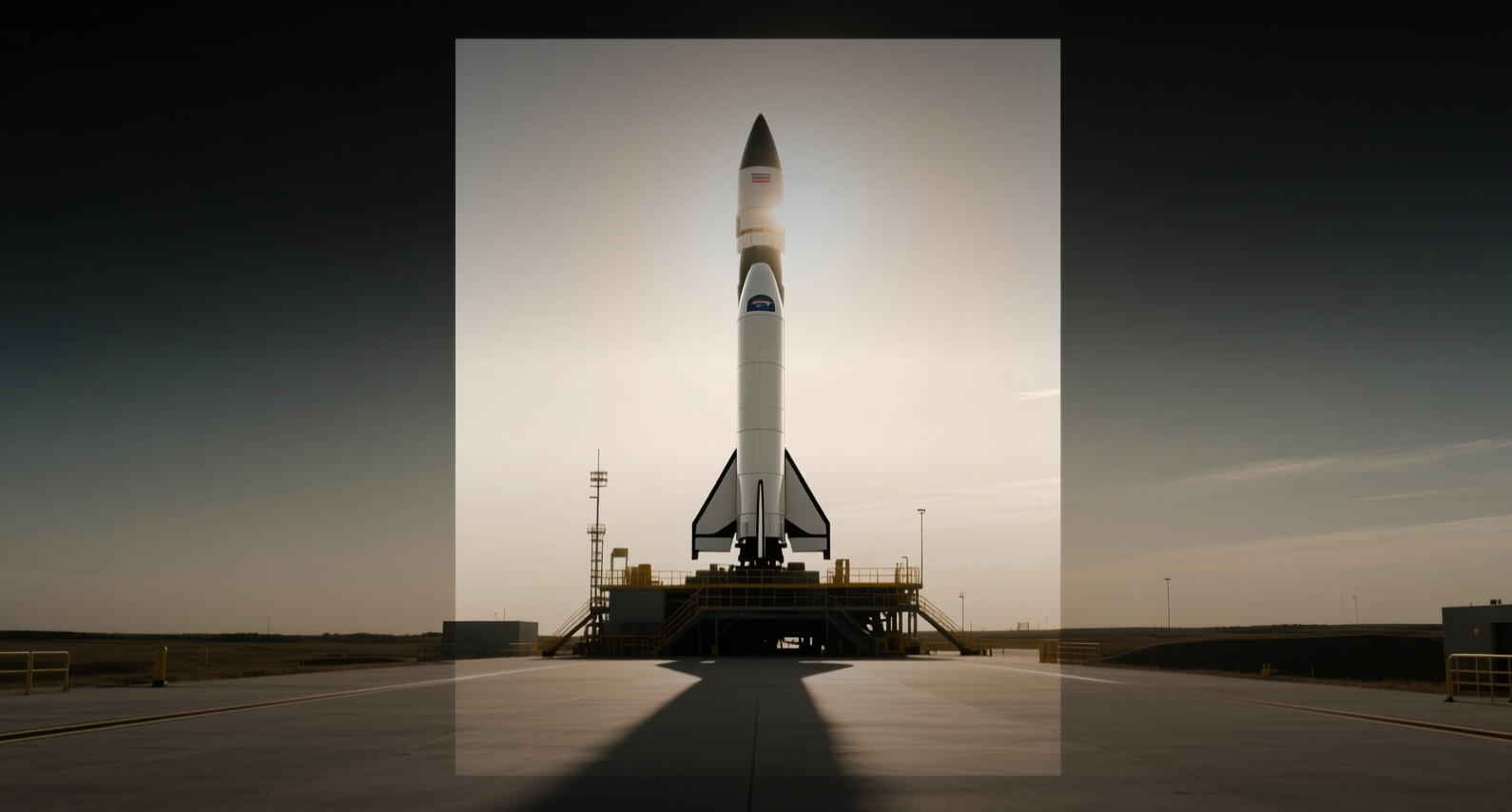
Rocket Lab's $266 million Space Force contract marks its biggest step yet into missile defense, nearly doubling its military order book.
The Space Force awarded Rocket Lab $266 million to conduct 12 to 18 suborbital hypersonic missile tests, deepening the launch company's shift into missile defense after a string of military contracts worth more than $1.5 billion.
"Cadence, iteration, and relentless execution are essential to maturing America's missile defense capabilities," Sir Peter Beck, chief executive of Rocket Lab, said.
The new work, awarded under the Rocket Systems Launch Program, will run from a new base at the Pacific Spaceport Complex-Alaska in Kodiak. It follows a $190 million Department of Defense deal in March for 20 HASTE launches with Kratos Defense & Security Solutions, and an $816 million contract to build 18 missile warning satellites for the Space Force.
The contract shows the U.S. military trusts Rocket Lab to move beyond detecting hostile missiles toward intercepting them, opening a new revenue stream as the company's backlog tops $2.2 billion. Rocket Lab reports quarterly earnings Aug. 10.
The award extends a pattern that has transformed Rocket Lab from a small-satellite launch provider into a defense contractor. The company conducted 21 launches in 2025, a personal best, including three HASTE test flights for the military. Its first commercial satellite launch came just over eight years ago.
Hypersonic tests at $9.5 million a launch
The HASTE program, run with Kratos, pays Rocket Lab $9.5 million per launch, roughly 13 percent above its usual Electron launch cost. The new Space Force work, at $266 million for 12 to 18 launches, implies a per-mission rate of $14.8 million to $22.2 million — a premium that reflects the suborbital test profile.
The defense pivot comes as Rocket Lab's commercial business faces pressure. The stock has fallen 61 percent from its late-May record high of $133.80, closing at $64.95 on Aug. 1, even as the order book climbed past $2.2 billion. First-quarter revenue hit a record $200.3 million, with a loss of 7 cents a share.
The market's concern centers on the Neutron rocket, a larger vehicle under development at NASA's Stennis Space Center in Mississippi. A fuel-tank rupture during a static-fire test earlier this year, followed by a successful full-duration burn of the second stage on July 14, has left the first flight scheduled for the fourth quarter of 2026 in doubt.
The defense contracts provide a counterweight. Rocket Lab is already a supplier to Raytheon on the Space Based Interceptor program, embedding its propulsion and bus technology in U.S. missile defense architecture. The new hypersonic test work, if it matures into a weapons program, could nearly double future military orders.
The last time the Space Force expanded a launch provider's role this quickly was with SpaceX, which won a $1.6 billion contract for 18 Falcon 9 launches. Rocket Lab's smaller Electron rocket occupies a different niche — responsive space, with launches on demand. On June 19, its "Victus Haze" mission put a satellite into orbit with 16 hours and 42 minutes of advance notice, a capability competitors need months to match.
For investors, the question is whether defense revenue can offset the development risk. Analysts' average price target sits nearly double the current level, and the 14-day relative strength index at 29.2 suggests the stock is oversold. The Aug. 10 earnings report will show whether the flood of new contracts is translating into cash flow.
This article is for informational purposes only and does not constitute investment advice.
