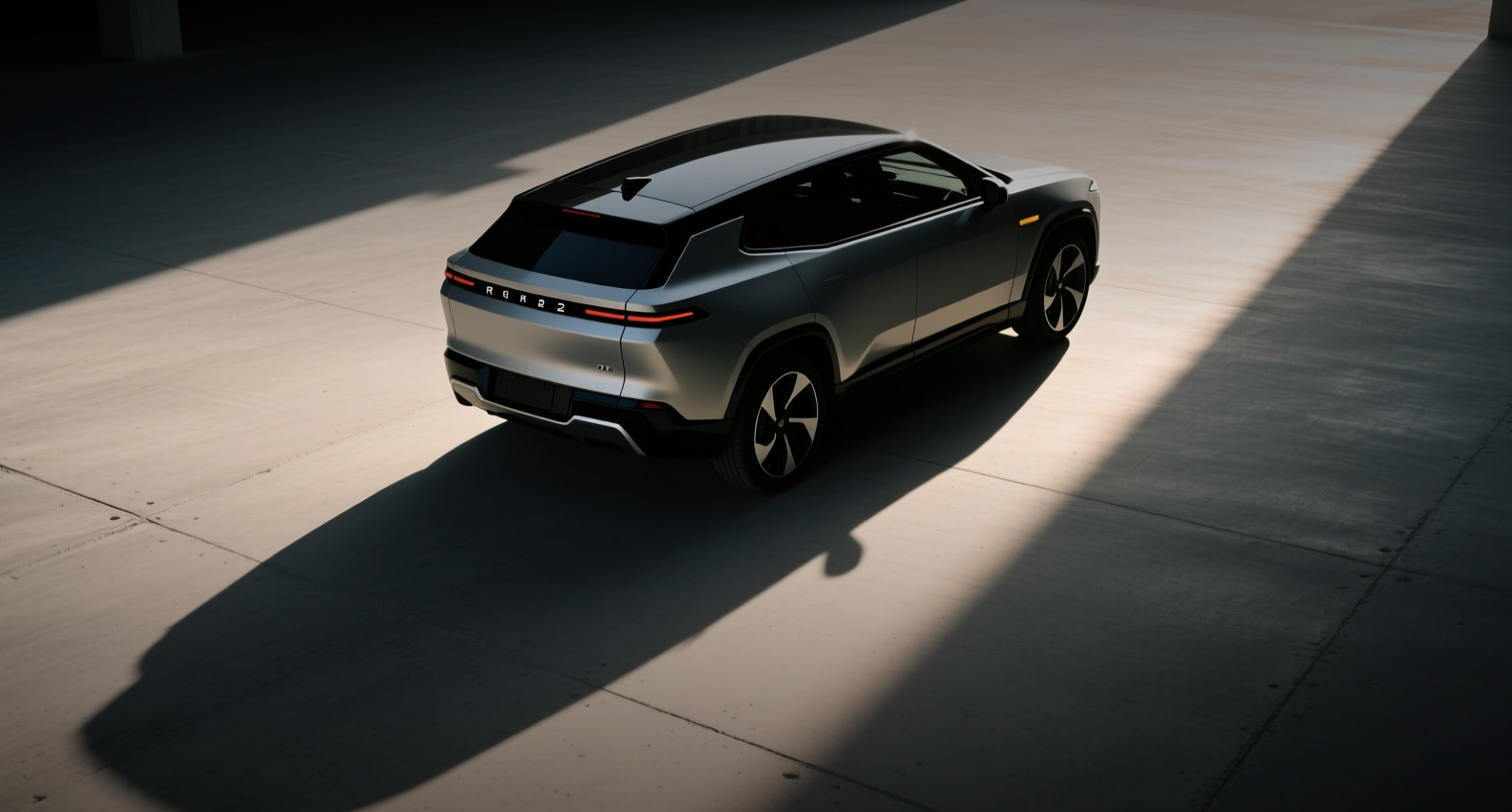
Rivian filed a lawsuit seeking a full refund of tariffs paid under President Trump's "Liberation Day" taxes, joining a wave of companies pursuing payouts that have already topped $121 billion.
Rivian sued the U.S. government Thursday for a full refund of tariffs paid under President Trump's "Liberation Day" taxes, as the Trump administration's replacement duties push the total refund bill past $166 billion. The lawsuit, filed in the U.S. Court of International Trade, targets tariffs the Supreme Court ruled unconstitutional in February.
"Although the Supreme Court invalidated the tariffs, this separate action remains necessary because importers that have paid IEEPA tariffs, including Plaintiffs, are not guaranteed a refund of amounts previously paid based on the Supreme Court's decision," Rivian's lawyers wrote in the complaint.
U.S. Customs and Border Protection has accepted over $121 billion in refund requests for processing, according to an agency statement. The Tax Foundation estimates the total refund bill at $166 billion — roughly three-quarters of all tariff revenue collected between Liberation Day in April 2025 and the Supreme Court's ruling in February 2026. Treasury data showed customs duties receipts swung to a negative $25.6 billion in June as reimbursements accelerated. Monthly tariff revenue had stood between $27 billion and $31 billion during that period, generating about $195 billion for fiscal year 2025.
For Rivian, the refund could provide a critical cash infusion as the automaker ramps production of its first mass-market SUV, the R2, with 20,000 to 25,000 units expected by year-end. Chief Financial Officer Claire McDonough said in April the company expected a refund in the "tens of millions of dollars." The company recently raised about $1.3 billion through a share sale to bolster its cash balance as it invests heavily in autonomous vehicle development, with profitability not expected until 2028.
The tariffs imposed under the International Emergency Economic Powers Act raised costs across the auto industry. Rivian Chief Executive Officer RJ Scaringe told Reuters last year that each vehicle's cost rose by "a couple of thousand dollars" as a result, though the company had mitigated the impact to the "low hundreds of dollars" by the end of 2025. The Cato Institute wrote earlier this month that $71 billion had already been paid out, suggesting "frictions built into" the refund process created "obstacles for importers seeking refunds."
The broader tariff landscape remains in flux. The Trump administration placed new global duties of 10 percent to 12.5 percent on more than 80 countries this week under Section 301 of the Trade Act of 1974, after stopgap measures expired. A separate 25 percent tariff on Brazilian goods took effect Wednesday, while a 50 percent tariff on select Canadian imports is scheduled for August. Goods including automobiles, aluminum, steel and semiconductors are exempt from tariff stacking under Section 232 of the Trade Act, which has so far evaded major legal challenges.
The tariffs were responsible for a tax increase of about $1,000 per household in 2025 as costs were passed to consumers, according to the Tax Foundation. They are projected to lower U.S. gross domestic product by 0.6 percent and cost the economy roughly 450,000 full-time equivalent jobs in the long run. Manufacturing construction has continued to decline, suggesting Trump's stated goal of reshoring production has not yet materialized.
Rivian is asking the trade court to declare the tariffs "contrary to law," issue a refund with interest and pay associated court fees. The company's lawsuit names the U.S. government, CBP and its commissioner, Rodney Scott, as defendants.
This article is for informational purposes only and does not constitute investment advice.