
Key Takeaways:
- Grain maize yields to fall 7% below five-year average across Europe
- Soybean output seen 14% below average as heat hits western, central regions
- El Niño largest since 19th century, UK Met Office says
Key Takeaways:
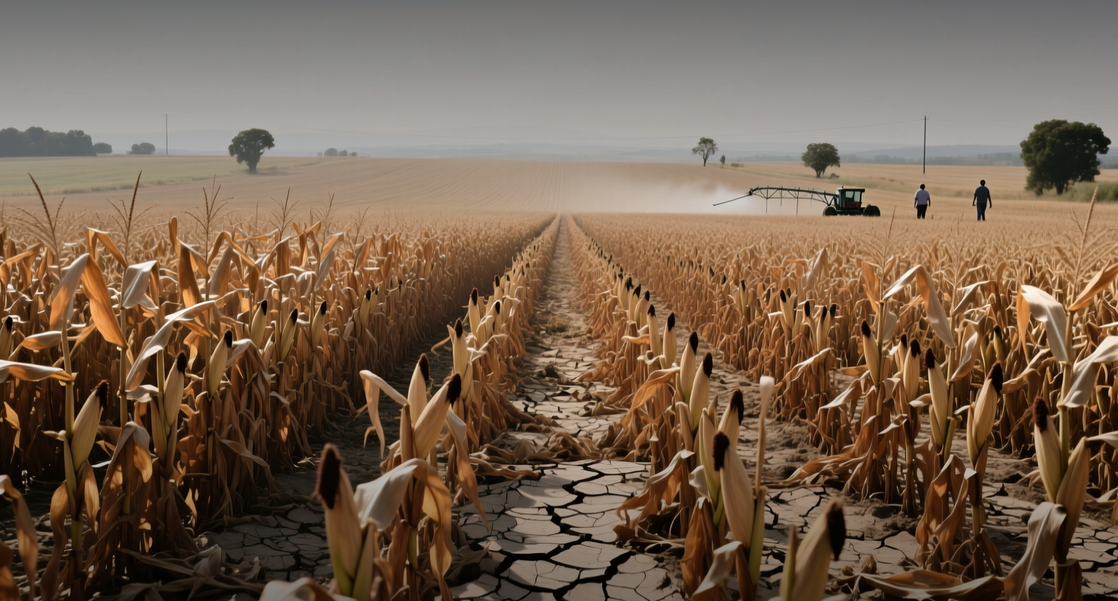
European grain maize yields will fall 7% below the five-year average in 2026, the European Commission said, as extreme heat and drought damage summer crops across western and central Europe.
"These events are a reminder that we must prepare for a future in which extreme weather becomes more frequent," Christophe Hansen, the European Commissioner for Agriculture and Food, said.
France, southern Germany and northern and central Italy are among the hardest hit, with grain maize yields more than 10% below the five-year average in those three countries. Soybean yields are projected 14% below average, potatoes 6% and rapeseed 5%, according to the Commission's MARS crop monitoring survey.
Crop failures are likely locally in the worst-affected regions, threatening fodder supplies for livestock. Cooler, wetter conditions forecast across much of Europe may offer some relief, though too late to offset losses already sustained.
Long-lasting dry and hot weather has "substantially worsened summer crop prospects across western and most of central Europe," researchers behind the MARS Bulletin said. The survey, covering July 1 to Aug. 15, detected hot spells and water deficits across the entirety of France and much of Germany.
Italy, Austria, the Czech Republic, Slovakia and Hungary are also among the most severely impacted countries, with crop failure likely to occur locally within those regions. Benelux countries, Slovenia and Croatia face moderate impacts, with yield expectations reduced particularly for maize where irrigation is unavailable.
The extreme weather stems from an El Niño event the UK Met Office called unprecedented in intensity and the largest since the 19th century. Heat and water deficits have reduced fertility and biomass accumulation, impaired grain filling and accelerated senescence, leaving seeds underdeveloped and plants aging and dying prematurely.
Grassland productivity and pasture availability have also declined markedly, raising concerns about fodder supply for livestock across the affected regions. Limited availability of irrigation water and restrictions on its use further aggravated crop stress in several areas.
With harvesting largely completed, yield prospects for most winter cereals have been confirmed around the five-year average at the EU level, the Commission said. Southern Ireland, northern Germany and Denmark face alerts from dry conditions, while northern Spain and southern Türkiye recorded locally very high temperatures with limited effects so far.
The supply shortfall is set to tighten European grain markets, where the affected maize, soybean and rapeseed crops feed into livestock rations and food processing. The 7% maize shortfall compares with a roughly 5% drop in EU soft wheat output in 2024, when a wet spring cut yields, underscoring how weather swings are reshaping the bloc's crop balance sheets.
This article is for informational purposes only and does not constitute investment advice.
