
China's first successful land recovery of an orbital-class rocket booster marks the end of SpaceX's decade-long monopoly on reusable launch economics.
China's first successful land recovery of an orbital-class rocket booster marks the end of SpaceX's decade-long monopoly on reusable launch economics.
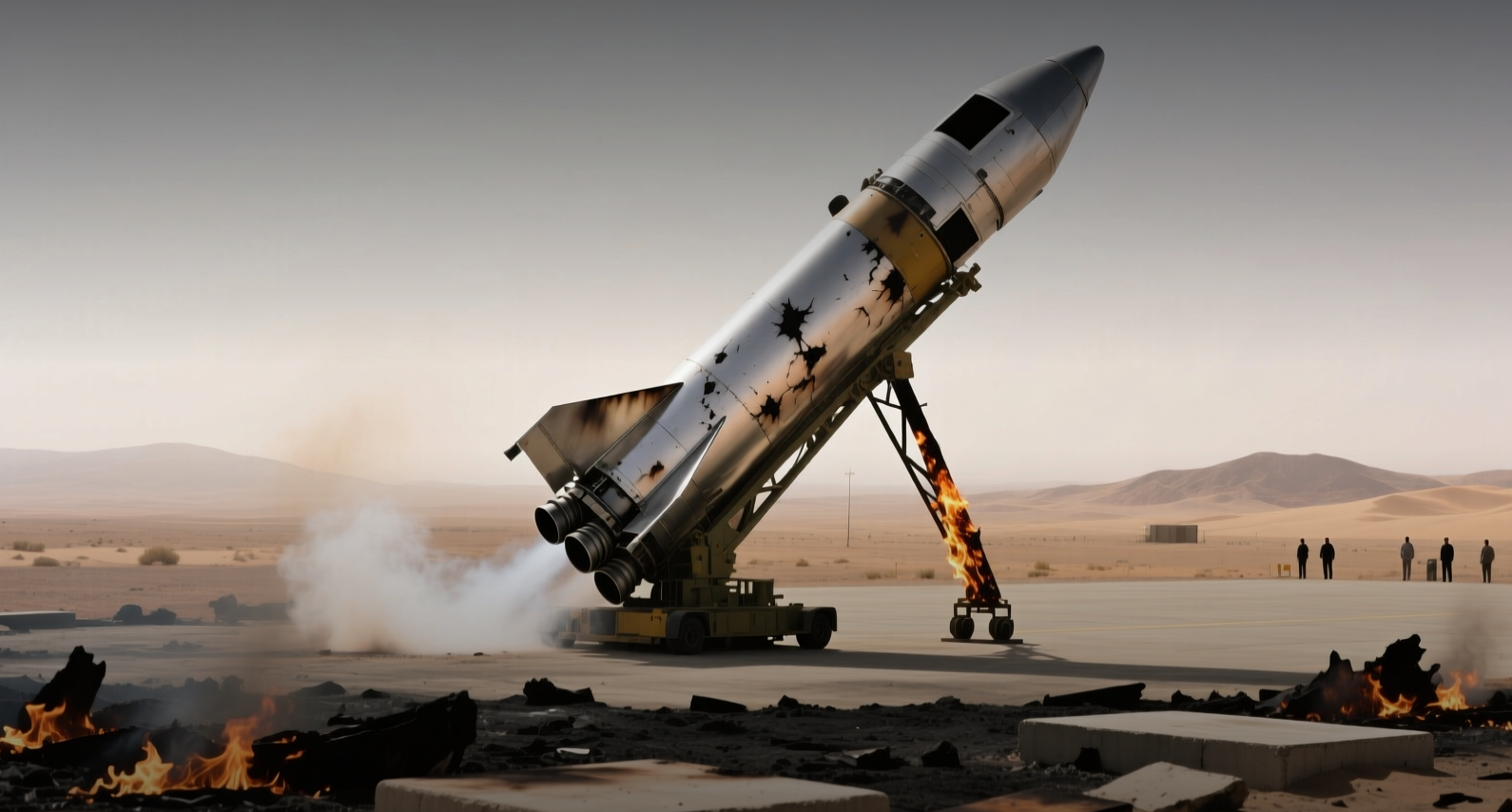
China's LandSpace recovered the first stage of its Zhuque-3 rocket on Aug. 18, marking the country's first successful land landing of an orbital-class booster and narrowing SpaceX's decade-long head start in reusable launch technology.
"Once Starship is flying reliably several times per week, it makes sense to shift super scarce SpaceX engineering and production resources to Starship," Elon Musk, chief executive of SpaceX, said in a post on X on Aug. 22. The comment came three days after Zhuque-3's successful recovery.
Zhuque-3 stands approximately 66 meters tall with a stainless-steel structure burning methane and liquid oxygen. The booster landed on deployable legs in northwest China after delivering a satellite to orbit. LandSpace plans to refly the recovered stage within six months and targets up to 20 flights per booster. The company is seeking about 7.5 billion yuan through an IPO on Shanghai's STAR Market, according to Reuters.
The milestone follows China's first controlled recovery of an orbital-class first stage on July 10, when a Long March-10B booster was captured by a net system at sea. China is now testing two recovery architectures. SpaceX's Falcon 9 has accumulated more than 680 launches and carries up to 22.8 metric tons to low Earth orbit, compared with Zhuque-3's planned 18.3 metric tons after a planned upgrade to 76.6 meters with more powerful TQ-12B and TQ-15B engines.
The Zhuque-3 recovery was not without drama. After landing, residual fuel burned off and ignited fires on the landing pad, melting one of the booster's landing legs and causing it to topple over several hours later. LandSpace had planned to refurbish and reuse the booster on its fourth flight; those plans may now be set back.
The landing followed a failed first attempt on Dec. 3, 2025, when the Zhuque-3 first stage exploded in a fireball near its designated landing pad during its debut mission. CCTV footage released in August showed the booster suffering a mini-explosion during descent before crashing.
China's approach to reusability differs from SpaceX's single-minded pursuit of vertical landing. The Long March-10B's net-capture recovery at sea represents a fundamentally different engineering solution. By testing both methods, China's aerospace sector is determining which architecture works best at scale before committing to mass production.
LandSpace is not a traditional arm of China's state space establishment. It is a commercial company operating within China's rapidly developing private space sector, which Beijing has encouraged to compete alongside state aerospace organizations. The company's planned IPO on Shanghai's STAR Market would make it one of China's first publicly traded private rocket companies.
The competitive stakes extend beyond national prestige. Reusable rockets become strategically important when combined with satellite constellations. SpaceX operates Starlink with thousands of satellites in low Earth orbit. China is developing its own large LEO communications constellations, which will require thousands of tonnes of hardware transported to orbit. A country capable of repeatedly flying reusable boosters can deploy satellites faster and at lower cost than a competitor dependent on expendable launch vehicles.
SpaceX still holds a significant operational advantage. The Falcon 9 family has accumulated more than 680 launches, and every flight produces engineering data about component wear, refurbishment requirements, and turnaround times. LandSpace has flown Zhuque-3 twice. The company's next test — reflying the recovered booster — will determine whether it can move from demonstrating recovery to operating a reusable launch system.
The competitive field is also shifting. Blue Origin's New Glenn achieved its first reusable landing at sea in 2025. Rocket Lab's Neutron, with roughly 13 metric tons of payload capacity to LEO, could begin launching as early as 2027. Meanwhile, SpaceX is preparing to phase out Falcon 9 in favor of Starship, which carried more than 100 metric tons to orbit on its most recent test flight and is targeting several launches per week.
For investors, the question is whether China's progress compresses SpaceX's pricing power in the global launch market. Falcon 9 currently offers the best cost per kilogram to orbit, but that advantage narrows as competitors accumulate flight experience. LandSpace's IPO will give public market investors their first direct exposure to China's commercial space race.
This article is for informational purposes only and does not constitute investment advice.
