


Key Takeaways:
- Beijing Kling raised 1.53 billion yuan ($228 million) in a growth round
- China's National AI Industry Investment Fund injected 1.4 billion yuan for a 1.14% stake
- The deal implies a valuation of about 122.8 billion yuan for Kling AI
Key Takeaways:
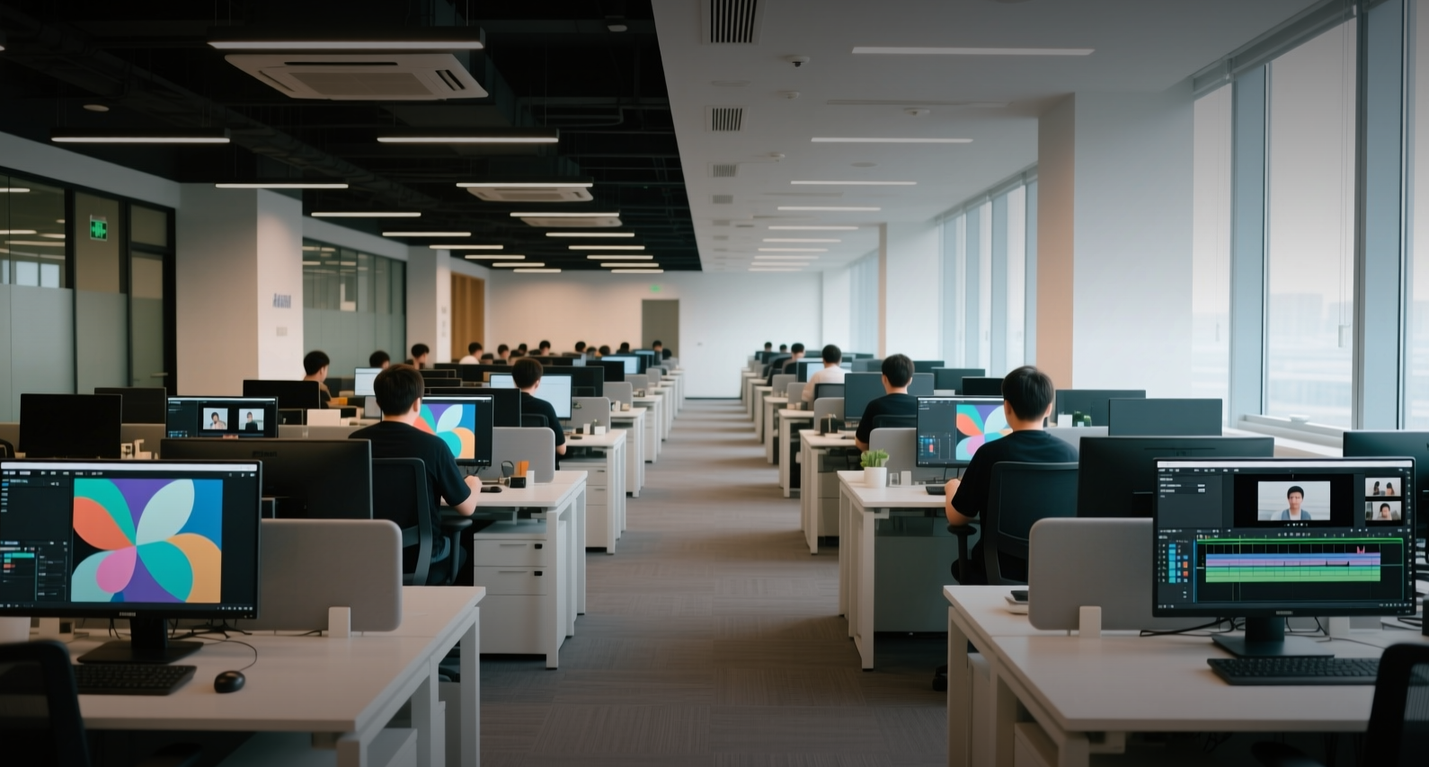
Kuaishou's video-generation unit Beijing Kling raised 1.53 billion yuan ($228 million), with China's National AI Industry Investment Fund injecting 1.4 billion yuan for a 1.14% stake, anchoring state capital in the country's generative-video race.
The Hong Kong-listed parent disclosed the capital increase on Aug. 31, with the state-backed fund and Charoen Pokphand Robot Limited joining as new investors under an existing framework, Kuaishou said in a filing.
Charoen Pokphand Robot Limited, a unit of Thailand's CP Group, contributed about 131 million yuan ($19.3 million) for a 0.11% stake. The two stakes imply a valuation of roughly 122.8 billion yuan for Beijing Kling, which operates the text-to-video platform Kling AI. Both investors received repurchase rights under the shareholder agreements.
The national fund's lead check ties Beijing's strategic capital directly to a domestic AI champion as competition in generative video intensifies. Kling AI competes with OpenAI's Sora, ByteDance's Jimeng and Runway for a share of a market that continues to expand as studios and advertisers adopt AI-generated footage.
Kling AI, developed by Kuaishou, is among China's leading text-to-video platforms, generating short clips from text prompts. The funding gives the unit a state-backed investor with both capital and political weight as Beijing pushes to build domestic AI models that can rival U.S. systems.
The investment also adjusts existing investor subscriptions. Kuaishou said contributions rose for Tianjin Lisi Xingque and Junmang Yunze, while falling for Ningbo Zhichun Huayan, Monolith Kling, HUNDREDS PLUS LIMITED PARTNERSHIP and PMF Select Polaris LP. The adjusted subscriptions for the two lead parties fall below regulatory thresholds, keeping the deals exempt from Hong Kong connected-transaction reporting requirements.
The state fund's participation follows a broader push by Beijing to channel national capital into AI infrastructure and applications, from model developers to chipmakers. The National AI Industry Investment Fund, also known as Guozhi Investment, has backed a range of domestic AI companies as part of a strategy to reduce reliance on U.S. technology. For Kling AI, the backing brings both funding and political weight as it expands beyond China. The platform has drawn international attention for generating realistic short videos from text, a capability that has made it a reference point in the global race to commercialize generative video.
Generative video has become one of the most contested corners of the AI market. OpenAI's Sora set a benchmark for text-to-video quality, while ByteDance's Jimeng and Alibaba's Wanxiang have pushed Chinese rivals forward. Kling AI has carved out a following among professional users in advertising and film production, where demand for AI-generated footage is growing.
For investors, the round shows Beijing's willingness to deploy state capital into AI applications. Kuaishou trades on the Hong Kong exchange with a market value of about HK$146 billion. The implied 122.8 billion yuan valuation for Kling AI, a figure that approaches the parent's entire market capitalization, shows how much value the market assigns to the video-generation unit as AI content tools gain traction.
This article is for informational purposes only and does not constitute investment advice.
