
Washington's "Operation Economic Outcast" puts China's banks in a bind — Beijing needs the dollar system, but it's quietly building alternatives.
Washington's "Operation Economic Outcast" puts China's banks in a bind — Beijing needs the dollar system, but it's quietly building alternatives.
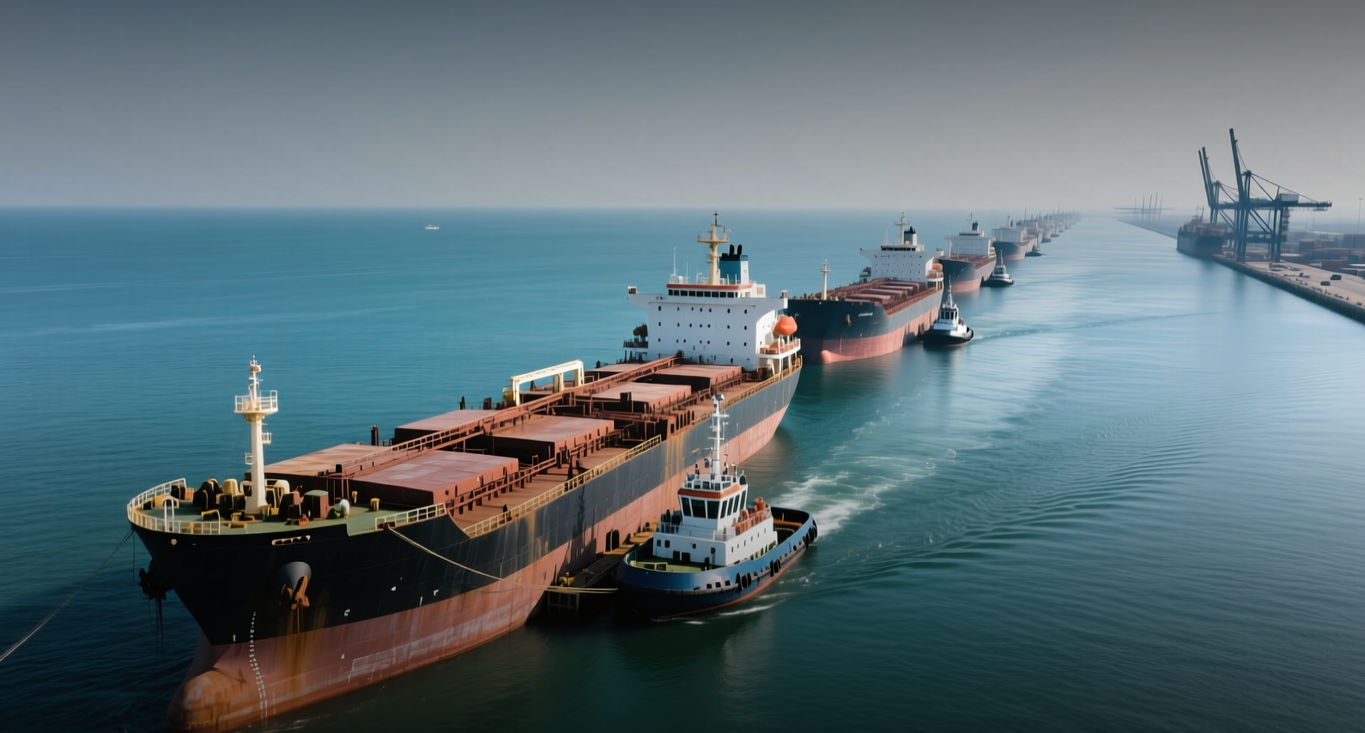
U.S. Treasury Secretary Scott Bessent warned Chinese banks they face sanctions if they help convert Iranian oil into revenue, as Washington's "Operation Economic Outcast" targets the 90 percent of Iran's crude exports that flow to China. The Treasury sanctioned more than 60 entities, individuals and vessels on Monday, including several China- and Hong Kong-based companies accused of procuring military technology and logistics support for Tehran.
"The emerging financial system isn't necessarily one in which countries abandon the USD," said Peter Alexander, Shanghai-based managing director at advisory Z-Ben. "It is a geopolitical hedging instrument."
The U.S. dollar still accounts for over half of global payments, while China's yuan ranks fifth at 3.1 percent, down from over 4 percent in early 2025, according to Swift data. In trade finance, the dollar holds nearly 80 percent share versus the yuan's 8.4 percent. The dollar index has strengthened about 1.5 percent since the Iran war began on Feb. 28, while the yuan has gained nearly 2 percent against the greenback and more than 3 percent against the euro.
The stakes are high: removing a major Chinese bank from SWIFT would significantly increase devaluation pressure on the yuan, which is "not acceptable" to Beijing, said Dan Wang, China director at Eurasia Group. Trump and Chinese President Xi Jinping are expected to meet in the U.S. late next month, and Washington doesn't want to derail the summit.
CIPS offers a hedge without abandoning the dollar
China's Cross-Border Interbank Payment System (CIPS), built by the People's Bank of China starting in 2012 — the same year the U.S. Treasury sanctioned Bank of Kunlun over illicit Iran activities — has expanded to 210 direct participating institutions globally, mostly affiliates of state-owned Chinese banks. Transaction volumes have picked up since the Russia-Ukraine war in 2022 and generally grown this year, according to official figures.
Argentina and Australia this month renewed bilateral currency swap agreements with China enabling the exchange of tens of billions of dollars' worth of yuan between central banks. Alexander said these arrangements show the emerging system is about hedging, not decoupling.
Iran oil flows to China are already falling
Chinese imports of Iranian crude have dropped sharply since the U.S. renewed its blockade of Iran's ports in July. Shipments fell to 785,000 barrels a day in June — the lowest since February 2023 — before rising slightly to 823,000 in July, with August intake at 534,000, according to Kpler ship-tracking data. Before the war, China bought around 1.57 million barrels a day, roughly 12 percent of its total crude imports.
Chinese independent refiners, known as "teapots," have been the main buyers of Iranian crude, attracted by steep discounts. State refiners have shunned Iranian oil since 2019 to avoid being cut off from dollar-based finance. Iranian oil delivered to China has been branded as Malaysian or Indonesian and settled in yuan through chains of hard-to-track intermediaries.
"China definitely wants to stay in the dollar system which benefits its trade engine, but that doesn't mean it will do everything to comply with expanding U.S. sanctions," said Tianchen Xu, senior economist at the Economist Intelligence Unit. He expects Beijing to use rare earth controls and other measures to retaliate against sanctions on major Chinese businesses.
Iran's rial fell to a record low of 2.02 million to the dollar on Monday. The World Bank cut its 2026 global growth forecast to 2.5 percent, calling the slowdown the worst hit to the global economy since the COVID-19 pandemic, as shipping disruptions through the Strait of Hormuz pushed energy prices sharply higher.
Bessent said the administration expects to announce sanctions against a major financial institution before the end of this week. "No one is above the reach of U.S. sanctions," he said.
This article is for informational purposes only and does not constitute investment advice.
