
Canadian provinces' alcohol bans have become the sharpest test of whether negotiators can finalize a deal before Trump's 50 percent tariffs resume Saturday.
Canadian provinces' alcohol bans have become the sharpest test of whether negotiators can finalize a deal before Trump's 50 percent tariffs resume Saturday.
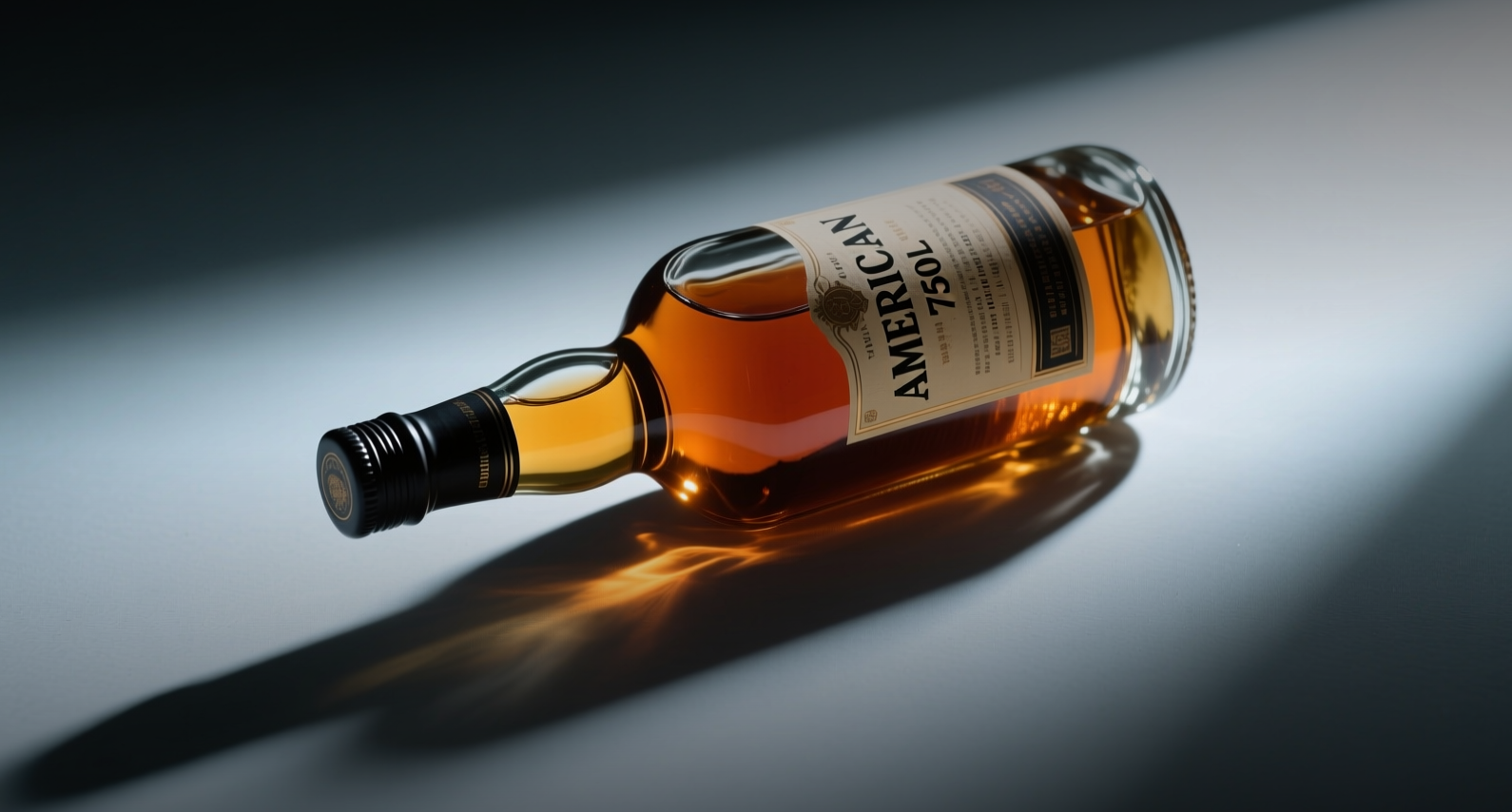
Canadian provinces' bans on U.S.-made wine, spirits and beer have emerged as the sharpest test of the three-day pause on President Trump's 50 percent tariffs, with negotiators racing to finalize a deal before the duties resume at 12:01 a.m. Saturday. Trump paused the levies Tuesday evening, hours before they were set to take effect, after declaring the two countries had reached a deal subject to final documentation.
"It's been a helpful piece of leverage for the federal negotiators to have these provincial alcohol bans as a bargaining chip," said Laura Dawson, an expert on U.S.-Canada economic relations. "But it's also an uncontrolled substance because they have no guarantee that the provinces will release them unilaterally."
The stakes for U.S. producers are steep. Exports of U.S. distilled spirits to Canada fell 70 percent year-over-year to $60 million in the months from March 2025 through December 2025, compared with $203 million in the same period of 2024, according to the Distilled Spirits Council of the United States. U.S. wine exports to Canada, the largest buyer of U.S. wine, fell 77 percent to $103 million in 2025 from $460 million in 2024, per U.S. Department of Agriculture data. Brown-Forman, producer of Jack Daniel's whiskey, said net sales to Canada plunged 60 percent in 2025.
The threatened tariffs, levied under Section 338 of the Tariff Act of 1930, would hit about $20 billion of Canadian goods — roughly 5 percent of the country's U.S.-bound exports — spanning dairy, alcoholic beverages and motor vehicles. Canadian officials have proposed pushing provincial premiers to return U.S. alcohol to shelves if the new levies are dropped and existing duties on steel, aluminum, lumber and autos are eased.
The Bargaining Chip That Won't Budge
The bans, imposed by most provinces after Trump's tariffs last year, have drawn broad public support even as they infuriate U.S. officials. Commerce Secretary Howard Lutnick called them "outrageous," and U.S. Ambassador to Canada Pete Hoekstra said they are one reason Trump thinks Canada is "nasty." A poll this month from Abacus Data found nearly 70 percent of Canadians support keeping the bans in place.
"Canada's boycott of California wine is causing devastating harm to winegrowers," Sen. Adam Schiff (D., Calif.) wrote on X last month, urging the Canadian government to lift the restrictions.
Provincial premiers have dug in. "There is not a chance in hell that U.S. alcohol is going back on the shelf in British Columbia," Premier David Eby said last month. Prime Minister Mark Carney has said the bans should be lifted only as part of a broader bilateral deal.
The Economic Toll on U.S. Producers
For small producers, the loss is acute. Crosby Roamann, a Napa Valley winery, was shipping an average of 10 percent of the production of several wines to Ontario before the trade battles; now 100 cases of its wines sit in storage in Canada. "It's an incredibly disappointing position to be in," said co-founder Sean McBride.
Even if the bans are lifted, demand may not return. A Nanos poll this month found nearly three-quarters of Canadians say they are unlikely to buy U.S. alcohol even if it's put back on store shelves.
Whether the federal government can deliver the provinces hinges on the fine print. If auto tariffs aren't eased significantly, Ontario Premier Doug Ford, whose economy relies heavily on the industry, is unlikely to budge. A deal without relief for the lumber sector could make it difficult for the premiers of British Columbia, New Brunswick and Quebec to lift their bans.
Trump, meanwhile, has tied the talks to energy infrastructure, saying the Keystone XL pipeline "may be awoken from the grave." U.S. Trade Representative Jamieson Greer said the tentative deal includes full market access for American goods, economic security commitments and digital trade alignment.
The last time the two countries reached an 11th-hour trade agreement was 2018, when the U.S.-Mexico-Canada Agreement replaced NAFTA. Whether this round ends the same way — or with the 50 percent duties taking effect — will be decided by Saturday's deadline.
This article is for informational purposes only and does not constitute investment advice.
