


Aurora Cannabis is fighting Curaleaf's $260 million hostile bid, calling it opportunistic and built on inaccurate claims about its business.
Aurora Cannabis is fighting Curaleaf's $260 million hostile bid, calling it opportunistic and built on inaccurate claims about its business.
Aurora Cannabis pushed back Monday on Curaleaf Holdings' $260 million hostile takeover bid, telling shareholders the offer undervalues a business whose international revenue grew 17 percent year over year.
"Curaleaf's timing and public comments appear to be a transparent attempt to pressure Aurora shareholders into making a short-term decision for the benefit of Curaleaf shareholders," Miguel Martin, executive chairman and chief executive of Aurora, said.
Curaleaf announced Aug. 18 it would take its offer directly to Aurora shareholders after private talks stalled. Under the proposal, Aurora holders receive 0.3463 Curaleaf shares and $0.75 in cash per share, for total consideration of $4, a 45 percent premium to the 30-day volume-weighted average price. The offer is capped at $5 per share if Curaleaf's stock rises above a set level. Aurora closed Friday at $3.94.
The fight comes as the U.S. Drug Enforcement Administration wraps hearings on reclassifying cannabis from Schedule I to Schedule III, a change that would let retailers deduct ordinary business expenses and free up capital for acquisitions. A combined Curaleaf-Aurora would generate more than $1.5 billion in revenue and nearly $350 million in adjusted EBITDA, Curaleaf estimates, with at least $40 million in annual cost savings.
Aurora's board and a newly formed special committee of independent directors are reviewing the proposal with financial and legal advisors, and shareholders have been told to take no action. The offer remains open for at least 105 days from launch. Aurora said discussions with Curaleaf have run since June, most recently Aug. 12, and included its lead independent director and Martin.
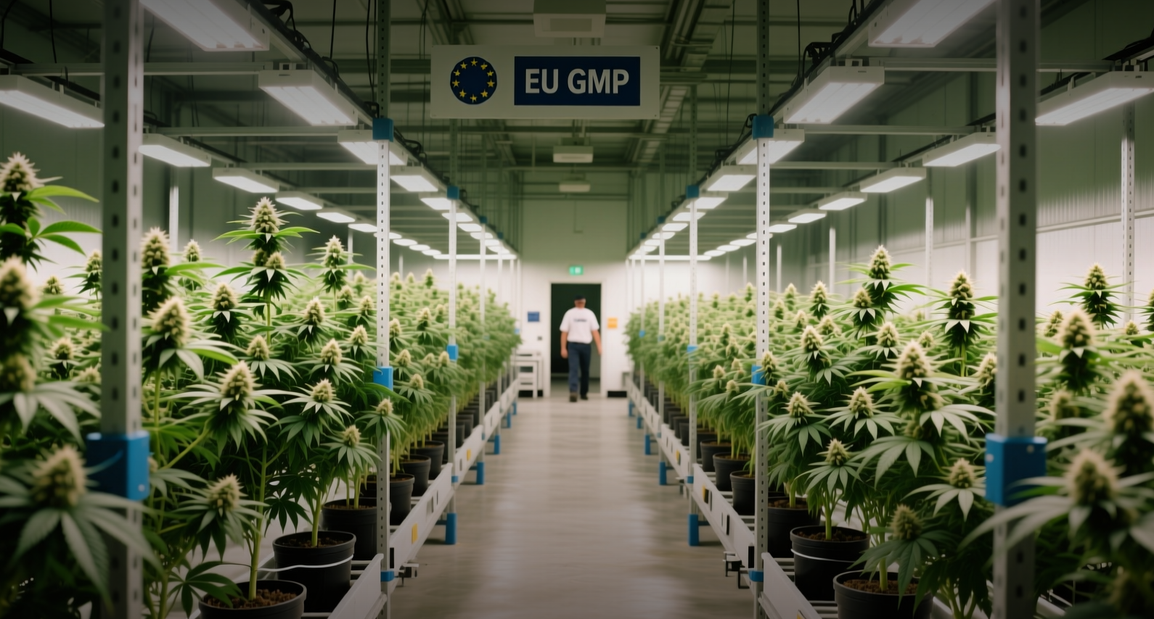
The Edmonton-based company disputed several claims in Curaleaf's bid circular. It said the German reimbursement segment Curaleaf cited as a challenge accounted for less than 10 percent of its total German volume before regulatory changes, and that Germany remains a key driver of the 17 percent international revenue growth. Aurora holds the top market share by revenue in Poland and is expanding in the UK, where it acquired Internode Pharma and HAP Pharma on Aug. 19 to add direct distribution. It said EU-GMP production capacity has risen more than 40 percent over five years, calling Curaleaf's comments on its cultivation methods outdated.
Aurora's financial position is a point of contention. It reported an earnings-per-share loss of $0.07 in the first quarter of fiscal 2027 and carries about $93.7 million in debt, yet has posted three consecutive years of positive adjusted EBITDA. International markets accounted for about 64 percent of total revenue in the quarter. The company exited lower-margin plant propagation and Canadian consumer businesses to focus on global medical cannabis, with brands including MedReleaf, Pedanios and IndiMed sold across Canada, Europe, Australia and New Zealand.
The hostile approach highlights a strategic divergence across the sector as companies position for a post-rescheduling environment. Green Thumb Industries, one of the most profitable U.S. retailers with more than 140 stores across 14 states, reported second-quarter revenue of $306.7 million, up 4.6 percent year over year, and swung to a profit of $0.02 a share from a loss of $0.06. It held $283.6 million in cash and repurchased $48.3 million of stock in the quarter, favoring organic growth and buybacks over the cross-border deal Curaleaf is pursuing. The last time Green Thumb made a major acquisition push was roughly five years ago, when it bought state-level operators including LeafLine in Minnesota and Mobley Pain Management in Rhode Island.
For Aurora shareholders, the outcome turns on whether Curaleaf raises its offer or a rival bidder emerges before the 105-day window closes. Aurora's stock jumped about 21 percent when the bid was announced, reflecting expectations of a higher price. If the bid fails, Aurora retains a medical cannabis platform that generated record revenue and adjusted EBITDA in fiscal 2026, with the UK expansion adding a growth market. If it succeeds, Curaleaf gains EU-GMP-certified facilities in Canada and Germany and a route into the world's largest cannabis market through its own U.S. operations.
This article is for informational purposes only and does not constitute investment advice.
