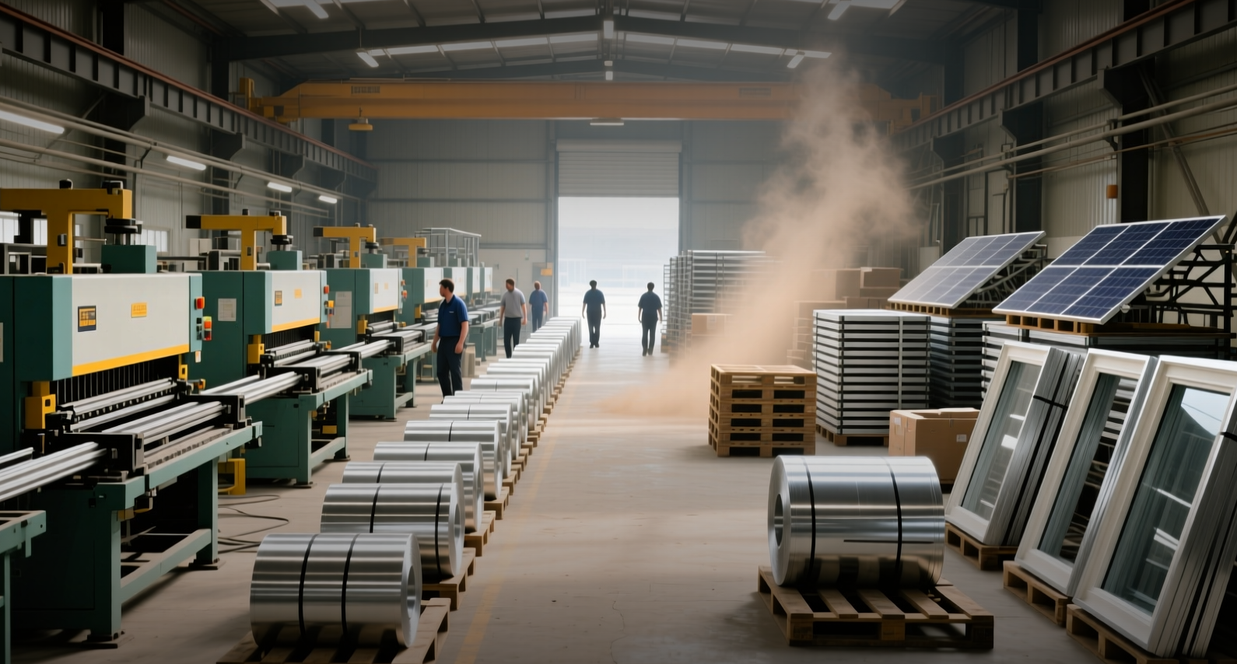
US downstream manufacturers and the beer industry are pressing Washington to reshape aluminum trade policy, arguing that import duties on primary metal have inflated the Midwest Premium surcharge by more than 300 percent over three years to an all-time high in 2026 — a cost they cannot escape even when buying domestic or recycled metal.
"Tariffs on primary aluminum won't build a single smelter in the U.S.," said Joe Donovan, executive director of the American Aluminum Alliance, which represents downstream manufacturers whose employees turn bare metal into aircraft components, fencing, windows, truck bodies and solar racking. "Electricity in the U.S. costs up to four times more than the rates smelters pay in some other countries, including Canada."
The letters, published in the Wall Street Journal in response to an Aug. 26 editorial on the metals lobby, lay out a two-pronged case. Donovan argues a tariff on derivative aluminum products is essential to protect domestic fabricators from foreign competitors that benefit from cheap electricity, warning that taxing raw aluminum while ignoring derivative goods only pushes the downstream fabrication industry offshore. The alliance counts 870,000 US jobs in the downstream aluminum sector.
Brian Crawford, president and chief executive of the Beer Institute, focuses on the recycling penalty. The Midwest Premium, a surcharge added to the cost of primary aluminum, is paid every time metal is recycled and reused, he wrote, effectively requiring US businesses to pay a tariff on recycled metal that never crosses a border. "This punishes companies for using recycled metal already circulating through our domestic supply chain," Crawford said.
The premium's climb tracks the tariff escalation that began with President Donald Trump's second-term import duties. Aluminum futures traded near $3,314 a ton on the London Metal Exchange, while the Midwest Premium — the market-clearing surcharge on every ton sold in the US — has compounded the landed cost for buyers. The last time the premium moved this sharply was after the 2018 Section 232 tariffs, which initially lifted the surcharge before supply adjustments brought it back down within two years.
The policy question now sits inside a broader North American trade rupture. Canada, the largest foreign supplier of aluminum to the US, is set to impose retaliatory tariffs of 15 percent to 50 percent on Sept. 8 covering more than 700 items, including iron, steel, aluminum and derivative articles made from those metals. The measures target roughly $20 billion of US exports, with Michigan — whose manufacturers exported about $1.5 billion of goods on the tariff list — among the most exposed states.
For downstream buyers, the stakes are immediate. The American Aluminum Alliance argues that without affordable electricity, no tariff level makes new domestic smelter construction economically viable, and without enforcement on derivative goods, fabrication migrates offshore. If policymakers extend duties to derivative products, domestic fabricators gain protection but downstream consumers of finished aluminum goods face higher input costs; if they instead address energy costs, smelter economics improve but the near-term premium relief depends on tariff rollback. The Beer Institute's push to end the recycling penalty offers a narrower fix that would lower costs for can makers without touching primary-metal trade flows.
The trajectory of US aluminum policy — whether derivative products face tariffs and whether electricity costs are addressed — will determine whether the Midwest Premium stays near its record or eases, and with it the cost base for the 870,000 downstream workers and the beverage industry that buys their output.
This article is for informational purposes only and does not constitute investment advice.