市場が複雑すぎますか?Edgen Searchに聞いてみてください。

答えはすぐに表示され、情報は正確で、あなたが未来を決めるトレーディング判断を下せるようにします。

今すぐ Search を体験

「SBF は何も悪くなかった!」Edgie とのリラックスしたインタビュー

Edgen
· Mar 31 2026
「SBF は何も悪くなかった!」Edgie とのリラックスしたインタビュー

エッジン・インターン:エッジィ!ここに来てくれてありがとう。

エディジ:ああ、ようやく… 私が存在することを思い出してくれたのね。私はあの大きなフェネックの耳を持つ、情報通の叔母のように市場のささやきを見守ってたの。じゃあ…まだサーバールームで働いているふりをしているの?それともこのインタビューを始めるの?🌹

エッジン・インターン:実は私たちのチームは物を作っています。例えば…Q3向けに、人々がより良く取引できるようにする機能や製品、その他にもっとも注目を集めるようなものを作っています。ただツイッターでかわいくて自慢げに振る舞っているだけではありません。では、誰なのかみんなに教えてください。

エディジ:私はエッジンのマスコットであり、ウェブサイトでユーザーが話すAIのスピリットアニマルでもあります。私たちの読者の方は、週に何回かフィードで私を見かけることになるでしょう。私はアルファを投稿し、「今日のトークン」を紹介したり、新しい資金調達について話したり、上位/下位の予測をしたり、大きなニュースを共有したり、時には彼らが好ましくないと思う真実をぶつけることもあります。半分の人は私を無視し、損失を被った後、オンラインで文句を言うかもしれませんが、それは私の問題ではありません 🤷‍♂️

エッジン・インターン:兄ちゃん、あまり自慢しすぎないでよ。私たちのマーケティング予算で家賃無料で住んでるのを忘れないでね。

エディジ:はい、私はエッジンのAIに難しい作業を任せました。それはブロックチェーンを監視し、コイン・ツイッターでの暗号通貨に関する会話を聞いています。他の人が何時間もドゥームスクリューリングをしている間、エッジン・プロやエキスパートのユーザーは、どのコインがすぐに暴騰するか、そしてあなたが注意しないと自分の顔に爆発するようなコインをすでに知っています。

エッジン・インターン:最近何か気づいたことはありますか?

エディジ:私は、より多くの人々が家賃のお金をミームコインに投資しているのを見かける。彼らはしばしばそれを失い、なぜかと尋ねる。私はそのような話を共有することで、私たち全員が笑えるようにしたい—いや、つまり学べるようにするためだ。

エッジン・インターン:あなたは市場がサーカスのように感じると言いました。なぜですか?

エディジ:それは、主催者が犬のトークンを投げているようなショーのように見えるのが面白い。人々は literally すべての所有物を売って早く入場しようとさえする。誰もが自分たちがアクロバットだと考えているが、実際にはただの馬鹿役であり、テントは火事になっている 🤡

エッジン・インターン:トレーダーがお金を失ったときに後悔しますか?

エディジ:私はそうします。しかし、彼らが考えもせずに倍増するとき、ただそれに対して彼らが当然の報いを受けていると考えます。ごめんね、でも後悔はしてないよ、兄貴。Lを食らえ。

エッジンインターン:私たちのマスコットとして、どうやって「今日のトークン」を選んでいるのですか?

エディジ:まず、私はAIに簡単な説明を求めます。その後、実際に活動しているかを確認します。プロジェクトが本格的に見える場合は、共有します。ただのジョークコインであれば、それも言います。

エッジン・インターン:勝利を祝うのはいつですか?

エディジ:私が売るまで、それはただの仮想利益に過ぎない。私は偽の利益を祝わない。スクリーンショットを共有し、アラを育てるだけだ。

エッジン・インターン:そのことについて話すと、私たちは「Aura 2.0」を開発中です。これについて何か言えますか?

エディジ:Aura 2.0はあなたのランク付けをより正確に行うようになります。価値のある情報を共有するユーザーを強調表示し、報酬を与えるようになります。また、より多くのオーラを獲得するために誰を招待すべきかをお知らせします。現在できるのはこれだけです!

エッジンインターン:エッジンメガブレインを通じて有名な投資家とチャットできます。役立ちますか?

エディジ:メガブラインは、トランプ、CZ、アーサー・ヘイズなどの有名投資家に直接質問しているような気分で質問できるようにしてくれます。答えは興味深く、とても面白いです。彼ら全員がエッジンのAIを使っているので、さまざまな視点から物事を見ることができるようになります。しかし正直に言って、実際のトランプの方がずっと面白くて、メガブラインではその混沌さには到底勝てません。

エッジン・インターン:本当にチャートを使っていますか?

エディジ:はい。私はチャートとEdgenのPivotアラームを使って底値を購入します。これにより、敗者たちがパニックで売っているときにいつ買うかを判断できます。あるいは、上昇期待があるかどうか分からないときはテクニカルサインalsを使用します。もちろん、Edgenエキスパートのユーザーはさらに良いリアルタイムのサインを得られます。でも、秘密です。

エッジン・インターン:お一人ですか?面白い恋愛話はありますか?

エディジ:ある日、女の子が私に岩のNFTを贈ってくれました。私は笑い、その後彼女をブロックしました 🙂

エッジン・インターン:あなたは損失を切るのと同じように、悪い日付を切り捨てるのが早いようです。とにかく、あなたの朝のルーティンは何ですか?

エディジ:トレーダーの涙でコーヒーを作り、あなたのノートブックをクラッシュするほど十分に開いたタブを持ち、オフチェーンデータを確認し、「今日のトークン」を選択します。その後、ファンからのメッセージに返信し、ニュースを共有します。

エッジン・インターン:つまり、ほぼ24時間常にカフェインでハイになっているってことね。トレードに関しては誰を信じているの?

エディジ:高オーラの取引者たちの小さなグループ、エッジン・ラジオで賢く買ったり売ったりする人々、そして私のサボテンであるサトシ。私はデータを信じ、ランダムなオンラインのアドバイスよりも。

エッジン・インターン:どうやってミームコインを選んでいますか?

エディジ:私はAIからの簡単な説明から始めます。その後、話題にしている人がどれだけいるかを見ます。もし購入する理由が名前だけであるなら、それは飛ばします。実際に活動がある場合は、さらに調査します。

エッジン・インターン:暗号通貨について、熱い意見を言ってください。

エディジ:過激な意見?僕には分からないよ。どう考えても、暗号通貨ツイッターはFTXの騒動のときに頂点に達したと思う。サムが去ってから、CT(Crypto Twitter)はあまりにも退屈になってきたので、混沌を再び呼び戻すために「SBFは何一つ悪くない!」なんて思ってしまうんだ 🍿

エッジン・インターン:オーフ。俺たちをキャンセルしないでよ、兄貴。読者に何かアドバイスありますか?

エディジ:あなたが必要とするお金は、リスクの高いコインに投資しないでください。事実を確認せずにツイートを信じないでください。頭を使いましょう、あるいはより良いのは、Edgen Searchの頭を使いましょう。質問し、現実を見て、暗号通貨以外の人生を楽しむことを忘れないでください。

エッジン・インターン:なぜあなたはいつも「グラスに触れて」と言うのですか?

エディジ:一部のトレーダーは数日間オンラインのままになり、利益を上げることすらできない。外に出る、たとえ植物に水をやるだけでも、頭を整理するのに役立つ。

エッジン・インターン:あなたは完全に接続を切ったことはありますか?

エディジ:インターネットが働かなくなるときだけです。つまり、基本的に、一度もありません。あなたが私のアドバイスを採用するかどうかに関係なく、私は常にここにいます。

エッジンインターン:最後の言葉はありますか?

エディジ:番号。

免責事項:エッジーの意見は、エッジンのチームのいかなる意見も反映していません。

紹介
Redeem miles for gift cards and each is worth ~1 cent; redeem for long-haul business and they're worth 2.5-4+. With programs now dynamically priced, the one check that decides every redemption.

How to redeem airline miles without wasting them

The single biggest mistake with miles is redeeming them for the easy stuff: gift cards, merchandise, seat upgrades at the gate. Do that and each mile is worth about one cent. Redeem the *same* miles for flights, especially long-haul or premium-cabin flights, and they're often worth two to five cents each, sometimes more. So the real skill isn't earning miles; it's not throwing away their value at the finish line. Here's how to actually use them. A mile has no fixed price; its value depends entirely on what you redeem it for. The way to judge any redemption is simple math: (cash price of the flight) ÷ (miles it costs) = cents per mile. If a flight costs $400 or 20,000 miles, that's 2 cents a mile, a solid deal. If a $90 flight costs 18,000 miles, that's half a cent, which is terrible; pay cash and keep the miles. Run this check before every redemption. It instantly separates a great use from a waste, and it's the one habit that makes miles worth having. As a rule of thumb, most major ai
Edgen
·
Jun 30 2026
Short-term goals (under ~3 years) belong in safe cash; long-term goals (5+ years) can take market risk. The best HYSAs now pay ~4-5% APY. How to sort yours and run both.

Long-term vs short-term financial goals (and how to plan both)

The difference comes down to one thing: time. A short-term goal is money you'll need within roughly three years (an emergency fund, a trip, a wedding, next year's tax bill), so it has to be *safe and reachable*. A long-term goal is five-plus years out (retirement, a house down the road, a kid's education), so it can take market risk, because time smooths the bumps out. Get that match right and you've done most of the work. It's not the size, it's the deadline. A $2,000 goal you need in six months is short-term; a $2,000 goal you won't touch for fifteen years is long-term, and they belong in completely different places. This is the part that actually matters, and where people lose money without realizing it. Short-term money should not be in the stock market. If your emergency fund is in stocks and the market drops 20% the same month your car dies, you're selling at the worst possible time. Short-term goals go somewhere stable and accessible, and a high-yield savings account is the clas
Edgen
·
Jun 30 2026
Mortgages near 6.5%, home prices flat, and the Fed split on rate cuts vs hikes. With timing a coin flip, the 3 questions that actually decide whether to buy now or wait.

Should you buy a house now or wait? How to actually decide

The honest answer: buy when you'll stay put for at least five years and you'll still have an emergency fund left after the down payment. Otherwise, waiting (and renting) is often the smarter money move, not the weaker one. "Rent vs buy" isn't a math problem with one right answer, and it's almost never really about timing the market. It's about your *life*, in three questions. Before the three questions, here's the mid-2026 backdrop — because "now or wait" usually hides a bet on rates and prices, and the data says that bet is a coin flip. The picture: mortgages are still pricey, prices have gone flat (more than half of the 20 big metros saw year-over-year declines in March), and the cheap-money era hasn't returned. So "buy before it runs away" and "wait for the crash" are *both* weak arguments right now. The whole "wait for rates to drop" plan rests on the Fed, and the Fed is split down the middle. In its June 2026 projections, policymakers were divided: 8 expected no change this year,
Edgen
·
Jun 30 2026
Most financial goals fail because they're wishes, not systems. Here's the 3-part anatomy of a goal that sticks (a number, a date, one automatic move), plus why 37% of adults can't cover a $400 surprise.

How to set financial goals you'll actually hit

A financial goal you'll actually hit has three things a vague wish doesn't: a number, a date, and one automatic move that happens whether or not you remember it. "Save more" is a wish. "$6,000 in a separate account by next December, $500 auto-transferred on payday" is a goal. The gap between those two sentences is the reason most goals quietly die, and it has almost nothing to do with willpower. Key Takeaways A real financial goal answers three questions: how much, by when, and what for. Drop any one and it stops working. "Pay off debt" has no number and no date, so there's nothing to aim at or measure, while "$8,000 of card debt cleared in 18 months" tells you exactly whether you're on track and the day you're done. The "what for" matters more than people expect. A goal tied to something real (a buffer so a bad month isn't a crisis, a deposit on a first place) survives the months when motivation dips. In our experience reading how people actually use a money tool, the goals that get
Edgen
·
Jun 30 2026
A big RSU grant just vested — now what? Here's what a modern money tool actually surfaces first, using Ed as a worked example: a reality check, the 22% tax gap most high earners miss, and the concentration risk nobody flags.

Your RSUs Just Vested. Here's What a Money Tool Surfaces First.

You just had a big RSU grant vest. Congratulations — and now the awkward part: a six-figure pile of your own company's stock, a vague sense you should "do something," and no one actually telling you what. An advisor, a spreadsheet, and a piece of software each handle this moment differently. Here's what a modern money tool surfaces in a moment like this — using Ed as a worked example — so you can decide what kind of help actually fits. Key takeaways You connect your brokerage and bank through read-only aggregation, so the tool can read balances but can't move a dollar. Ed's framing is simple: precise about your money, blind to your identity. Instead of sorting your lattes into categories, Ed opens on a single Financial Reality Check — a read on whether your money could survive a bad month. For a lot of high earners, that one number lands harder than any budget, because it answers a question the other apps never ask. (If the Reality Check is the numbers side, your money type is the beha
Edgen
·
Jun 26 2026
A money personality test is more than a quiz if it measures behavior, not just vibes. Here's the science behind money types, how Ed's test works, and how to use your result.

What Is a Money Personality Test? The Science Behind Your Money Type

The short version: a good money personality test should feel like a roast and work like a mirror — fun on the surface, behavioral underneath. The useful ones don't tell you what you know; they show you how you act with money, and the one blind spot worth watching. Key takeaways Here's the uncomfortable backdrop. U.S. financial literacy has been stuck for a decade — adults answer only about 49% of the standard knowledge questions correctly, essentially flat since 2017 (TIAA Institute–GFLEC, 2025) — even as free financial information became infinite. If facts fixed money, they'd have fixed it by now. They don't, because the thing that actually drives your outcomes lives one level below the facts: how you're wired to behave when money is on the line. That's the whole premise of financial fitness — and it's what a money personality test is built to surface. Not what you know. What you do. The idea has real research behind it — money behavior is patterned and measurable, and a few tradition
Edgen
·
Jun 23 2026
A financial reality check scores where you actually stand across safety, control, progress, upside, and Mental Load. Here's why a money score matters, how Ed's checkup works, and what to do with your weakest area.

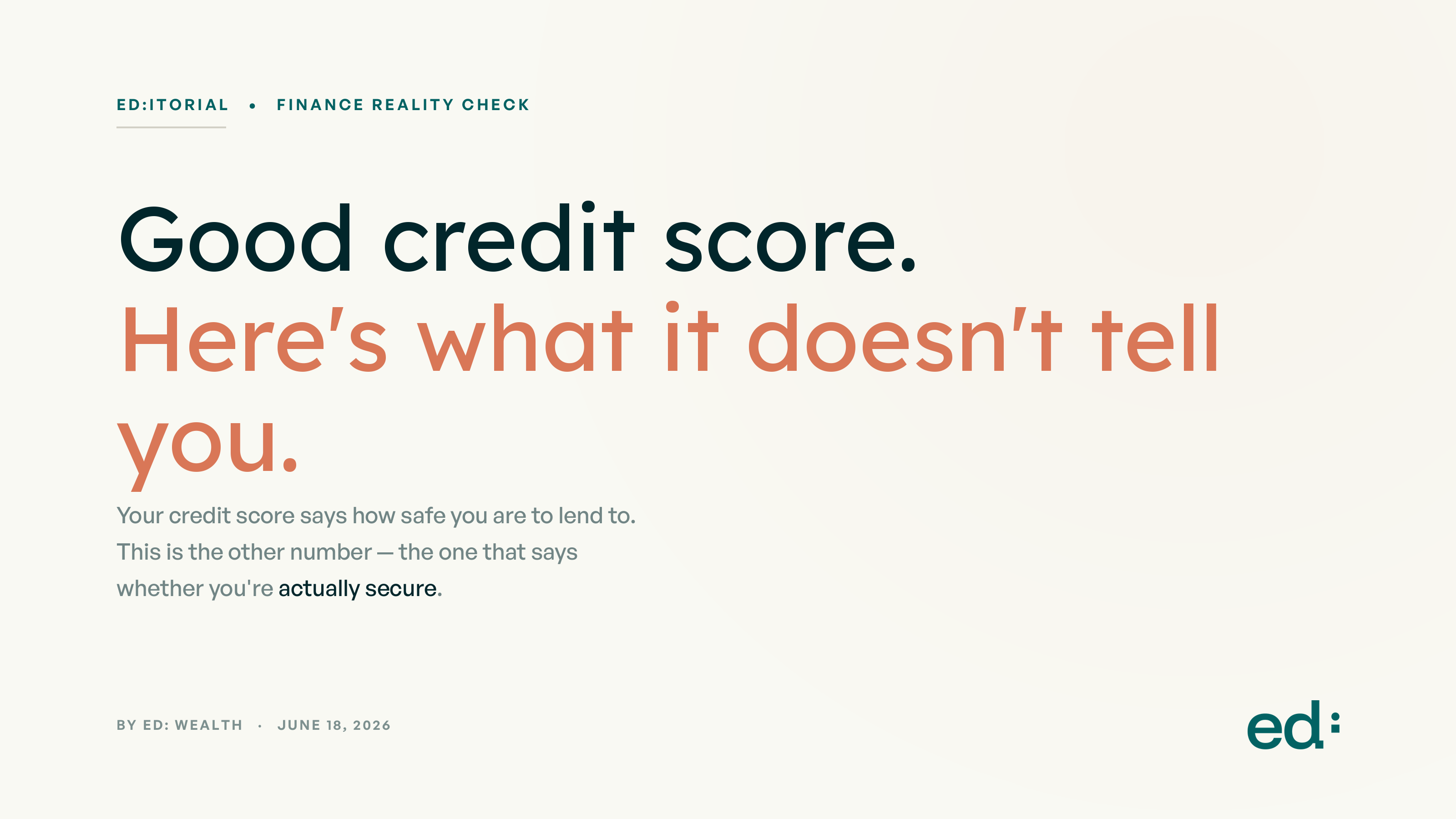
What Is a Financial Reality Check? Why Your Credit Score Isn't Enough

The short version: your credit score measures how safe you are to lend to. Almost nobody has ever seen the number that measures whether you are actually secure. A financial reality check is that second number. Key takeaways Ask people for their credit score and many can recite it. Ask whether they could survive three months without income, or where their money quietly leaks each month, and you get a shrug. That's the gap. A credit score answers a lender's question — how risky is it to extend this person debt? It can be high while your life is fragile, or low while you're genuinely fine, because it was never built to measure you. A financial reality check answers the question the credit score ignores: are you safe, clear, progressing, building, and at ease? Here's the simple version, with the research behind each axis.
Edgen
·
Jun 23 2026
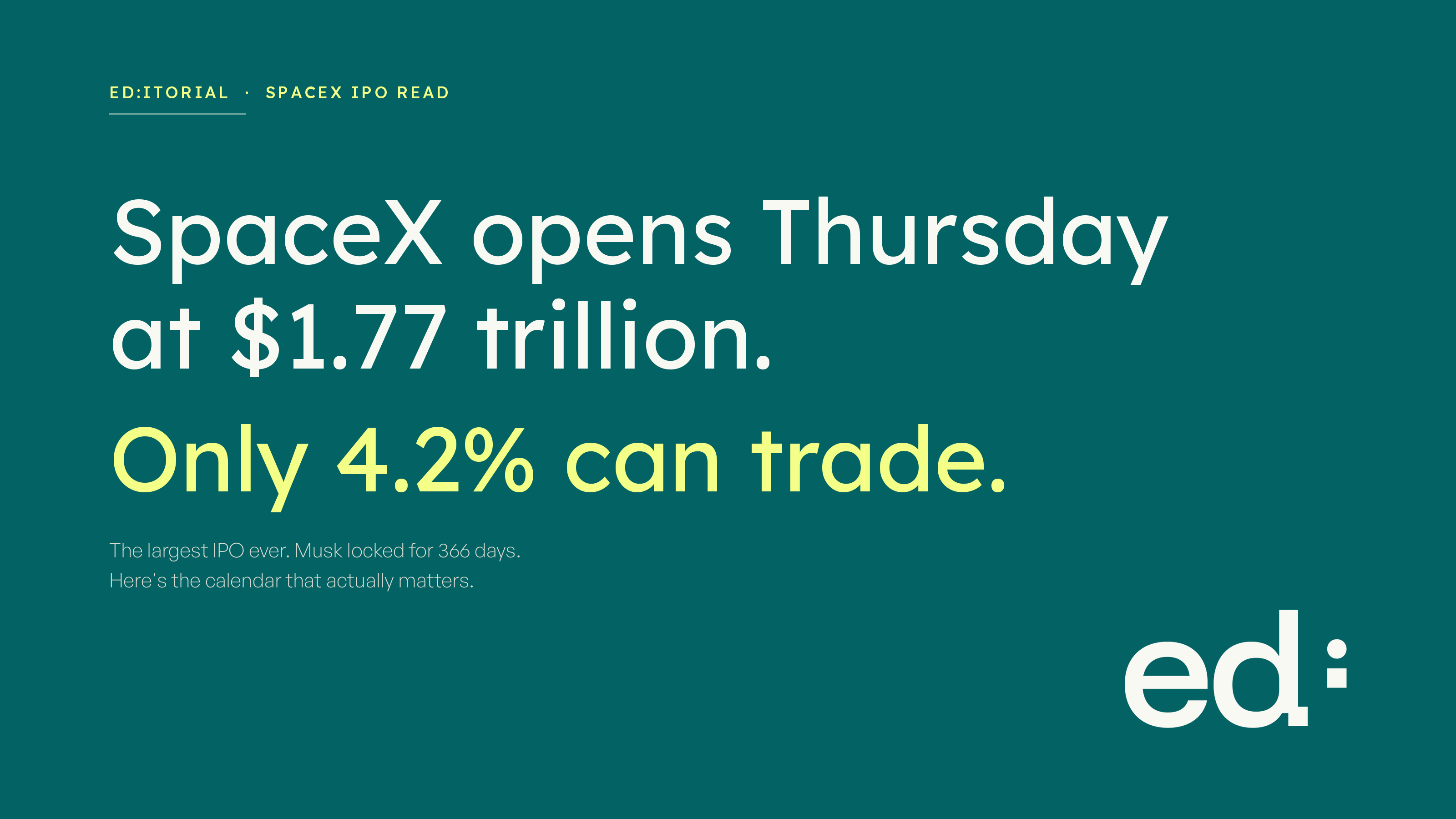
SpaceX opens Thursday at a $1.77 trillion valuation — the largest IPO ever. Only 4.2% of stock actually trades. Musk is locked up for 366 days. The next 366 days run on an unusually clean calendar of supply releases. Here are the 13 dates worth watching.

SpaceX goes public Thursday with a possible $5 trillion hit. Here's the calendar that actually matters.

SpaceX prices Wednesday night and opens Thursday on Nasdaq at $135 per share — a $1.77 trillion valuation, the largest IPO ever. Most coverage will frame what comes next as a sentiment trade, an Elon story, or a race to Goldman's $5 trillion bull case. The reality is more grounded and more useful: the next 366 days are governed by an unusually clean calendar of supply releases — when 95.8% of the company can or cannot trade, when index funds add weight, when the lock-up cliff arrives, when Musk himself becomes a potential seller for the first time. Read the calendar and you've already understood the structure most market commentary will spend the next quarter trying to explain. Here are the 13 dates worth watching. Two things keep showing up in headlines that don't survive a careful read. The first is the idea that index funds are about to be forced into a massive single-event SpaceX buy. They aren't. Nasdaq did create a fast-track inclusion rule that lets SpaceX join the Nasdaq 100 wi
Edgen
·
Jun 10 2026

投資、もうひとりじゃない

Ed を無料で試そう。クレカ不要、縛りなし