
A second major legal blow this year threatens to dismantle President Donald Trump's signature economic policy of using broad, unilateral tariffs to reshape global trade.
A second major legal blow this year threatens to dismantle President Donald Trump's signature economic policy of using broad, unilateral tariffs to reshape global trade.
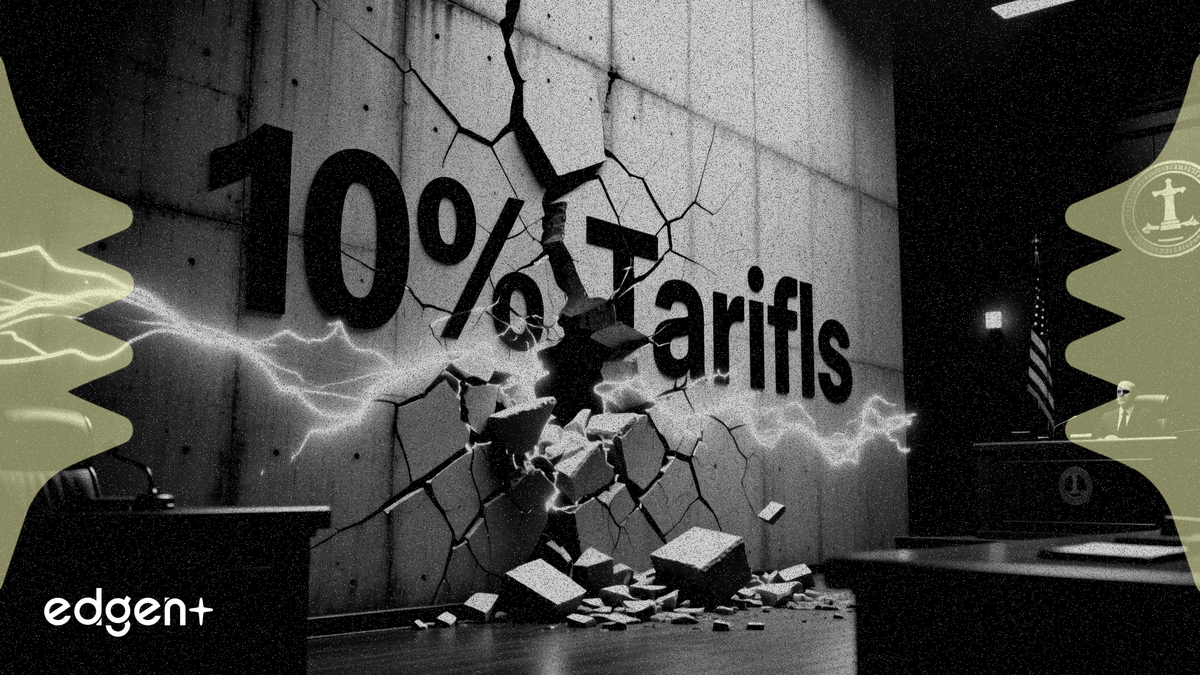
A US Court of International Trade panel ruled 2-1 that the Trump administration's 10% across-the-board tariffs are illegal, finding the White House lacked the authority under a 1974 trade law to impose the levy.
"The presidential proclamation putting the tariffs in place identifies no ‘large and serious United States balance-of-payments deficits’ as Congress understood that phrase,” the majority ruling noted, directly challenging the administration's core justification.
Thursday's ruling orders the administration to stop collecting the tariffs from the plaintiffs in the case and to refund prior payments. The decision follows a landmark Supreme Court ruling in February that struck down a broader set of Trump's tariffs, forcing the administration to pivot to the then-untested authority of the Trade Act of 1974.
The decision injects further uncertainty into a US trade policy landscape that has left importers scrambling to adapt to frequent and chaotic changes. While the ruling only applies directly to the plaintiffs, it sets a critical precedent that could undermine the administration's remaining tariff powers and may face a swift appeal from the government.
The case centered on Section 122 of the Trade Act of 1974, which allows a president to impose tariffs of up to 15% across all imports without congressional approval to address a balance-of-payments deficit. The court found the administration’s argument for invoking this power was insufficient. This loss narrows the executive branch's unilateral options for imposing tariffs, pushing the administration toward more industry-specific or country-specific negotiations.
The legal challenges reflect the ongoing turmoil surrounding Trump's economic policies. After the Supreme Court invalidated a wide swath of tariffs earlier this year, the administration responded by enacting these new global tariffs under a different legal justification. Importers now face a complex and phased process to apply for refunds for payments made under the tariffs struck down by the Supreme Court, with the timeline for full reimbursement remaining unclear. The administration is expected to appeal Thursday's ruling, which could delay resolution and extend the period of uncertainty for businesses. For now, the 10% tariffs can remain in place for all importers not involved in the lawsuit through July.
This article is for informational purposes only and does not constitute investment advice.
