
Cái nhìn tổng quan về L1 chuyên biệt của Somnia dành cho metaverse và gaming, bao gồm chiến lược, đối tác, mô hình token, các yếu tố xúc tác và định giá. Để xem hướng dẫn đơn giản cho người dùng mới, hãy nhấp vào đây
TÓM TẮT
- L1 chuyên biệt cho các ứng dụng thời gian thực: Kiến trúc (MultiStream Consensus, Accelerated Sequential Execution, IceDB) nhắm mục tiêu vào các khối lượng công việc trạng thái nóng mà các chuỗi khác gặp khó khăn.
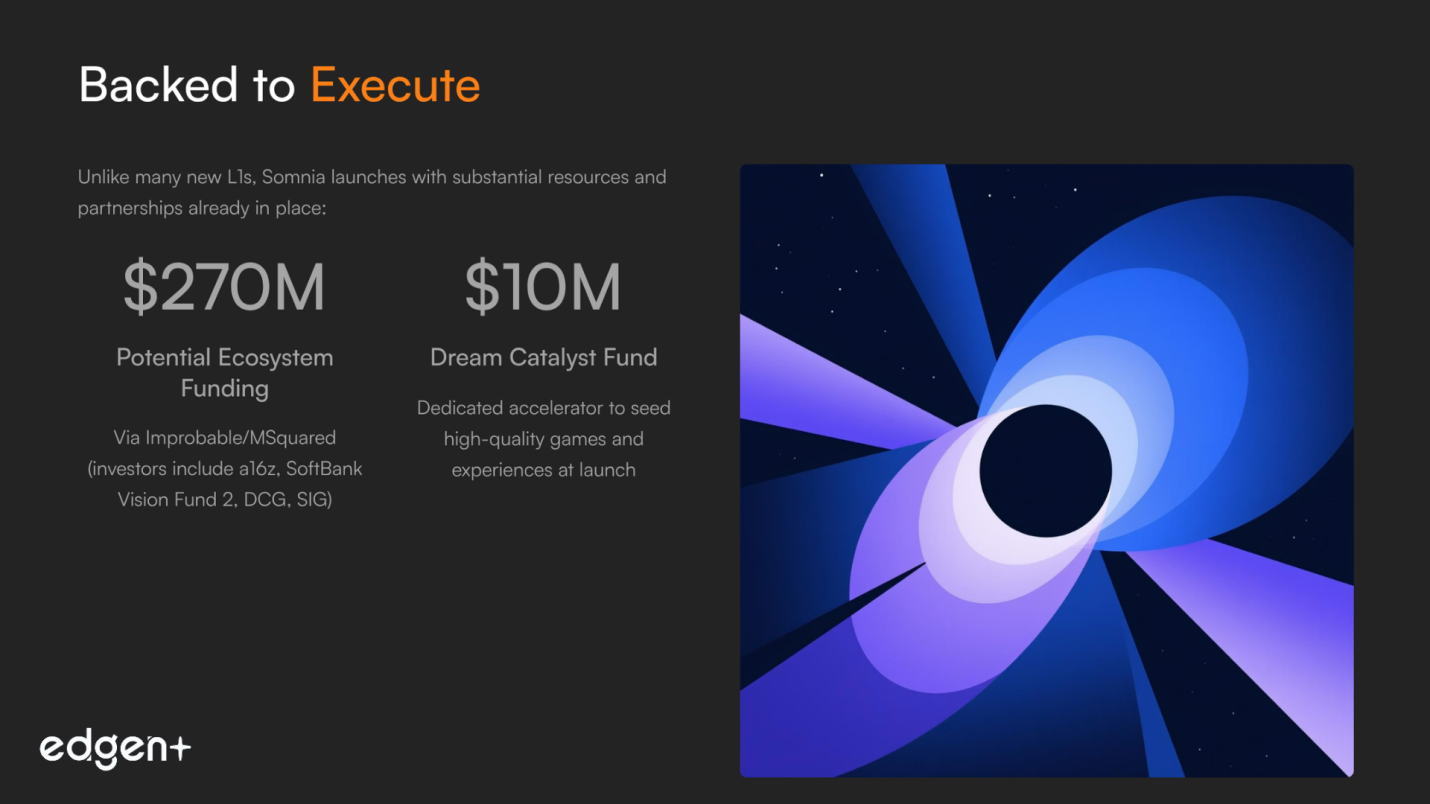
- Được hỗ trợ để thực hiện: Lên đến 270 triệu đô la tài trợ hệ sinh thái thông qua Improbable/MSquared, cơ sở hạ tầng/trình xác thực Google Cloud, và 10 triệu đô la Dream Catalyst để ươm mầm các trò chơi, định vị Somnia để chuyển đổi câu chuyện thành các sản phẩm đã phát hành.
Somnia là gì
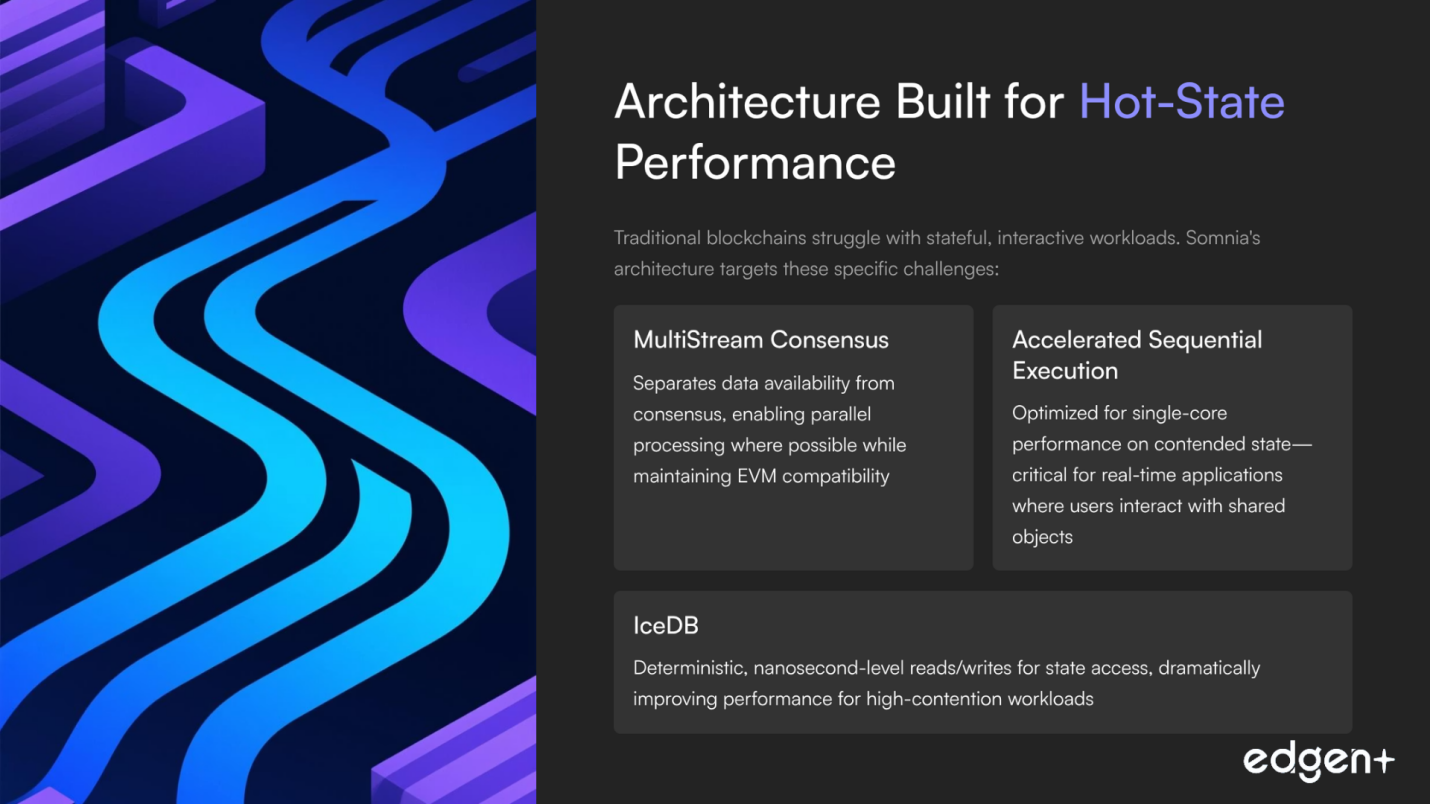
Somnia là một Layer-1 tương thích EVM được thiết kế cho hiệu suất quy mô metaverse: hoàn tất dưới một giây, phí dưới một xu và mục tiêu hơn 1 triệu TPS. Thay vì theo đuổi thông lượng DeFi tổng quát, Somnia được tối ưu hóa cho các khối lượng công việc có trạng thái, tương tác—MMO, biểu đồ xã hội, kinh tế on-chain—sử dụng thiết kế tăng tốc thực thi lõi đơn cho tranh chấp nóng trong khi tận dụng song song hóa phần cứng. MultiStream Consensus của nó tách biệt tính khả dụng của dữ liệu khỏi sự đồng thuận, và IceDB hướng tới các thao tác đọc/ghi có tính xác định ở cấp độ nano giây.
Được hỗ trợ bởi kinh nghiệm sâu rộng của Improbable/MSquared trong các thế giới ảo, Somnia điều chỉnh cơ sở hạ tầng phù hợp với thực tế của nhà phát triển: công cụ EVM quen thuộc, ngăn xếp xây dựng mã thấp (thông qua đối tác) và một chương trình tăng tốc được tài trợ tốt để mang nội dung ngay từ ngày đầu. Với sự hỗ trợ xác thực và các dịch vụ bảo mật AI/dữ liệu của Google Cloud, cùng với các studio như Realm (Variance) đang chuẩn bị xây dựng, đề xuất của Somnia rất rõ ràng: một "máy tính mơ ước" nơi trải nghiệm Web3 tức thì và có thể kết hợp—sẵn sàng cho người dùng phổ thông.
I. Phân tích nền tảng & Chiến lược
1) Tầm nhìn & Sự phù hợp của nhà đầu tư
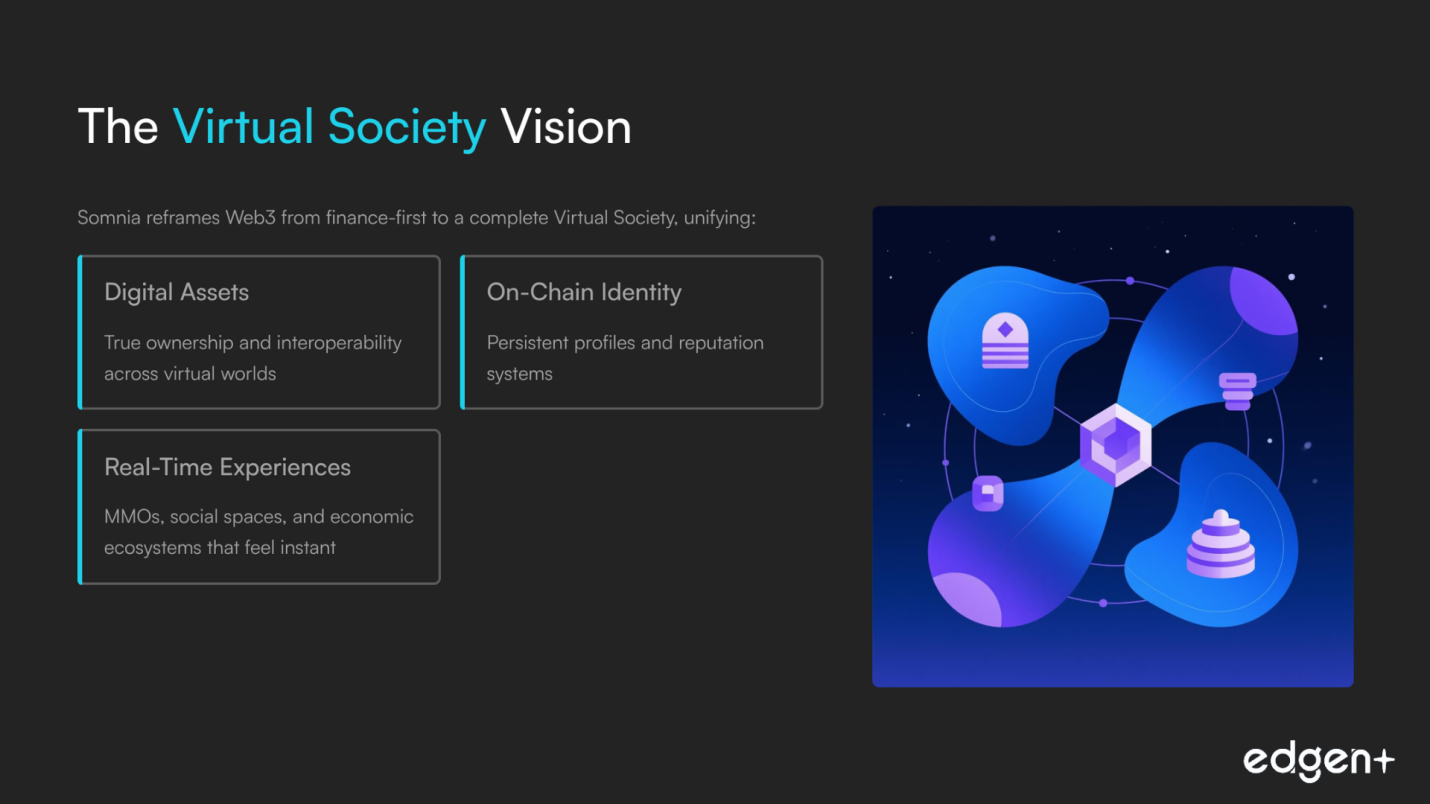
Luận điểm của Somnia tập trung vào việc: trở thành L1 chuyên biệt cho metaverse/xã hội/gaming, nơi hiệu suất, độ trễ và chi phí quyết định người thắng cuộc. Chiến lược này định hình lại Web3 từ ưu tiên tài chính sang Xã hội ảo, thống nhất tài sản, danh tính và trải nghiệm. Các mối quan hệ đối tác (ví dụ, liên kết với Yuga Labs) và một chương trình tăng tốc 10 triệu đô la cho thấy cam kết dài hạn đối với nội dung và sự thành công của nhà phát triển.
2) Đội ngũ & Năng lực thực thi
Người sáng lập Paul Thomas (Improbable) mang đến kinh nghiệm sâu sắc hiếm có về các hệ thống phân tán; Michelle Kang bổ sung chuyên môn về tăng trưởng L1/L2. Sự kết hợp giữa sự chặt chẽ về cơ sở hạ tầng và bí quyết tiếp cận thị trường (GTM) hỗ trợ việc triển khai giao thức phức tạp và tích hợp hệ sinh thái, rất hứa hẹn cho một L1 mới.
3) Vốn & Sự chứng thực
Thay vì các vòng gọi vốn truyền thống, Somnia hưởng lợi từ nguồn tài trợ hệ sinh thái lên đến 270 triệu đô la thông qua Improbable/MSquared (các nhà đầu tư bao gồm a16z, SoftBank Vision Fund 2, DCG, SIG). Google Cloud xác thực ở cấp doanh nghiệp (trình xác thực + AI/dữ liệu/bảo mật), trong khi Sequence và Rarible đẩy nhanh sự sẵn sàng của nhà phát triển và thị trường.
4) Cơ hội thị trường & Mức độ phù hợp
Gaming/metaverse on-chain là một thị trường lớn và đang mở rộng. Somnia phục vụ các nhà phát triển cần hiệu suất đáng tin cậy, cạnh tranh cao với sự quen thuộc với EVM, cùng với các khoản tài trợ, SDK và phân phối, giảm cả chi phí chuyển đổi kỹ thuật và tài chính.
5) Vị thế cạnh tranh & Các yếu tố khác biệt
Cạnh tranh với các chuỗi EVM tập trung vào game (Ronin, Immutable zkEVM, GalaChain) và các L1 có thông lượng cao (Solana, Aptos). Điểm khác biệt: tập trung vào thực thi trạng thái nóng, EVM đầy đủ, câu chuyện "Xã hội ảo" đầy tham vọng và nguồn gốc thế giới ảo đích thực từ Improbable.
Đánh giá nền tảng: Sức mạnh nền tảng đáng kể với vốn đầu tư phù hợp, các đối tác đáng tin cậy và thiết kế được xây dựng có mục đích cho các thế giới on-chain thời gian thực.
II. Hệ sinh thái trước khi ra mắt & Chiến lược tiếp cận thị trường
1) Cộng đồng & Đà phát triển câu chuyện
Sự tăng trưởng ở đầu phễu là rất lớn, được thúc đẩy bởi testnet và các ưu đãi. Cơ hội bây giờ là chuyển đổi độ rộng thành chiều sâu, thể chế hóa truyền thông, làm nổi bật các dApp đã ra mắt và định hướng năng lượng cộng đồng vào việc sử dụng mainnet.
2) Dấu chân On-Chain
Hoạt động testnet đã ở quy mô thử nghiệm căng thẳng, một nền tảng thử nghiệm hệ thống hữu ích. KPI chính sau TGE là sử dụng chất lượng (DAU, ví được giữ lại, dApp đang hoạt động), chứ không phải số lượng giao dịch thô.
3) Quan hệ đối tác & Mức độ sẵn sàng
- Google Cloud: tích hợp trình xác thực + AI/dữ liệu/bảo mật cho nhà phát triển.
- Sequence: ví thông minh, SDK Unity/Unreal, ngăn xếp thị trường cho Somnia Builder.
- Uprising Labs: 10 triệu đô la Dream Catalyst để ươm mầm các trò chơi chất lượng cao.
Cùng nhau, những điều này giảm thiểu ma sát từ mã đến người dùng và giúp đảm bảo nội dung ngay từ ngày đầu tiên.
4) Tokenomics & Tích lũy giá trị (Hiện tại)
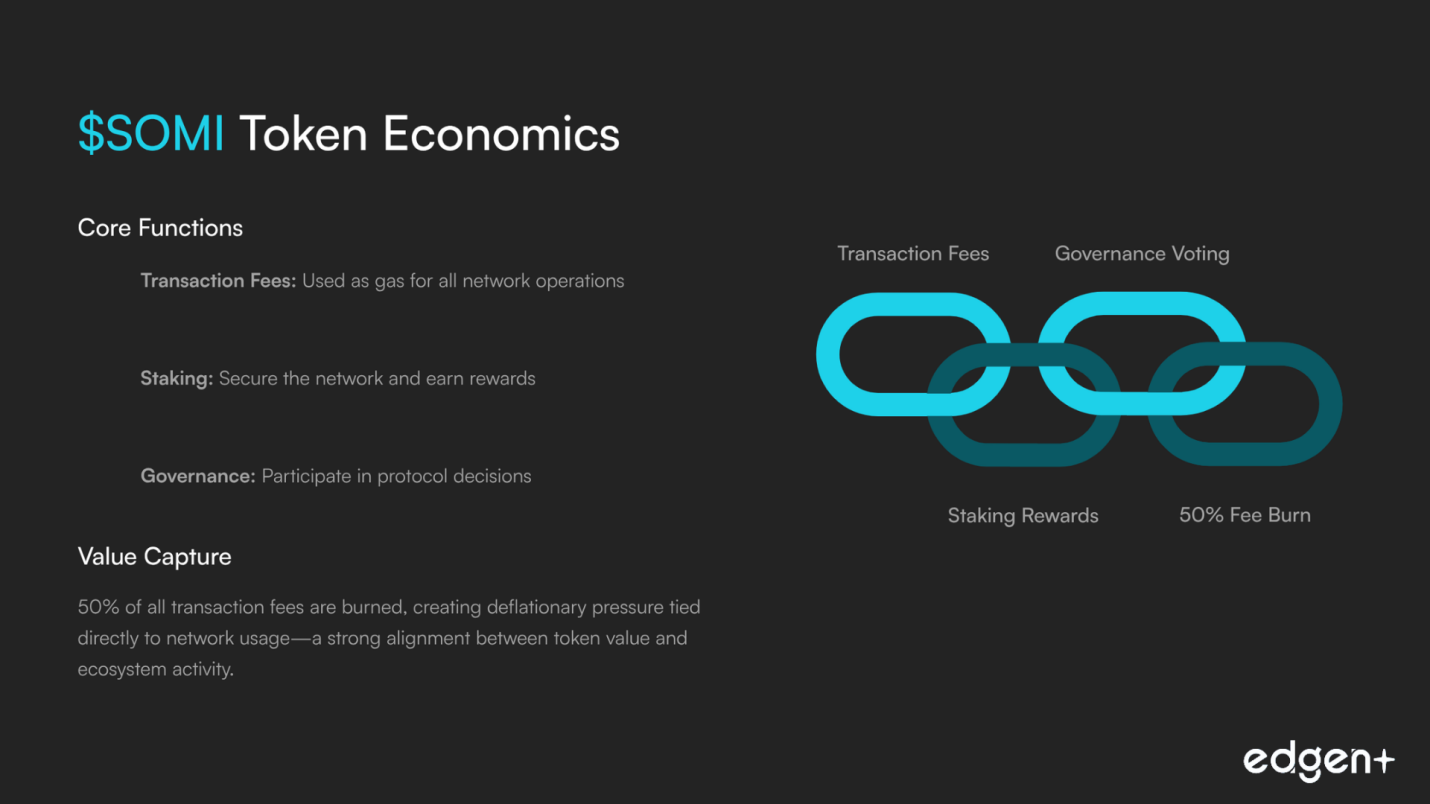
$SOMI: gas, staking, quản trị. 50% phí đốt điều chỉnh giá trị với việc sử dụng. Airdrop (5% nguồn cung) được trả dần thông qua các nhiệm vụ mainnet hàng tuần (20% thanh khoản tại TGE; ~80% bị khóa theo hoạt động trong khoảng 60 ngày) để khuyến khích sự tham gia thực sự ngay từ đầu.
Đánh giá GTM: Rất hứa hẹn. Ngăn xếp, chương trình và đối tác cho thấy tốc độ phát triển mạnh mẽ; các hoạt động ra mắt (lưu ký/MM/thông tin thanh khoản) nên được làm rõ để tối đa hóa sự tự tin ngay từ ngày đầu.
III. Phân tích định hướng tương lai (Các yếu tố xúc tác & Cơ hội)
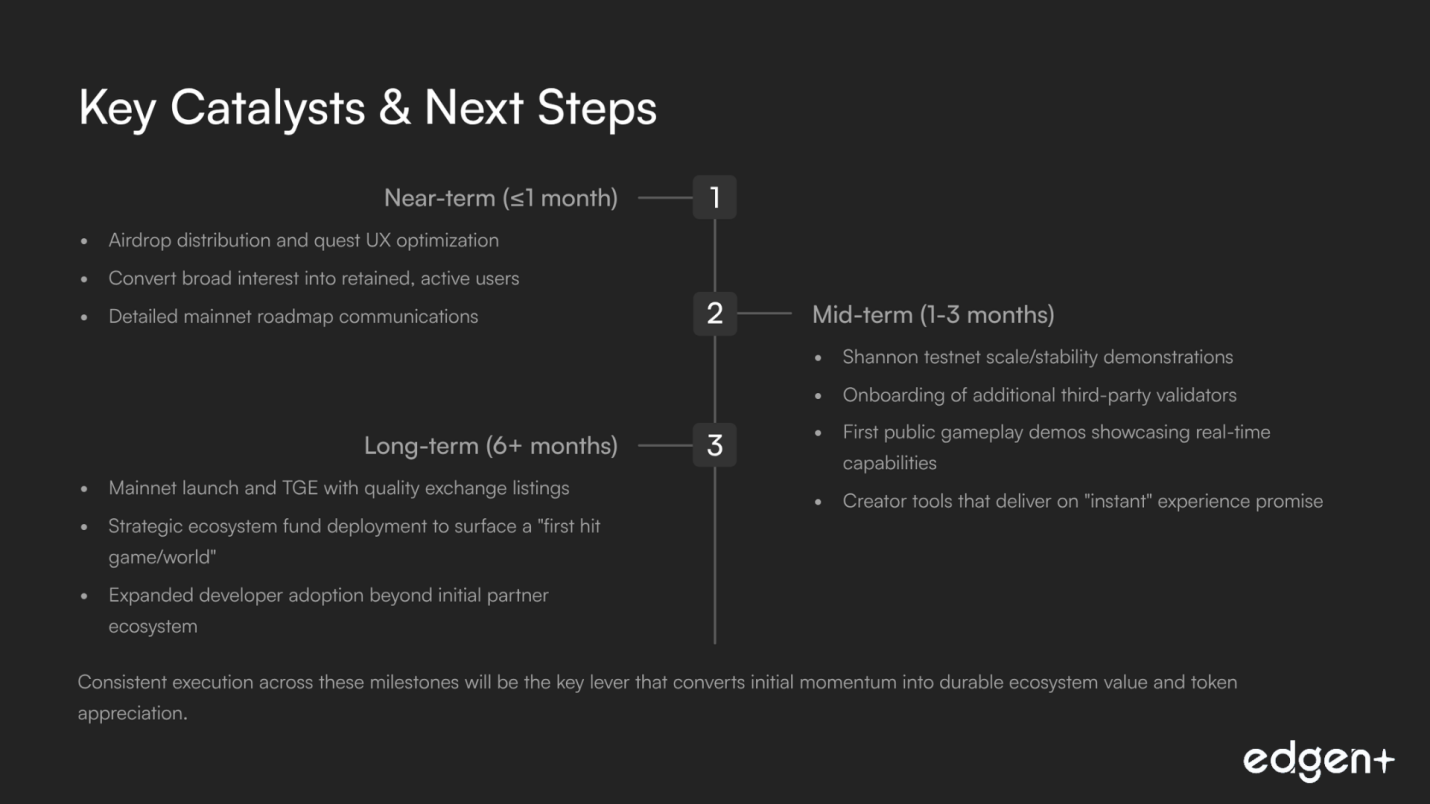
Ngắn hạn (≤1 tháng):
- Truyền đạt các bài học về airdrop + UX nhiệm vụ rõ ràng. Biến sự quan tâm rộng rãi thành người dùng hài lòng, được giữ chân có thể nhanh chóng thay đổi tâm lý.
Trung hạn (1–3 tháng):
- Bằng chứng về quy mô/ổn định của testnet Shannon và nhiều trình xác thực bên thứ ba hơn; gameplay công khai đầu tiên và các công cụ tạo nội dung mang lại cảm giác tức thì.
Dài hạn (6+ tháng):
- Mainnet + TGE với các danh sách chất lượng và thanh khoản; triển khai quỹ hệ sinh thái để tạo ra một "trò chơi/thế giới ăn khách đầu tiên."
Tốc độ thực thi là đòn bẩy biến động lực thành giá trị bền vững.
IV. Phân tích kịch bản định giá (TGE FDV)
Kịch bản | FDV (tỷ đô la USD) | Mô tả ngắn gọn |
Kịch bản lạc quan | 8.0 – 12.0 | Ra mắt hoàn hảo + niêm yết tier-1; các trò chơi ăn khách được phát hành; Somnia dẫn đầu câu chuyện L1 metaverse/gaming. |
Kịch bản cơ bản | 2.5 – 4.0 | Công nghệ vững chắc + việc tích hợp ổn định trong một thị trường hỗn hợp; quỹ + đối tác thúc đẩy việc chấp nhận. |
Kịch bản bi quan | 1.0 – 2.0 | Triển khai chậm hơn hoặc thị trường yếu hơn; cơ sở hạ tầng được cung cấp, việc sử dụng tăng dần với những người dùng cốt lõi trung thành. |
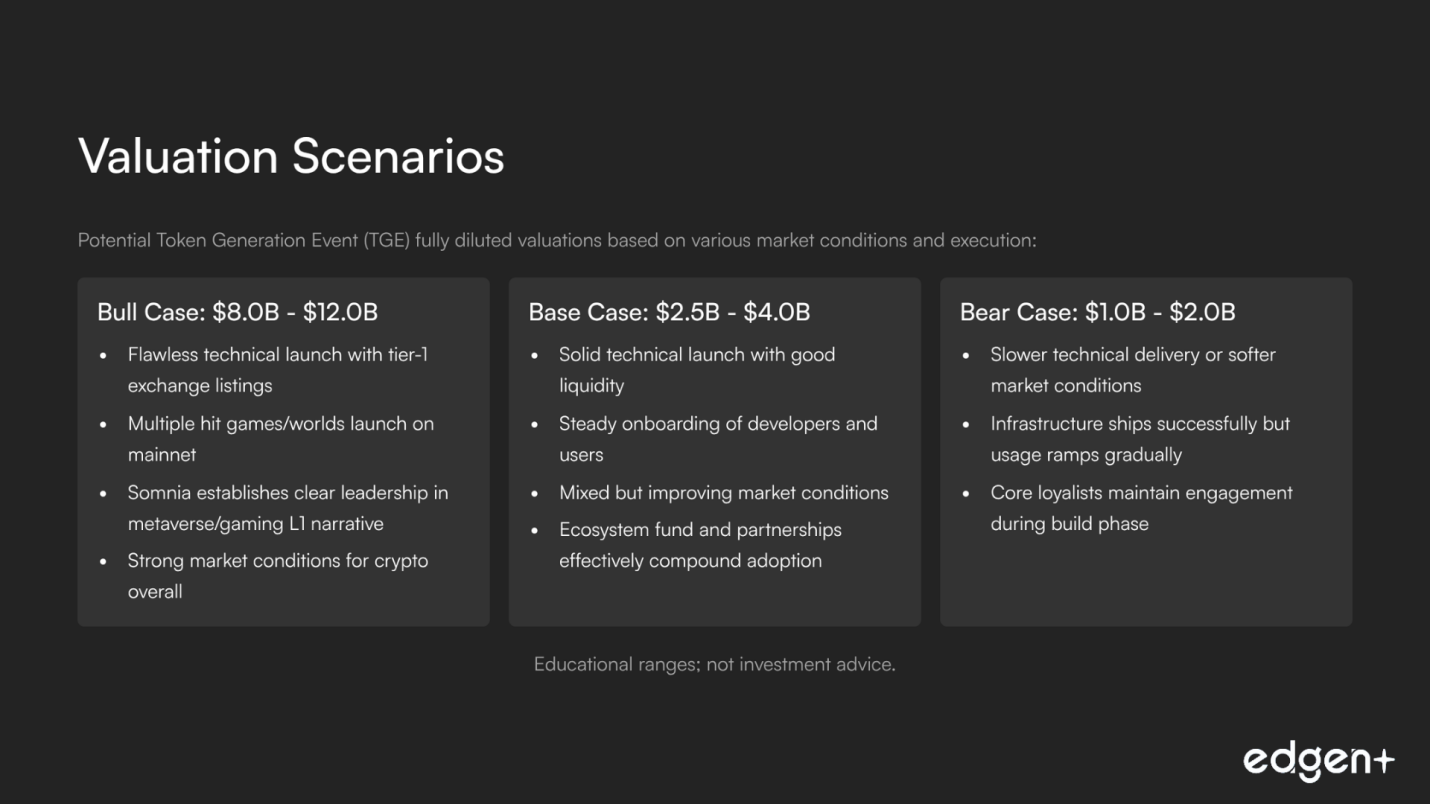
Phạm vi giáo dục; không phải lời khuyên đầu tư.
Bức tranh cạnh tranh (góc độ token tại/gần TGE)
Mạng lưới | Token | Trọng tâm | Vị thế kịch bản cơ bản so với Somnia |
Ronin | EVM L1 cho gaming (do nhà phát hành dẫn dắt) | Có hệ thống đã được chứng minh mạnh mẽ; Somnia cạnh tranh về phạm vi thế giới mở rộng lớn hơn và mục tiêu thông lượng thô. | |
Immutable zkEVM | $IMX | L2 cho game, sức mạnh thị trường | Có các studio & cơ sở hạ tầng sâu rộng; Somnia đối chọi với hiệu suất L1 + EVM + đốt phí. |
Solana | L1 thông lượng cao (thực thi song song) | Hệ sinh thái trưởng thành; Somnia tạo sự khác biệt về câu chuyện hiệu suất trạng thái nóng và sự quen thuộc với EVM. | |
Aptos | L1 thông lượng cao (Move) | Công nghệ mạnh mẽ; Somnia giảm ma sát cho nhà phát triển thông qua EVM + câu chuyện metaverse chuyên biệt. |
Kết luận cuối cùng
Somnia trông rất hứa hẹn: một L1 chuyên biệt, tương thích EVM với kế hoạch thực tế để cung cấp năng lượng cho các thế giới on-chain thời gian thực. Với nguồn tài trợ hệ sinh thái đáng kể, các đối tác blue-chip và thiết kế nhắm thẳng vào các khối lượng công việc trạng thái nóng, nó được thiết lập để biến tầm nhìn thành việc sử dụng. Con đường đến định giá ở mức cao là thẳng thắn nhưng nghiêm ngặt: các hoạt động ra mắt rõ ràng, các trò chơi ban đầu có thể thấy được, TGE suôn sẻ và triển khai nhất quán.
Nội dung mang tính giáo dục; không phải lời khuyên tài chính.









Đầu tư, cuối cùng không phải một mình nữa.
Dùng thử Edgen miễn phí. Không cần thẻ, không ràng buộc.