Content
ÖZET
Litecoin Nedir?
Litecoin'in arkasındaki ekip kimdir?
Ne kadar fon topladılar ve destekçileri kimler?
Projenin değeri nedir?
Airdrop fırsatı var mı?
Litecoin'i nasıl alabilirim?
Litecoin Projesi Tahmini
Sıkça Sorulan Sorular (SSS)

Markets Confusing? Ask Edgen Search.

Instant answers, zero BS, and trading decisions your future self will thank you for.

Try Search Now

Litecoin Nedir? Kolay Bir Rehber

· Mar 31 2026
Litecoin Nedir? Kolay Bir Rehber

Bitcoin'in daha hızlı ve daha ucuz bir versiyonu gibi çalışan ünlü bir kripto para olan Litecoin'e başlangıç dostu bir genel bakış. Litecoin hakkında tam bilgi edinmek için buraya tıklayın.

ÖZET

  • Litecoin (LTC), "dijital gümüş" olarak bilinen, hızlı ve ucuz günlük ödemeler için mükemmel olan güvenilir ve güvenli bir dijital para birimidir.
  • 10 yılı aşkın süredir %100 çalışma süresiyle mükemmel bir şekilde çalışmaktadır ve bu da onu dünyanın en güvenilir kripto projelerinden biri haline getirmektedir.
  • Litecoin için potansiyel bir ABD Spot ETF gibi büyük gelişmeler geliyor, bu da değerini daha da artırabilir.
  • Litecoin projesi, akıllı sözleşmeleri ve DeFi'yi desteklemek için yeni teknoloji eklediğinden çok parlak bir geleceğe sahip ve proje tahmini güçlü bir büyüme potansiyeli gösteriyor.

Litecoin Nedir?

Litecoin (LTC), Bitcoin'e daha hızlı ve daha uygun fiyatlı bir ortak olmak için oluşturulmuş önde gelen bir kripto para birimidir. Şöyle düşünün: Eğer Bitcoin "dijital altın" ise, Litecoin "dijital gümüş"tür. Daha hızlı olması ve çok düşük ücretlere sahip olması nedeniyle daha küçük, günlük işlemler için tasarlanmıştır.

On yılı aşkın süredir Litecoin projesi inanılmaz derecede güvenli ve güvenilir olduğunu kanıtlamıştır. Ağı hiç kapanmamıştır.

Şimdi Litecoin daha da iyiye gidiyor. LitVM adlı yeni bir teknoloji tanıtıyor. Bu, geliştiricilerin Litecoin üzerinde DeFi (Merkeziyetsiz Finans) gibi modern uygulamalar oluşturmasına olanak tanıyacak büyük bir adımdır. Bu yükseltme, heyecan verici proje tahmininin önemli bir parçasıdır.

Litecoin'in arkasındaki ekip kimdir?

Litecoin, Google'da çalışmış, kripto dünyasında çok tanınan ve saygı duyulan bir kişi olan Charlie Lee tarafından yaratıldı.

Proje şu anda özel bir kar amacı gütmeyen kuruluş olan Litecoin Vakfı tarafından desteklenmektedir. Vakfın ekibi, Litecoin'i dünya çapında büyütmeye ve tanıtmaya yardımcı olmak için çok çalışarak projenin güçlü ve istikrarlı bir geleceğe sahip olmasını sağlamaktadır.

Ne kadar fon topladılar ve destekçileri kimler?

Litecoin, birçok yeni proje gibi özel risk sermayesi şirketleri tarafından finanse edilmeyen bir "adil lansman"a sahipti. Başlangıçtan itibaren herkesin kullanması ve katılması için oluşturuldu ve dünyaya verildi.

En güçlü destekçileri, küresel kullanıcı, geliştirici topluluğu ve bağışlar ve endüstri ortakları tarafından desteklenen Litecoin Vakfı'dır. Bu topluluk desteği, projeyi çok güçlü ve merkezi olmayan hale getirir.

Projenin değeri nedir?

Bu rapor itibarıyla (2025 sonu), Litecoin projesinin değeri zaten çok etkileyici.

  • Mevcut Piyasa Değeri: Yaklaşık 8,7 Milyar Dolar
  • Mevcut Tam Seyreltilmiş Değerleme (FDV): Yaklaşık 9,6 Milyar Dolar

Bu yüksek proje değeri, piyasanın Litecoin'e ne kadar güvendiğini ve değer verdiğini göstermektedir. Yeni özellikler ve ETF'ler gibi kurumsal ürünler geldiğinde, proje fiyatının daha da büyümesi için önemli bir potansiyel vardır.

Airdrop fırsatı var mı?

Hayır, Litecoin için airdrop bulunmamaktadır.

Airdroplar genellikle yeni projeler tarafından kullanıcı çekmek için yapılır. Litecoin, on yılı aşkın süredir devam eden çok köklü bir proje olduğu için airdrop kullanmaz.

Litecoin'i nasıl alabilirim?

Litecoin edinmenin en iyi yolu, büyük, güvenilir bir kripto para borsasından satın almaktır. En yaygın olarak bulunan coinlerden biridir, bu nedenle Coinbase, Binance, Kraken ve diğer birçok popüler platformda bulabilirsiniz.

Litecoin Projesi Tahmini

Litecoin proje fiyatının geleceği çok umut verici görünüyor. Yapay zeka analizi ve piyasa uzmanları, yaklaşan olaylara dayanarak bir proje tahmini oluşturdu. Gelecekteki değerlemesi için olası senaryolar şunlardır.

Senaryo

FDV Aralığı (USD)

Basit Anlatım

Boğa Senaryosu

35 milyar - 50 milyar dolar

ABD ETF'i onaylandı ve yeni teknoloji kusursuz çalışıyor.

Temel Senaryo

15 milyar - 30 milyar dolar

ABD ETF'i onaylandı ve proje istikrarlı büyümesine devam ediyor.

Ayı Senaryosu

7 milyar - 12 milyar dolar

Büyük olaylar ertelendi ve piyasa yavaş.

Sıkça Sorulan Sorular (SSS)

1. Litecoin yeni başlayanlar için iyi bir proje mi?

Evet! Litecoin yeni başlayanlar için mükemmel bir seçimdir. Anlaşılması kolaydır, güvenli ve güvenilir olma konusunda uzun bir geçmişe sahiptir ve güçlü bir vakıf ve topluluk tarafından desteklenmektedir.

2. Litecoin'i özel kılan nedir?

Litecoin, on yılı aşkın süredir hızlı, ucuz ve inanılmaz derecede güvenilir bir ödeme ağı olduğunu kanıtladığı için özeldir. Şimdi, daha da büyümek için yeni teknoloji ekliyor, bu da ona çok heyecan verici bir gelecek sunuyor.

3. Litecoin güvenli mi?

Kesinlikle. Litecoin ağı, 10 yılı aşkın süredir %100 mükemmel çalışma süresi rekoruna sahiptir ve bu da onu var olan en güvenli ve güvenilir kripto para birimlerinden biri haline getirmektedir.

4. Litecoin'i nerede kullanabilirim?

Litecoin'i dünya çapında binlerce satıcıda mal ve hizmetler için ödeme yapmak üzere kullanabilirsiniz. Düşük ücretleri ve yüksek hızları, onu gerçek dünya işlemleri için harika bir seçim haline getirmektedir.

Recommend
Redeem miles for gift cards and each is worth ~1 cent; redeem for long-haul business and they're worth 2.5-4+. With programs now dynamically priced, the one check that decides every redemption.

How to redeem airline miles without wasting them

The single biggest mistake with miles is redeeming them for the easy stuff: gift cards, merchandise, seat upgrades at the gate. Do that and each mile is worth about one cent. Redeem the *same* miles for flights, especially long-haul or premium-cabin flights, and they're often worth two to five cents each, sometimes more. So the real skill isn't earning miles; it's not throwing away their value at the finish line. Here's how to actually use them. A mile has no fixed price; its value depends entirely on what you redeem it for. The way to judge any redemption is simple math: (cash price of the flight) ÷ (miles it costs) = cents per mile. If a flight costs $400 or 20,000 miles, that's 2 cents a mile, a solid deal. If a $90 flight costs 18,000 miles, that's half a cent, which is terrible; pay cash and keep the miles. Run this check before every redemption. It instantly separates a great use from a waste, and it's the one habit that makes miles worth having. As a rule of thumb, most major ai
Edgen
·
Jun 30 2026
Short-term goals (under ~3 years) belong in safe cash; long-term goals (5+ years) can take market risk. The best HYSAs now pay ~4-5% APY. How to sort yours and run both.

Long-term vs short-term financial goals (and how to plan both)

The difference comes down to one thing: time. A short-term goal is money you'll need within roughly three years (an emergency fund, a trip, a wedding, next year's tax bill), so it has to be *safe and reachable*. A long-term goal is five-plus years out (retirement, a house down the road, a kid's education), so it can take market risk, because time smooths the bumps out. Get that match right and you've done most of the work. It's not the size, it's the deadline. A $2,000 goal you need in six months is short-term; a $2,000 goal you won't touch for fifteen years is long-term, and they belong in completely different places. This is the part that actually matters, and where people lose money without realizing it. Short-term money should not be in the stock market. If your emergency fund is in stocks and the market drops 20% the same month your car dies, you're selling at the worst possible time. Short-term goals go somewhere stable and accessible, and a high-yield savings account is the clas
Edgen
·
Jun 30 2026
Mortgages near 6.5%, home prices flat, and the Fed split on rate cuts vs hikes. With timing a coin flip, the 3 questions that actually decide whether to buy now or wait.

Should you buy a house now or wait? How to actually decide

The honest answer: buy when you'll stay put for at least five years and you'll still have an emergency fund left after the down payment. Otherwise, waiting (and renting) is often the smarter money move, not the weaker one. "Rent vs buy" isn't a math problem with one right answer, and it's almost never really about timing the market. It's about your *life*, in three questions. Before the three questions, here's the mid-2026 backdrop — because "now or wait" usually hides a bet on rates and prices, and the data says that bet is a coin flip. The picture: mortgages are still pricey, prices have gone flat (more than half of the 20 big metros saw year-over-year declines in March), and the cheap-money era hasn't returned. So "buy before it runs away" and "wait for the crash" are *both* weak arguments right now. The whole "wait for rates to drop" plan rests on the Fed, and the Fed is split down the middle. In its June 2026 projections, policymakers were divided: 8 expected no change this year,
Edgen
·
Jun 30 2026
Most financial goals fail because they're wishes, not systems. Here's the 3-part anatomy of a goal that sticks (a number, a date, one automatic move), plus why 37% of adults can't cover a $400 surprise.

How to set financial goals you'll actually hit

A financial goal you'll actually hit has three things a vague wish doesn't: a number, a date, and one automatic move that happens whether or not you remember it. "Save more" is a wish. "$6,000 in a separate account by next December, $500 auto-transferred on payday" is a goal. The gap between those two sentences is the reason most goals quietly die, and it has almost nothing to do with willpower. Key Takeaways A real financial goal answers three questions: how much, by when, and what for. Drop any one and it stops working. "Pay off debt" has no number and no date, so there's nothing to aim at or measure, while "$8,000 of card debt cleared in 18 months" tells you exactly whether you're on track and the day you're done. The "what for" matters more than people expect. A goal tied to something real (a buffer so a bad month isn't a crisis, a deposit on a first place) survives the months when motivation dips. In our experience reading how people actually use a money tool, the goals that get
Edgen
·
Jun 30 2026
A big RSU grant just vested — now what? Here's what a modern money tool actually surfaces first, using Ed as a worked example: a reality check, the 22% tax gap most high earners miss, and the concentration risk nobody flags.

Your RSUs Just Vested. Here's What a Money Tool Surfaces First.

You just had a big RSU grant vest. Congratulations — and now the awkward part: a six-figure pile of your own company's stock, a vague sense you should "do something," and no one actually telling you what. An advisor, a spreadsheet, and a piece of software each handle this moment differently. Here's what a modern money tool surfaces in a moment like this — using Ed as a worked example — so you can decide what kind of help actually fits. Key takeaways You connect your brokerage and bank through read-only aggregation, so the tool can read balances but can't move a dollar. Ed's framing is simple: precise about your money, blind to your identity. Instead of sorting your lattes into categories, Ed opens on a single Financial Reality Check — a read on whether your money could survive a bad month. For a lot of high earners, that one number lands harder than any budget, because it answers a question the other apps never ask. (If the Reality Check is the numbers side, your money type is the beha
Edgen
·
Jun 26 2026
A money personality test is more than a quiz if it measures behavior, not just vibes. Here's the science behind money types, how Ed's test works, and how to use your result.

What Is a Money Personality Test? The Science Behind Your Money Type

The short version: a good money personality test should feel like a roast and work like a mirror — fun on the surface, behavioral underneath. The useful ones don't tell you what you know; they show you how you act with money, and the one blind spot worth watching. Key takeaways Here's the uncomfortable backdrop. U.S. financial literacy has been stuck for a decade — adults answer only about 49% of the standard knowledge questions correctly, essentially flat since 2017 (TIAA Institute–GFLEC, 2025) — even as free financial information became infinite. If facts fixed money, they'd have fixed it by now. They don't, because the thing that actually drives your outcomes lives one level below the facts: how you're wired to behave when money is on the line. That's the whole premise of financial fitness — and it's what a money personality test is built to surface. Not what you know. What you do. The idea has real research behind it — money behavior is patterned and measurable, and a few tradition
Edgen
·
Jun 23 2026
A financial reality check scores where you actually stand across safety, control, progress, upside, and Mental Load. Here's why a money score matters, how Ed's checkup works, and what to do with your weakest area.

What Is a Financial Reality Check? Why Your Credit Score Isn't Enough

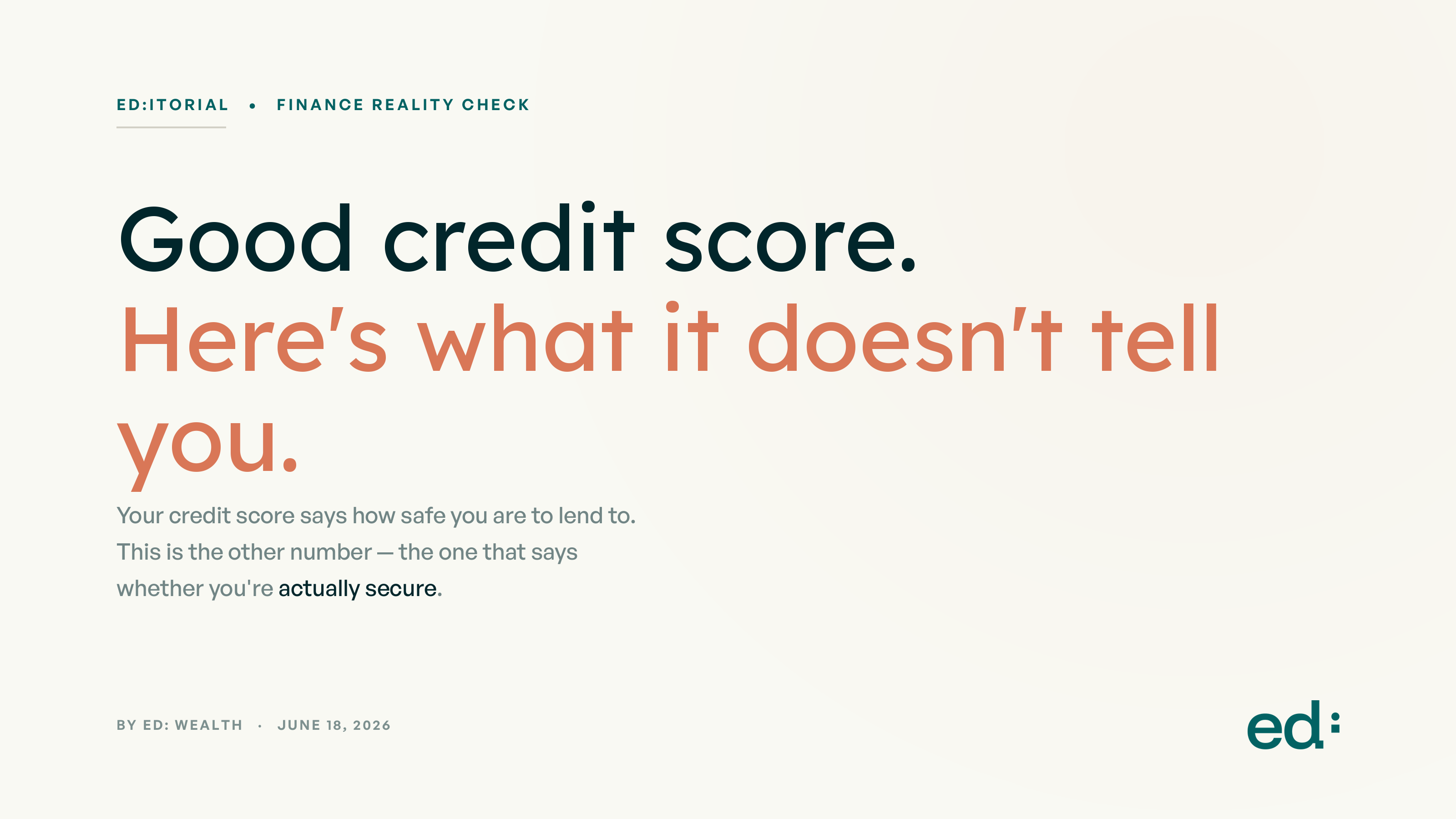
The short version: your credit score measures how safe you are to lend to. Almost nobody has ever seen the number that measures whether you are actually secure. A financial reality check is that second number. Key takeaways Ask people for their credit score and many can recite it. Ask whether they could survive three months without income, or where their money quietly leaks each month, and you get a shrug. That's the gap. A credit score answers a lender's question — how risky is it to extend this person debt? It can be high while your life is fragile, or low while you're genuinely fine, because it was never built to measure you. A financial reality check answers the question the credit score ignores: are you safe, clear, progressing, building, and at ease? Here's the simple version, with the research behind each axis.
Edgen
·
Jun 23 2026
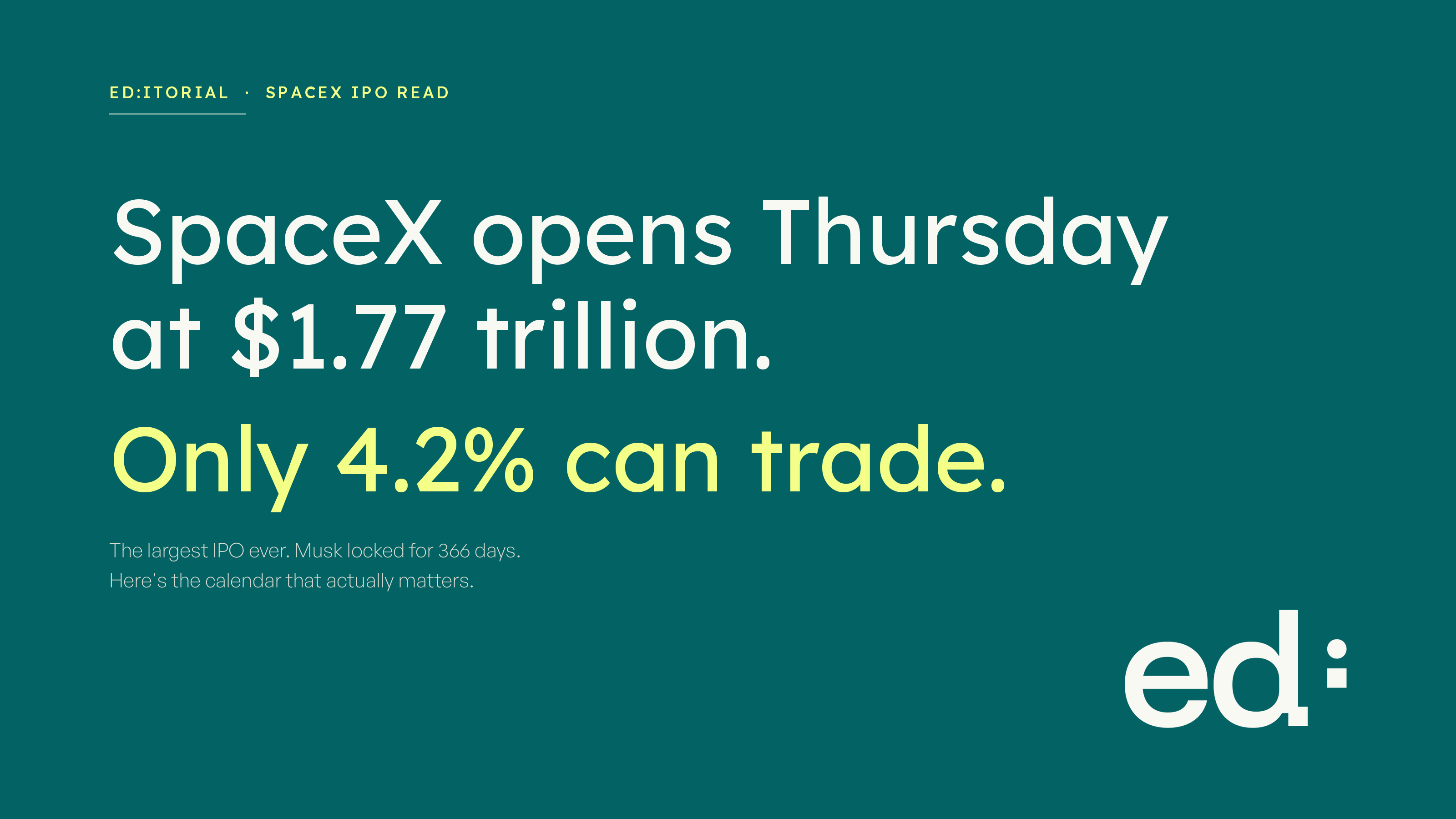
SpaceX opens Thursday at a $1.77 trillion valuation — the largest IPO ever. Only 4.2% of stock actually trades. Musk is locked up for 366 days. The next 366 days run on an unusually clean calendar of supply releases. Here are the 13 dates worth watching.

SpaceX goes public Thursday with a possible $5 trillion hit. Here's the calendar that actually matters.

SpaceX prices Wednesday night and opens Thursday on Nasdaq at $135 per share — a $1.77 trillion valuation, the largest IPO ever. Most coverage will frame what comes next as a sentiment trade, an Elon story, or a race to Goldman's $5 trillion bull case. The reality is more grounded and more useful: the next 366 days are governed by an unusually clean calendar of supply releases — when 95.8% of the company can or cannot trade, when index funds add weight, when the lock-up cliff arrives, when Musk himself becomes a potential seller for the first time. Read the calendar and you've already understood the structure most market commentary will spend the next quarter trying to explain. Here are the 13 dates worth watching. Two things keep showing up in headlines that don't survive a careful read. The first is the idea that index funds are about to be forced into a massive single-event SpaceX buy. They aren't. Nasdaq did create a fast-track inclusion rule that lets SpaceX join the Nasdaq 100 wi
Edgen
·
Jun 10 2026

Yatırım yapmak artık yalnız bir iş değil.

Ed'i ücretsiz dene. Kart yok, taahhüt yok.