
SpaceX's Starship V3 deployed 20 next-generation Starlink satellites during its 13th test flight, marking the first operational payload delivery for the world's largest rocket.
SpaceX's Starship V3 deployed 20 next-generation Starlink satellites during its 13th test flight, marking the first operational payload delivery for the world's largest rocket.
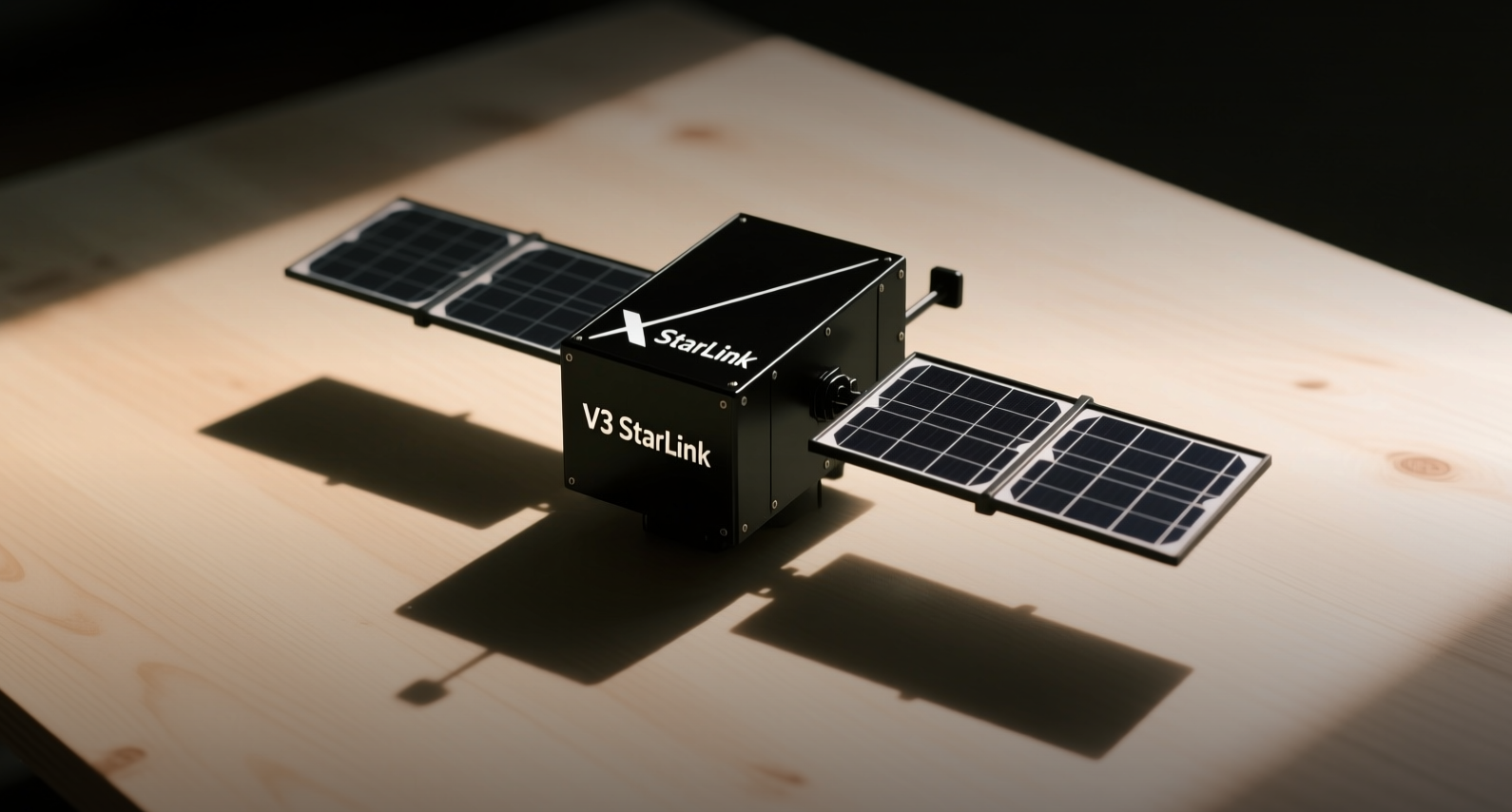
SpaceX's Starship V3 deployed 20 third-generation Starlink satellites during its 13th test flight on July 24, the first time the mega-rocket has delivered operational payloads to space. The launch from Starbase in South Texas at 6:51 p.m. EDT came eight days after a July 16 attempt was aborted when several engines failed to ignite.
"SpaceX's Starship V3 is deploying Starlink satellites," the company said in a statement on July 25, confirming the milestone. The 20 V3 satellites, each weighing about 4,400 pounds (2,000 kilograms), extended solar arrays and antennas and attempted to connect with the broader Starlink network via high-capacity lasers, the company said.
The deployment marks a step forward for the V3 Starlink program. SpaceX has said launching 60 of the new satellites on Starship offers a "potential twenty-fold increase" in downlink capacity compared with a single Falcon 9 flight. The company aims to operate as many as 100,000 V3 Starlinks in low Earth orbit, up from about 10,800 spacecraft currently in the constellation.
The milestone comes as SpaceX navigates its first months as a public company following a June IPO that was the largest in history. Shares have fallen to $115 from a peak above $200, and dropped another 2 percent in after-hours trading after the Super Heavy booster failed during a simulated landing. The ability to deploy V3 Starlinks at scale is critical to the economics of the satellite internet network, the only profitable part of SpaceX's business.
The Super Heavy booster suffered engine issues during its return to Earth and exploded after a faster-than-expected impact with the Gulf of Mexico, the second consecutive failure for the booster on the V3 version of Starship. In May, on the first Starship V3 flight, Super Heavy also encountered engine problems during separation.
SpaceX replaced six engines after the July 16 abort and said it made several modifications to hardware and software to address issues seen on the previous flight. The upper stage, known as Ship, performed better this time, surviving atmospheric reentry and executing a controlled splashdown in the Indian Ocean about 65 minutes after liftoff. Unlike previous missions, Ship did not explode when it tipped over, allowing SpaceX to use a drone to inspect the heat shield tiles on its belly.
Six of the 20 deployed satellites carried cameras to scan and study Ship's heat shield, part of SpaceX's effort to gather data before attempting to return the vehicle to the launch pad for a chopsticks-style catch. The heat shield also carried load-sensing tiles to measure stress during ascent.
The V3 Starlink satellites that burned up in the atmosphere about 20 minutes after deployment were never intended to reach orbit — Starship remains incapable of orbital flight. But SpaceX communicated with all 20 while they were in space, validating the satellite design and the deployment mechanism.
Raymond James issued an $800 price target for SpaceX stock, reflecting confidence in the company's long-term trajectory despite the recent share price decline. However, the economics of the Starlink V3 expansion depend on Starship achieving full reusability. SpaceX's S-1 filing warned that without a fully reusable Starship, progress on Starlink "would be at a slower pace and higher cost."
SpaceX shares, trading at about $115 after the after-hours decline, face headwinds from the booster failures. But the successful satellite deployment demonstrates progress toward the operational capability needed to justify the company's valuation. The next Starship flight, Flight 14, has not yet been scheduled.
This article is for informational purposes only and does not constitute investment advice.
