
Intel's EMIB yields have reached a "very good level," potentially unlocking a Google TPU packaging deal.
Intel's EMIB yields have reached a "very good level," potentially unlocking a Google TPU packaging deal.
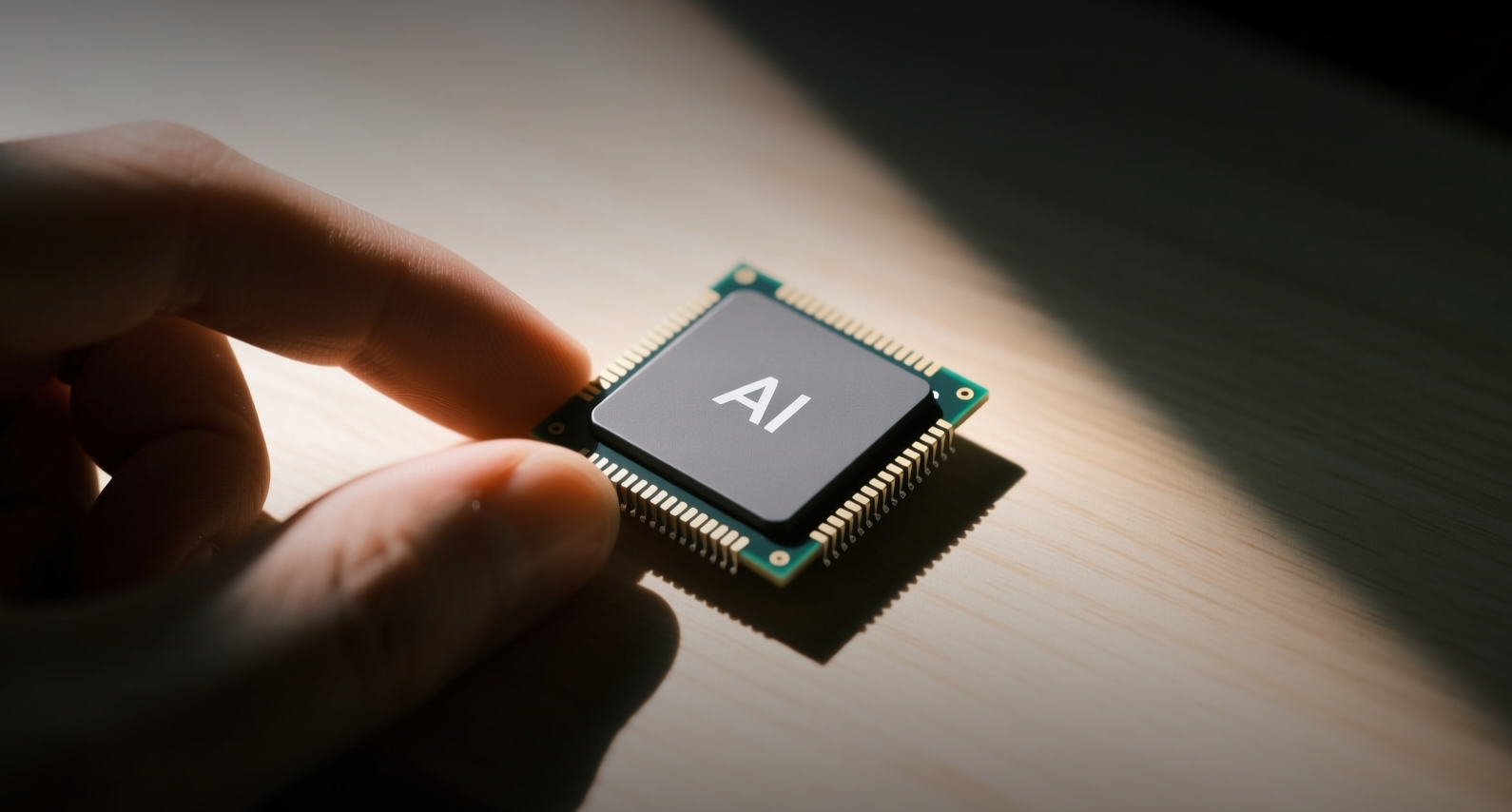
Intel's EMIB yields have reached a "very good level," potentially unlocking a Google TPU packaging deal.
Intel's EMIB packaging yields have reached a "very good level" per MediaTek, a development that could bring Google's TPU packaging orders to Intel's foundry unit, Wedbush analysts said.
"MediaTek's comments further confirm Intel's progress in advanced packaging," Matt Bryson, an analyst at Wedbush, said. "This appears to strengthen earlier speculation that Google's tensor processing units could use Intel's EMIB technology."
MediaTek, which raised its target for AI application-specific integrated circuit share in 2027 to between 15 percent and 20 percent from 10 percent to 15 percent, made the EMIB yield comments during its earnings call last week. Intel recently disclosed that cybersecurity company Fortinet became the first outside customer for its foundry unit.
A Google deal would be a major win for Intel's foundry ambitions, which depend on attracting large external customers and proving its manufacturing technology can support demanding AI workloads. It would also challenge TSMC's dominance in advanced packaging, where the Taiwanese foundry's CoWoS (chip-on-wafer-on-substrate) technology is the industry standard for AI accelerators.
Intel's EMIB technology uses a small silicon bridge embedded in the package substrate to connect chiplets, enabling high-bandwidth interconnects without the cost of a full silicon interposer. TSMC's CoWoS, by contrast, uses a silicon interposer to connect multiple dies and has become the de facto standard for Nvidia's AI GPUs and other high-end accelerators.
The packaging layer has become a critical bottleneck in AI chip production. As chipmakers push toward more complex multi-die designs, advanced packaging determines how efficiently compute dies communicate with memory and other components. TSMC has been the primary beneficiary, with its CoWoS capacity fully booked as hyperscalers and AI companies compete for allocation.
If Google were to move TPU packaging to Intel, it would mark a significant shift in the advanced packaging market. Google's TPUs are among the most widely deployed AI accelerators in the industry, powering much of the company's internal AI infrastructure and cloud services. A packaging deal with Intel would diversify Google's supply chain and reduce its dependence on TSMC.
The competitive stakes extend beyond Google. Intel has also been developing its Optical Compute Interconnect (OCI) chiplet, a self-contained optical I/O subsystem that can be co-packaged with CPUs, GPUs, and accelerators. The 2024 OCI prototype delivered 4 Tbps of bidirectional bandwidth over eight fiber pairs, and Intel is working on a next iteration with 200G-per-lane photonic integrated circuits to support 800 Gbps and 1.6 Tbps applications. TSMC, meanwhile, is pursuing its own Compact Universal Photonic Engine (COUPE) roadmap, with plans to move optical engines from pluggable modules to on-substrate and eventually on-interposer integration by 2030.
Intel's foundry business has been building momentum. Beyond the Fortinet win, the company has been investing heavily in its advanced packaging capabilities, including EMIB and Foveros (a 3D stacking technology). The company's 18A process node (which uses ribbonFET transistors and PowerVia backside power delivery) is expected to enter high-volume manufacturing in 2025.
The advanced packaging market is projected to grow substantially as AI workloads demand more bandwidth and lower latency. Industry estimates put the advanced packaging market at roughly $44 billion in 2023, with projections reaching $60 billion by 2028.
Intel shares have been volatile as investors weigh the company's foundry turnaround against its declining core business. A confirmed Google deal would provide tangible evidence that Intel's manufacturing strategy is gaining traction. For TSMC, losing a major customer like Google to Intel's packaging would be a symbolic blow, even if the financial impact is modest relative to TSMC's overall revenue.
Investors will next watch for formal confirmation of a Google relationship and additional external customers for Intel's packaging platform.
This article is for informational purposes only and does not constitute investment advice.
