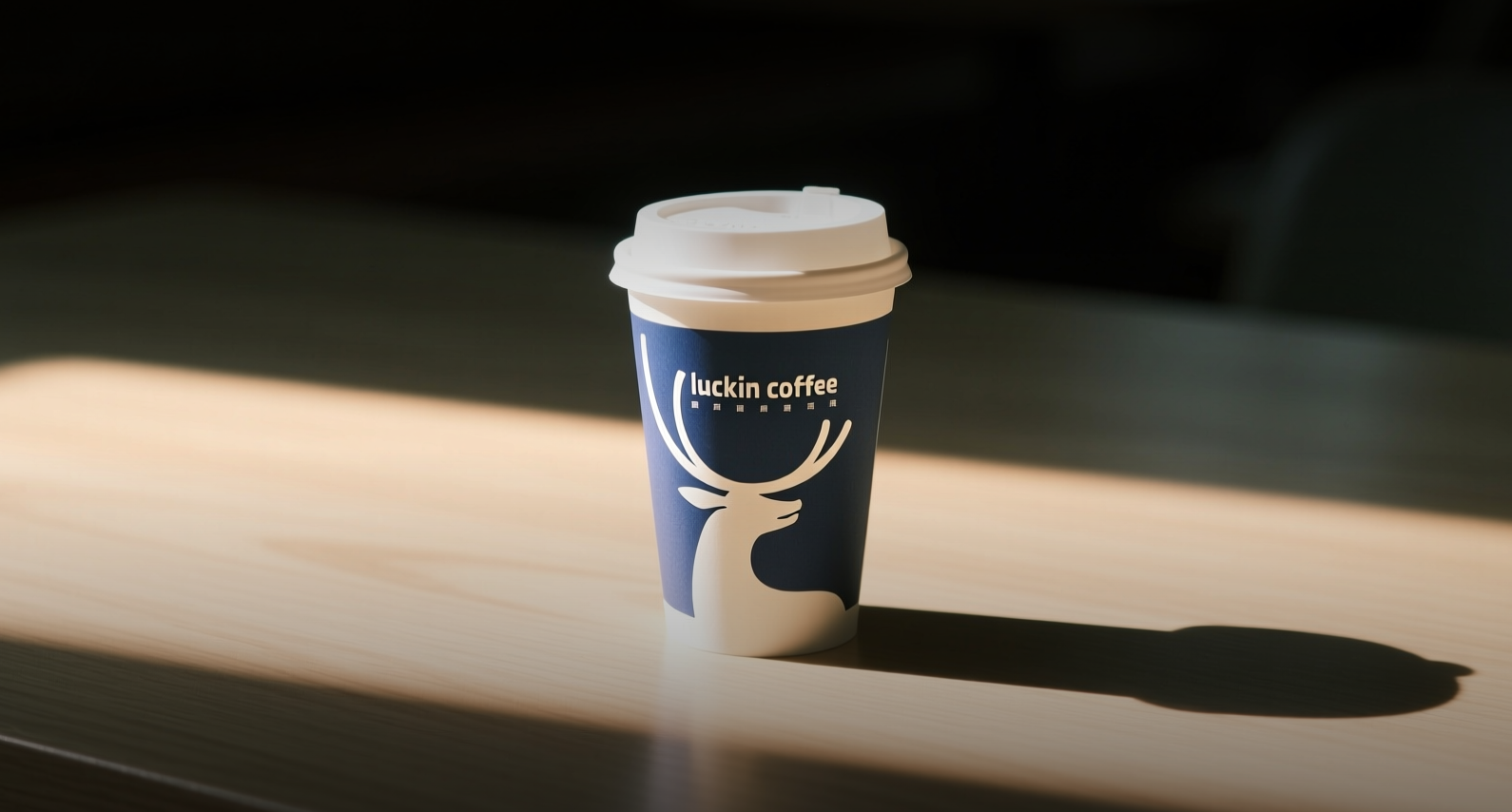
China's largest coffee chain has brought its digital-first, value-driven model to New York, adding a new competitive front for Starbucks in its home market.
Luckin Coffee opened its first New York locations, bringing 33,596 stores of competitive pressure to bear on Starbucks' 17,000 US outlets.
"Luckin sells speed, novelty, and value, all in a cashless transaction," Food & Wine reported, contrasting the Chinese chain's approach with Starbucks' premium positioning.
Starbucks already faces 24,000 US locations from McDonald's and Dunkin' Donuts combined. The Seattle-based chain's stock has fallen 16 percent over five years while the S&P 500 gained 69 percent, making the arrival of a well-funded Chinese rival particularly untimely.
Luckin's expansion into New York — after entering Hong Kong, Singapore, and Malaysia — marks its ambition to replicate its domestic success abroad. The chain's 132 percent stock return over five years and P/E of 18.7x, below the hospitality industry average of 24.1x, suggest investors see room for further growth even as execution risks mount.
The Store Count Battle
Luckin's US entry comes as Starbucks works through a turnaround under Chief Executive Officer Brian Niccol. The Chinese chain's model — mobile-only ordering, lower prices, and rapid store openings — directly targets the convenience segment where Starbucks has lost ground to McDonald's and Dunkin'.
McDonald's operates about 14,000 US locations and has aggressively expanded its breakfast menu. Dunkin' Donuts adds 10,000 more. Smaller chains including Tim Hortons and Caribou Coffee contribute over 1,000 additional stores, and tens of thousands of independent coffee shops round out the field.
Starbucks staged a rally after its most recent earnings report, but the stock still trails the broader market. Over the past year, SBUX gained 13 percent versus the S&P 500's 18 percent advance. The five-year gap is wider: Starbucks down 16 percent, the S&P up 69 percent.
Luckin's valuation suggests the market sees potential despite the risks. The stock trades at about $30.60, with a P/E of 18.7x that screens as undervalued against a fair-value estimate of 31.0x, according to Simply Wall St's model. The company's ability to convert store-level growth into consistent cash generation will determine whether that discount narrows or widens.
This article is for informational purposes only and does not constitute investment advice.