

DoorDash received Federal Aviation Administration approval to operate commercial drone deliveries, becoming the eighth US company to earn Part 135 air carrier certification.
DoorDash received Federal Aviation Administration approval to operate commercial drone deliveries, becoming the eighth US company to earn Part 135 air carrier certification.
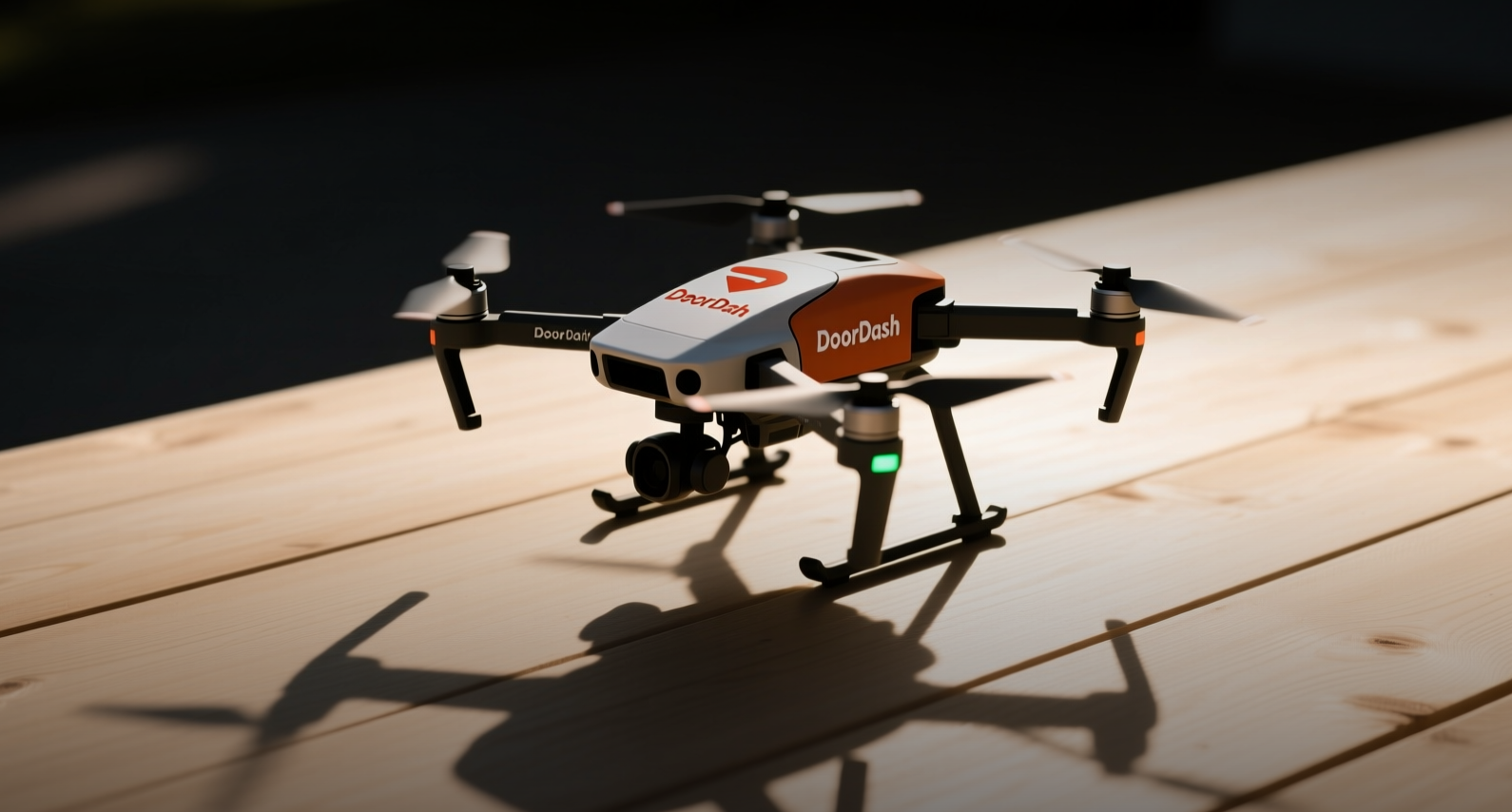
DoorDash's in-house drone unit, DoorDash Air, received Federal Aviation Administration certification to operate commercial deliveries, giving the food-delivery giant direct control over a delivery method that could cut mid-range trip times by roughly 25 percent.
"We want drone delivery to work for any merchant, anywhere," Harrison Shih, head of DoorDash Air, said. "We're building the full stack to make that possible from the ground infrastructure to the drone itself, and the handoff systems that make it work together seamlessly."
The Part 135 certification, granted after a five-stage evaluation of aircraft airworthiness, maintenance programs and safety procedures, allows DoorDash to operate as an air carrier. The company designed and built the drone in the US, with most components sourced domestically. DoorDash cited internal data showing drone deliveries under five miles averaged less than 25 minutes, and participating merchants saw order volume grow roughly 30 percent, sustained over nine weeks after pilot launches. The company will maintain existing partnerships with Wing and Flytrex while building its own fleet.
DoorDash said roughly 20 percent of its orders involve trips of three to five miles, which take about 25 percent longer to fulfill than shorter deliveries because fewer drivers accept mid-range routes. By shifting those orders to drones, the company aims to let human Dashers focus on shorter, higher-earning trips. DoorDash posted record membership signups and a new high for monthly active users in the first quarter, though revenue fell short of analyst forecasts.
Mid-Range Routes Are the Target
The certification places DoorDash among a small group of US operators that includes Amazon's Prime Air, Alphabet's Wing and Zipline. However, DoorDash still needs separate Beyond Visual Line of Sight approval before its drones can fly autonomously over longer distances — a certification its three main competitors already hold. Amazon received its BVLOS waiver in 2024, while Wing and Zipline have been operating beyond-line-of-sight flights in select US markets for more than a year.
The drone delivery market remains nascent but growing. Wing, owned by Alphabet, has completed hundreds of thousands of commercial deliveries across the US, Australia and Finland since launching in 2019. Amazon's Prime Air began drone deliveries in select US cities in 2022 and has since expanded to additional markets. Zipline, which started with medical supply deliveries in Africa, entered the US food-delivery market through partnerships with companies including Walmart.
DoorDash Air is one component of a broader multi-modal delivery network that includes human couriers, the Dot sidewalk robot and third-party autonomous partners. The company's Autonomous Delivery Platform software determines in real time which method to dispatch for a given order, selecting between drone, robot or human based on distance, order size and merchant location. The Dot robot, also developed by DoorDash Labs, handles shorter curbside-to-doorstep trips, while drones target the three-to-five-mile range where human drivers are hardest to find.
The in-house drone program could reduce DoorDash's per-delivery cost on mid-range routes by replacing human labor with autonomous flight, though the company has not disclosed unit economics. DoorDash aims to begin commercial deliveries with its own drones this fall, per a company spokesperson. The company said it expects to share further updates on DoorDash Air later this year. For investors, the key question is whether drone delivery can improve take rates on the roughly 20 percent of orders that fall in the three-to-five-mile range, where per-delivery costs are highest.
This article is for informational purposes only and does not constitute investment advice.
