
Didi Global plans to invest more than $200 million in Argentina this year, intensifying a two-front battle with Uber in the region's third-largest economy.
Didi Global plans to invest more than $200 million in Argentina this year, intensifying a two-front battle with Uber in the region's third-largest economy.
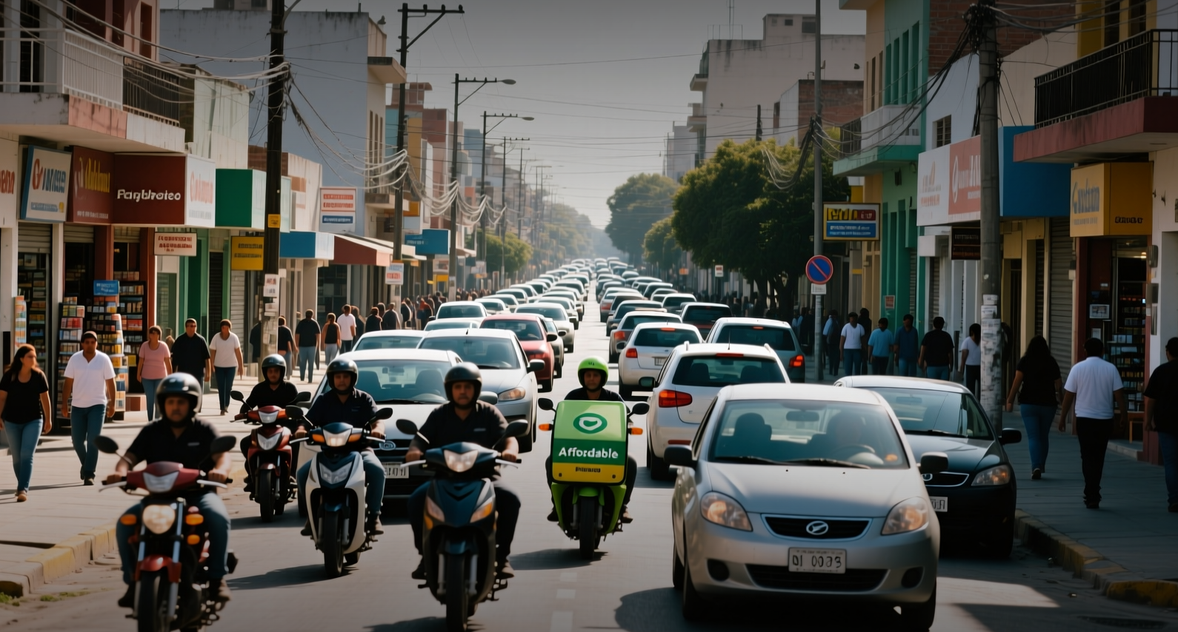
Didi Global expects to invest more than $200 million in Argentina this year to launch services in smaller cities and upgrade safety technology, its country manager said, deepening a Latin America push against Uber.
"Argentina today is one of Didi's top priorities globally," Eduardo Coello, the company's general manager in Argentina, said in an interview.
The commitment follows $160 million deployed in Argentina in 2025 and comes as Didi projects driver numbers will rise 25 percent this year to more than 500,000 across 350-plus locations. Coello said driver count should grow at least another 10 percent in 2027. Didi has completed about 130 million trips in Argentina in 2026, compared with 3 billion trips accumulated over eight years in Mexico, according to company estimates.
The capital injection escalates competition in Argentina, where Uber said in March it would invest $500 million over three years. Didi's push into smaller cities and low-cost motorcycle rides through Didi Moto targets price-sensitive riders, a segment where the Chinese company has built scale in Brazil and Mexico.
The expansion comes as Didi rebounds financially. The company reported a profit of $129 million in the second quarter, swinging from a $177 million loss in the first quarter, as it seeks to grow beyond its home market in China.
Didi introduced safety upgrades in August, improving mapping systems and AI models as part of its local investment plan. The company is extending services including Didi Moto, which offers low-cost motorcycle rides, and "last-mile" transportation that complements public transit journeys.
Uber leads Argentina's ride-hailing market, and its $500 million commitment over three years shows the U.S. company's determination to defend its position. Didi's strategy of targeting smaller cities and budget-conscious riders mirrors its approach in Brazil and Mexico, where it has built significant scale.
The investment also carries broader implications for Chinese technology companies expanding in Latin America. As Western markets tighten scrutiny of Chinese platforms, Argentina's status as the region's third-largest economy provides a test case for Didi's ability to compete against Uber outside China.
For Didi, the Argentina bet is part of a broader international push. The company has sought to extend its business beyond China in recent years, with Latin America emerging as a key battleground. The $200 million commitment represents a meaningful escalation of its regional ambitions, though it remains modest relative to Uber's $500 million pledge.
The company's financial trajectory supports the expansion. After swinging to a $129 million profit in the second quarter from a $177 million loss in the first, Didi has the balance sheet to fund aggressive international growth. The Argentina investment, combined with its existing operations in Brazil and Mexico, positions Didi to capture a larger share of Latin America's ride-hailing market, which has grown rapidly as smartphone penetration and urbanization rates rise across the region.
The competitive dynamics in Argentina mirror patterns seen elsewhere in Latin America. In Mexico, where Didi has accumulated 3 billion trips over eight years, the company has successfully challenged Uber by offering lower fares and expanding into underserved markets. In Brazil, Didi has similarly carved out a position by focusing on affordability. The Argentina playbook follows the same template: enter smaller cities first, build driver supply, then expand service offerings.
The Argentina investment also reflects Didi's confidence in the country's economic trajectory. Argentina's ride-hailing market has expanded as smartphone adoption grows and urban populations concentrate in major metropolitan areas. Didi's focus on smaller cities differentiates it from Uber, which has concentrated on Buenos Aires and other major urban centers.
The broader Latin American ride-hailing market has become a critical growth arena for both companies as saturation looms in their home markets. Uber faces regulatory pressure in Europe and parts of the United States, while Didi continues to navigate a complex regulatory environment in China. Latin America offers a relatively open market with growing demand for affordable mobility options.
This article is for informational purposes only and does not constitute investment advice.
