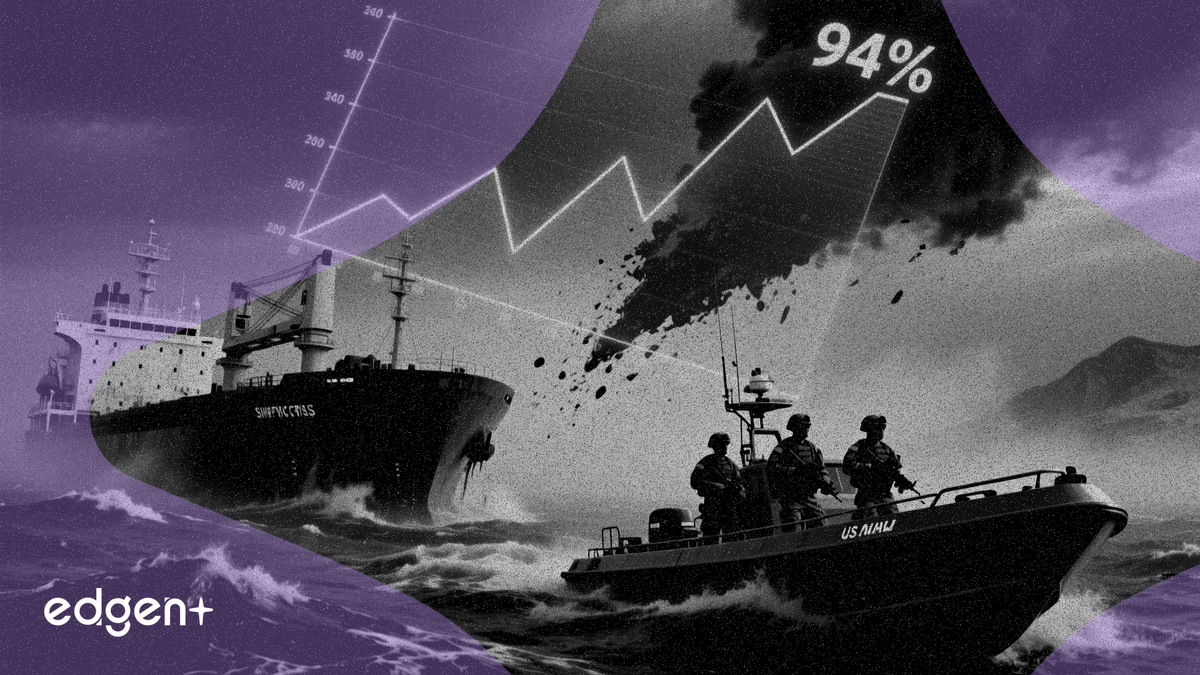
Strait of Hormuz Traffic Plummets 94% Forcing US Naval Response
Shipping traffic through the Strait of Hormuz, a conduit for 20% of the world's oil, has nearly halted following Iran's attacks on commercial vessels. According to data from Lloyd’s List Intelligence, only 77 ships transited the waterway in March, a 94% collapse from the 1,229 passages recorded in the same period last year. Most of the remaining traffic consists of a "shadow fleet" linked to Iran and Russia. The disruption has roiled energy markets, contributing to a 40% climb in global oil prices since the conflict began.
Pentagon Deploys 2,200-Strong Marine Unit for Amphibious Raids
In response to the crisis, the Pentagon has ordered the 31st Marine Expeditionary Unit (MEU) to the Middle East. The 2,200-personnel rapid-response force departed Okinawa, Japan, on March 11 aboard the USS Tripoli amphibious assault ship. This self-sustained unit is a versatile force comprising ground infantry, an aviation combat element with F-35B fighters and MV-22 Osprey aircraft, and a logistics battalion. Its deployment provides U.S. Central Command with the capability to conduct swift amphibious operations, including ship-to-shore raids.
Seizing Kharg Island Presents a High-Stakes Bargaining Chip
The arrival of the MEU gives the White House several tactical options to pressure Tehran into reopening the strait. Military analysis focuses on the potential seizure of key Iranian islands, most notably Kharg Island, which serves as Iran's primary oil export terminal. Other potential targets include Qeshm Island, which hosts naval vessels and missile sites, and Kish Island. The strategy would be to use control of the islands as leverage rather than destroying critical global energy infrastructure.
You can destroy the oil infrastructure, which would give irrevocable damage to the Iranian economy and the global economy, or you could seize it to use as a bargaining chip, which doesn’t then permanently degrade the world economy.
— Frank McKenzie, retired General and former commander of U.S. Central Command.
This approach, while preserving infrastructure, marks a significant potential escalation. Military experts suggest it could be the precursor to a "boots on the ground" operation intended to physically deny Iran the ability to threaten shipping lanes, shifting the conflict from air assaults to direct territorial control.
 Edgen Stock·Mar 19 2026, 08:51