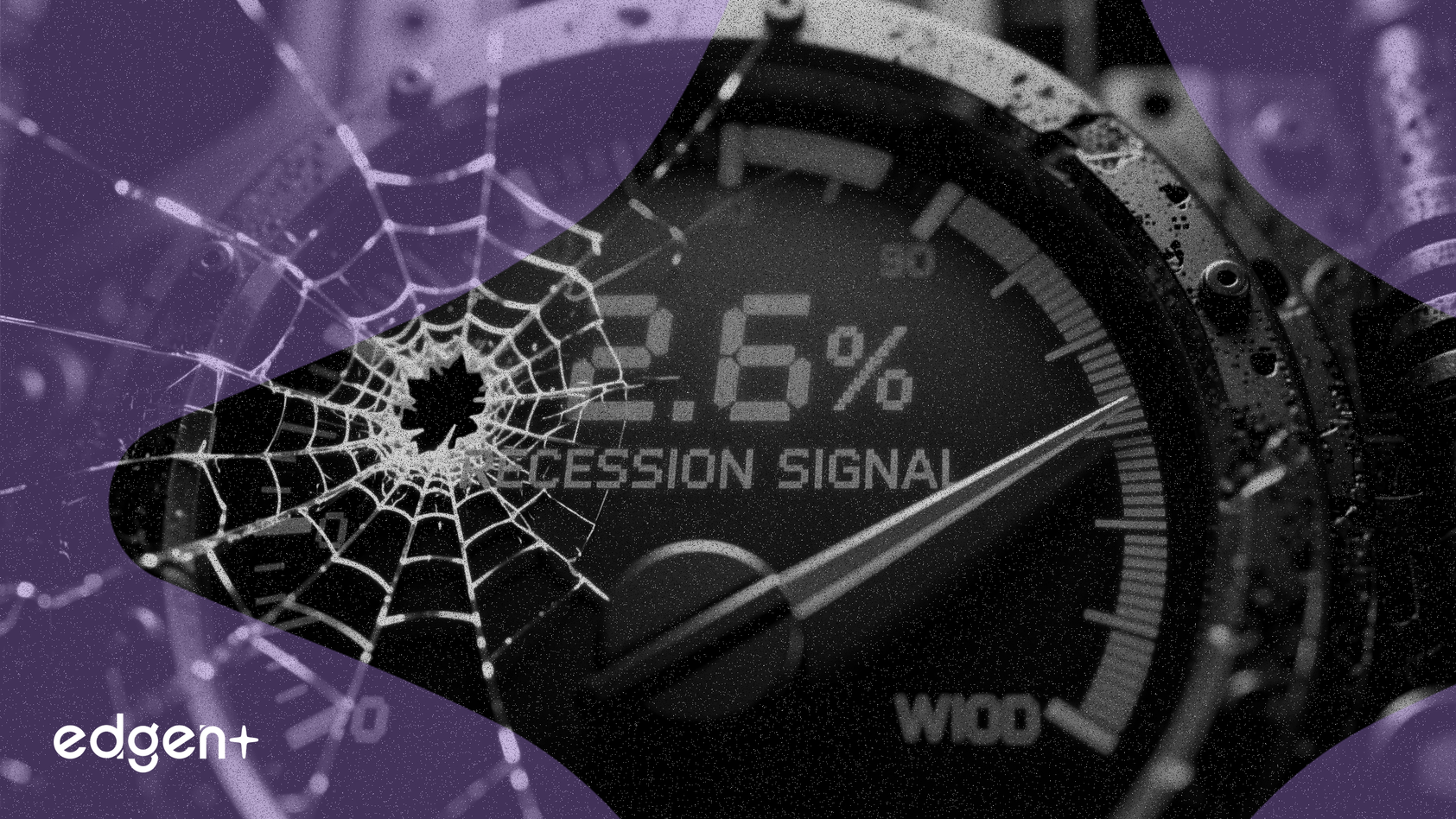
Consumer Debt Burden Rises to 2.6% as Spending Falters
A critical measure of U.S. consumer financial health showed signs of strain at the end of 2025, as non-mortgage interest payments rose to 2.6% of disposable personal income. This indicator, reported by the Bureau of Economic Analysis, is now approaching its recent peak of 2.7%, which occurred just after the Federal Reserve concluded its rate-hiking cycle in 2023. The metric tracks how much income households must allocate to interest payments, limiting their capacity for spending and saving.
The rising debt service burden coincided with a clear slowdown in consumer activity. Personal consumption expenditures growth fell to 2.4% in the fourth quarter of 2025, a significant deceleration from the 3.5% rate seen in the third quarter. At the same time, households fell further behind on payments, with the aggregate delinquency rate climbing to 4.8% from 4.5% in the prior quarter.
Key Indicator Nears 3% Recession Threshold
Historically, a sharp increase in the non-mortgage interest-to-income ratio has served as a reliable recession warning, spiking just before the economic downturns in 2000 and 2007. According to Mike Reid, head of U.S. economics at RBC Capital Markets, if the indicator reaches 3%, it would provide a strong signal that the U.S. is in a recession. While current conditions have not reached that dire level, the upward trend warrants close monitoring.
This consumer stress persists even as the Federal Reserve lowered its target federal funds rate three times over the past year. The relief has been minimal for many Americans, who remain locked into high rates on credit cards and personal loans. With average credit card interest rates holding near historic highs of approximately 24%, the cost of carrying a balance continues to weigh on household finances.
Stable Labor Market Provides A Key Buffer
Despite the concerning debt trends, a collapse in consumer spending is not considered imminent. Economists expect the U.S. consumer to remain resilient through the coming year, largely because of a stable labor market. Projections show the unemployment rate holding steady near 4.5% for most of the year, providing a crucial backstop for the economy.
As long as employment remains strong, households can continue to manage their obligations. However, the elevated share of income going toward interest payments suggests that any additional funds, such as tax refunds, will likely be used to pay down debt rather than fuel new consumption. This deleveraging could help lower the recession indicator but may also constrain broader economic growth.
 Edgen Stock·Feb 23 2026, 21:45