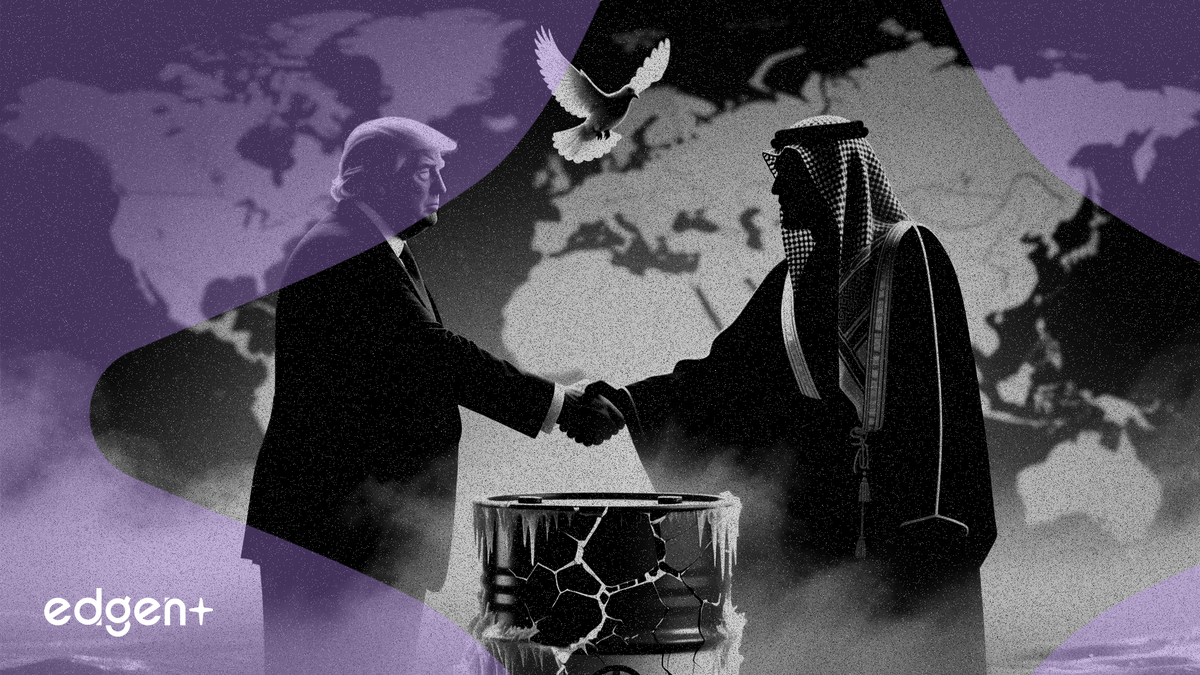
A phone call between Donald Trump and Saudi Crown Prince Mohammed bin Salman regarding a potential Iran ceasefire could signal a shift in Middle East geopolitics, carrying significant implications for global oil markets.
Former U.S. President Donald Trump held a phone call with Saudi Crown Prince Mohammed bin Salman on Wednesday to discuss potential ceasefire negotiations with Iran, an event that introduces new uncertainty into oil markets just as prices test multi-month highs.
The conversation was reported by Axios, which cited two sources familiar with the matter. The discussion adds a complex new variable for energy traders. Brent crude, the global benchmark, has risen over 15 percent since December, recently trading above $85 per barrel on the back of OPEC+ production cuts and resilient global demand.
A successful de-escalation with Iran could ease supply fears, as any agreement would likely reduce the risk of disruption to the nearly 20 million barrels of oil that pass through the Strait of Hormuz daily. The core issue for markets is whether this represents a credible step toward de-escalation.
A reduction in geopolitical risk could remove the $5 to $10 "war premium" that analysts estimate is currently priced into crude, potentially sending prices back toward the low $80s. The last significant diplomatic overture in the region, the 2015 JCPOA nuclear deal, led to a multi-month decline in oil prices as Iranian supply returned to the market.
Oil Market's Geopolitical Premium
The premium baked into oil prices reflects months of heightened tension, including attacks on shipping in the Red Sea by Houthi militants, a group supported by Iran. This has forced many tankers to reroute around Africa, increasing costs and tightening near-term supply. A potential U.S.-Iran understanding, even if brokered by a former president, could lead traders to unwind some of those long positions. Major oil producers like Exxon Mobil (XOM) and Chevron (CVX) have seen their stocks rally with rising crude; a reversal could put pressure on the entire energy sector.
A Complex Diplomatic Path
However, the path to a ceasefire is fraught with challenges. The two anonymous sources cited by Axios did not provide details on the substance of the talks or any concrete next steps. The official position of the current U.S. administration under President Biden remains a key factor, as is the reaction from other regional powers like Israel. Without a formal, state-backed agreement, any market relief could be short-lived, leaving crude prices susceptible to the next headline.
This article is for informational purposes only and does not constitute investment advice.
 Edgen Stock·Apr 01 2026, 16:50