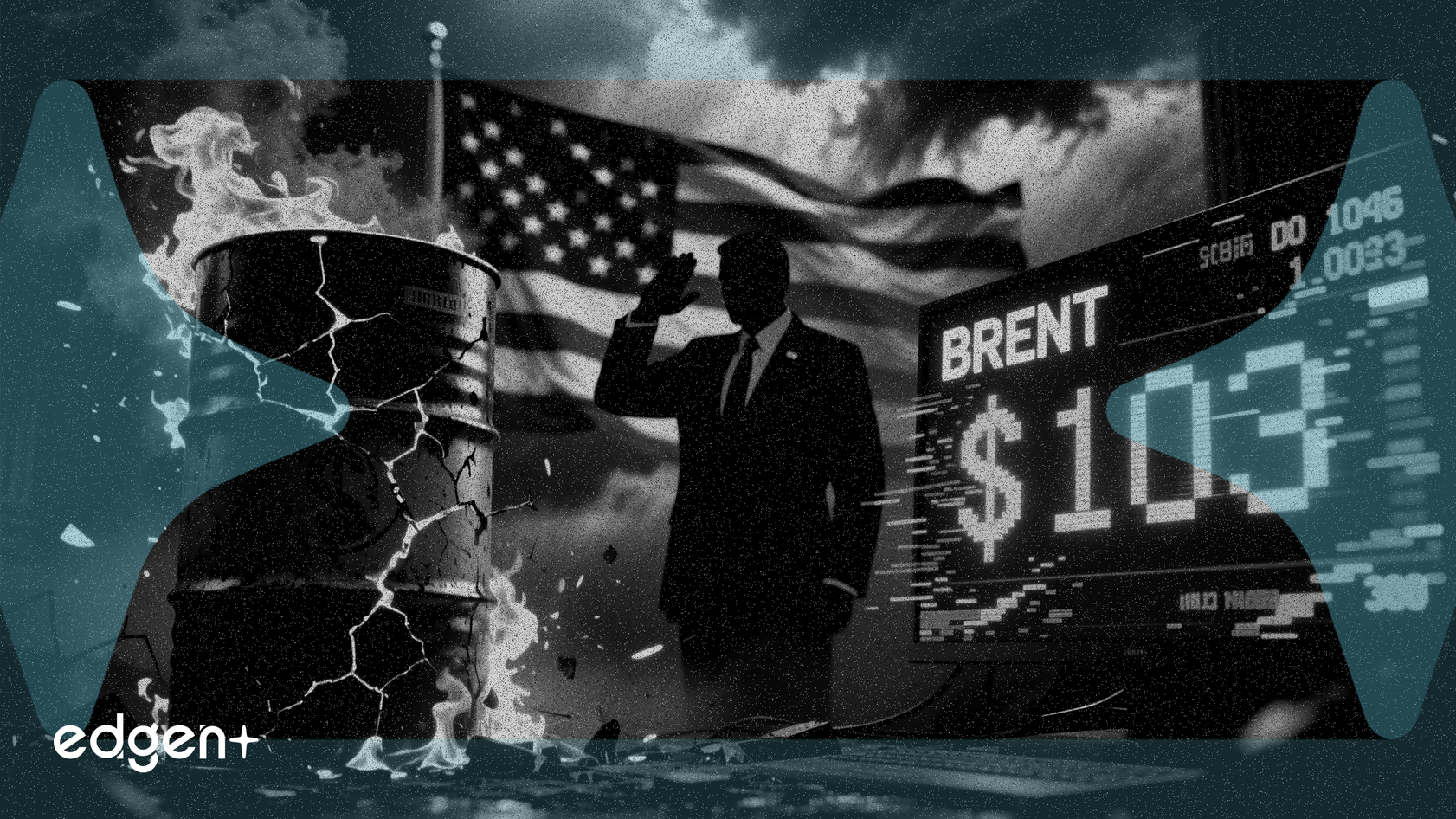
Official's Resignation Sends Brent Crude Past $103
A significant fissure appeared within the U.S. government on March 17 after National Counterterrorism Center Director Joseph Kent resigned in protest of the war with Iran, which has entered its 18th day. In a letter to the president, Kent, a former CIA officer and Green Beret, asserted he could not "in good conscience support the ongoing war," claiming "Iran posed no imminent threat to our nation." Kent's departure immediately intensified investor concerns over geopolitical stability.
The resignation compounded existing supply fears, sending energy prices higher. Brent crude, the international oil benchmark, climbed approximately 3% to trade around $103 a barrel. West Texas Intermediate crude followed, rising about 3% to nearly $95 a barrel. The price action reflects Iran's closure of the Strait of Hormuz, a chokepoint for 20% of the world's oil supply. In the U.S., average gasoline prices reached $3.81 per gallon, with prices in California exceeding $5.53.
White House Disputes Resignation as Conflict Escalates
The White House swiftly rejected Kent's assessment, exposing deep internal divisions over the war's justification. President Trump told reporters it was "a good thing that he’s out," while the White House Press Secretary labeled the resignation letter as riddled with "false claims." Further complicating the narrative, Director of National Intelligence Tulsi Gabbard, Kent's former superior, stated that the president had concluded from intelligence briefings that Iran did pose an imminent threat. This public disagreement among senior officials undermines the administration's official war rationale.
The dispute comes as the conflict intensifies. Israeli airstrikes reportedly killed Ali Larijani, Iran's top intelligence official. The war has already resulted in 13 U.S. military fatalities and over 200 wounded, with thousands of additional troops en route to the region. The escalation alongside internal dissent signals a period of heightened and unpredictable risk for markets.
Energy Inflation Surge Complicates Fed's March 18 Decision
The sustained increase in oil prices presents a significant challenge for the Federal Reserve, which concludes its policy meeting on March 18. The central bank faces a difficult dilemma: combat rising inflation driven by energy costs, which typically calls for higher interest rates, or cut rates to support an economy potentially weakened by the conflict's uncertainty. This dynamic constrains the Fed's ability to maneuver and adds a layer of policy risk for investors.
To counter spiking prices, the administration is reportedly considering easing oil sanctions on Venezuela, though analysts believe it would take months for any significant new supply to reach the market. Reflecting growing concern, financial analysis firm Strategas recently increased its odds of a U.S. recession to 25%. While market participants still forecast at least one rate cut by the end of the year, the war's inflationary impact makes the Federal Reserve's path forward increasingly uncertain.
 Edgen Stock·Mar 18 2026, 00:10