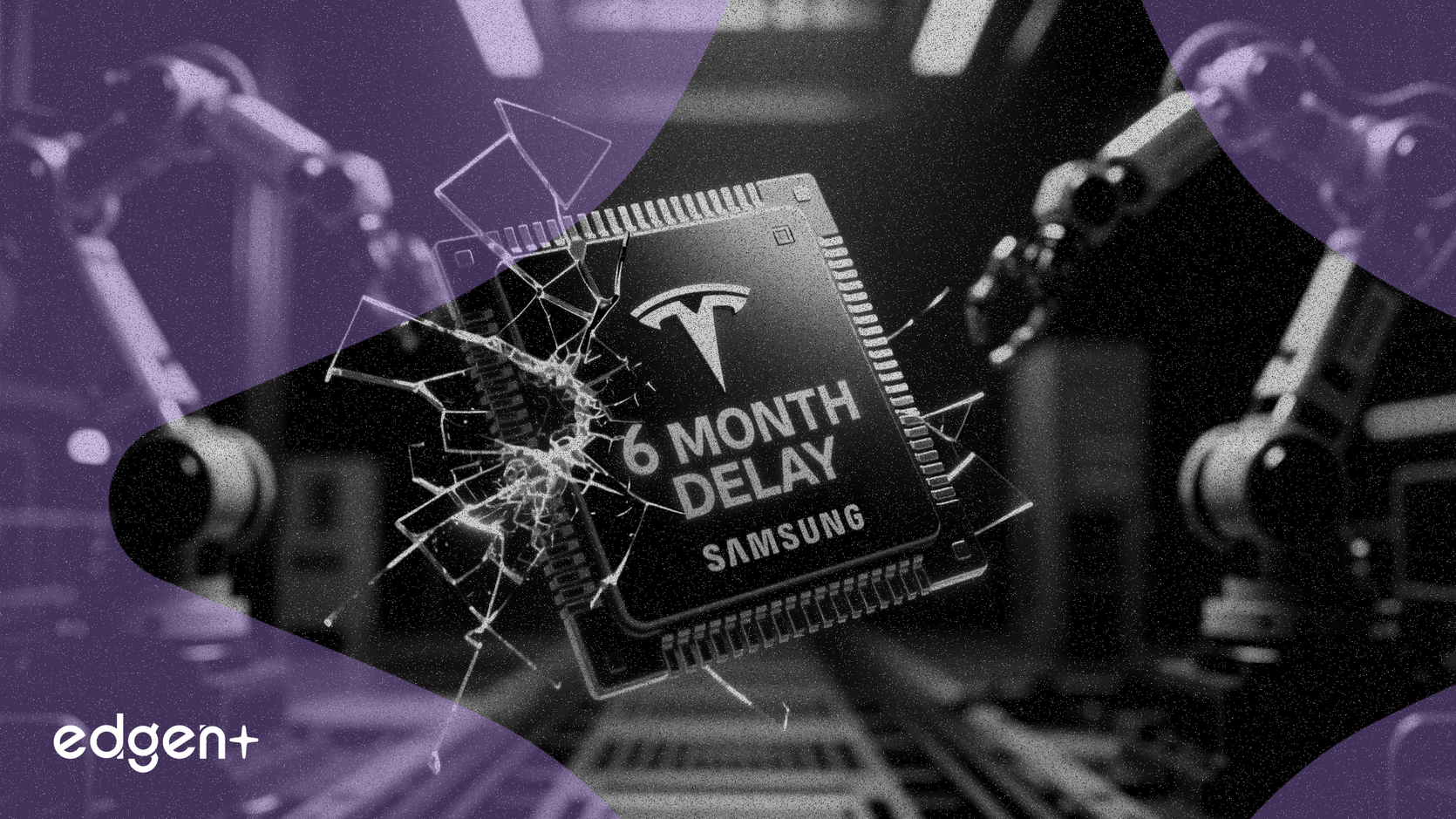
Samsung's 2nm Process Delay Pushes AI6 Chip Production to Late 2027
A six-month postponement in Samsung's 2-nanometer (2nm) manufacturing process has delayed the mass production of Tesla's next-generation AI6 chip to late 2027. The setback stems from a slip in the multi-project wafer (MPW) prototype run, originally scheduled for April, which now impacts all customers on the advanced node. This production snag directly affects the $16.5 billion contract Tesla signed with Samsung to produce the chips at its new fabrication facility in Taylor, Texas.
The delay is not isolated to Tesla. Other Samsung foundry clients, such as South Korean AI startup DeepX, are also facing revised timelines for their own processors. For Tesla, the AI6 chip is central to its future plans for autonomous vehicles, Optimus robots, and AI data centers, making any manufacturing disruption a material constraint on its long-term strategy.
Production Snag Threatens Samsung Foundry's Profitability Goals
The delay deals a significant blow to Samsung's foundry division, which has been counting on the Tesla AI6 contract as a cornerstone of its 2026 profitability targets. Samsung Foundry had aimed for 2 trillion won in profit, driven heavily by revenue from the Tesla deal and high-bandwidth memory production. The inability to hit the original 2nm production schedule puts this financial goal at risk and highlights the persistent challenges Samsung faces in competing with market leader TSMC in advanced process nodes.
Despite the immediate hurdle, Samsung's long-term ambitions in Texas remain robust. The company is already proceeding with plans for a second factory, "Fab 2," at the Taylor site, signaling strong underlying demand from major tech firms seeking to diversify their supply chains away from a capacity-strained TSMC. The entire Taylor campus, large enough for ten fabs, is intended to focus on producing 2-nanometer chips for high-performance computing and automotive applications.
Ripple Effect Constrains Tesla's Aggressive AI Timelines
This latest delay for the AI6 chip compounds an existing pattern of timeline slippage for Tesla's semiconductor roadmap. The company previously pushed volume production of its AI5 chip to mid-2027, a decision that will force its planned Cybercab to launch on older, current-generation AI4 hardware. The recurring postponements cast significant doubt on CEO Elon Musk’s aggressive public projections of nine-month design cycles for successive chip generations.
The gap between Tesla's ambitious hardware goals and the realities of semiconductor manufacturing is becoming increasingly apparent. While Samsung's 2nm process represents a genuinely difficult engineering challenge, the repeated delays mean Tesla's current AI4 hardware must carry the load for its autonomous systems longer than planned. This creates a tangible constraint on the company's ability to deliver the next-generation performance promised to investors and customers.
 Edgen Stock·Mar 18 2026, 03:27