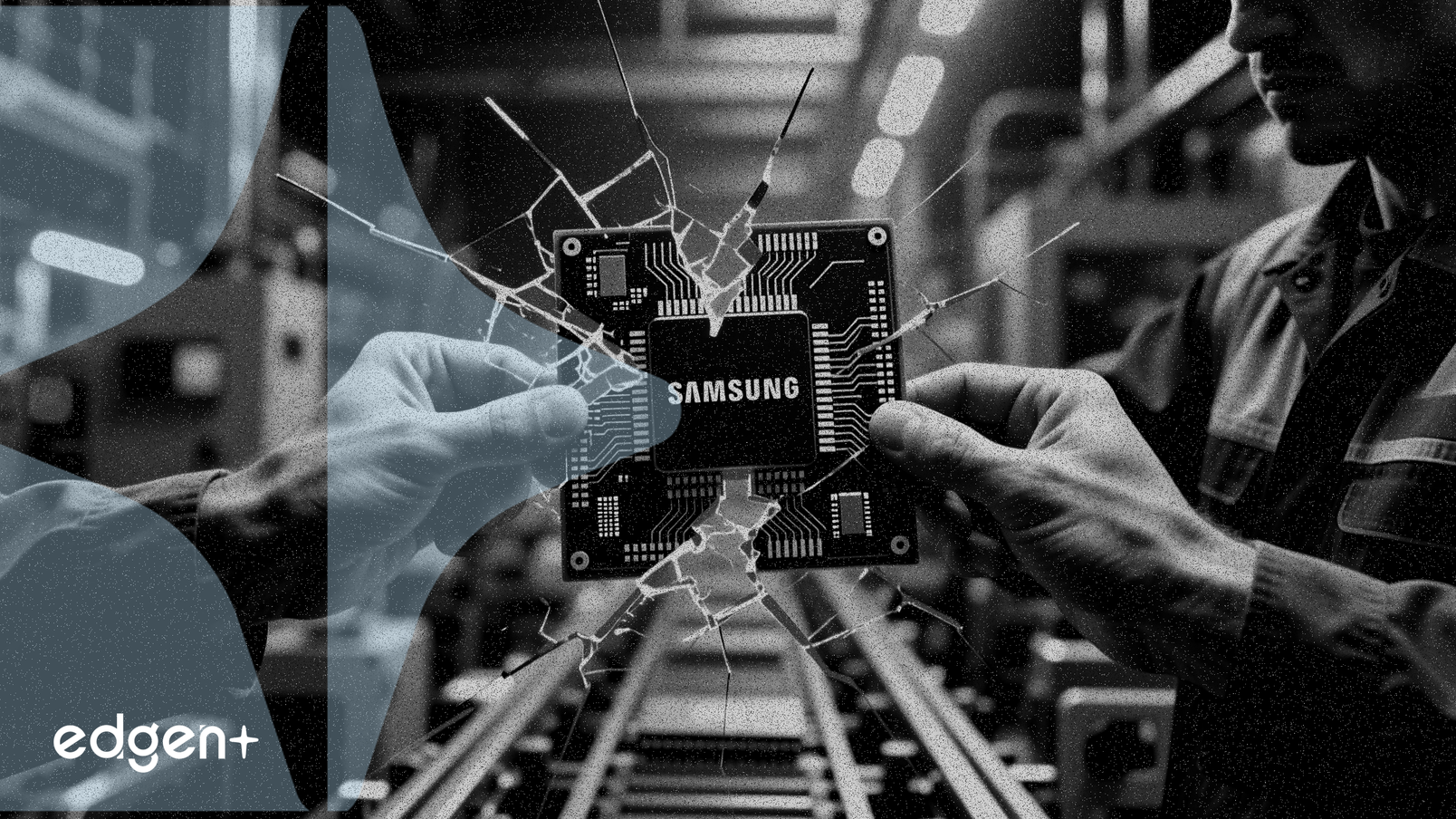
Strike Threatens to Disrupt 50% of Pyeongtaek Chip Output
Samsung Electronics, the world's largest memory chip maker, faces a significant production threat as its largest union votes on an 18-day strike scheduled to begin May 21. The Samsung Electronics Labor Union (SELU), with 90,000 eligible voters among the company's 125,000 domestic employees, is conducting the vote. If the strike proceeds, it could affect approximately half of the production at Samsung's primary semiconductor campus in Pyeongtaek, creating new instability in a global chip supply chain already strained by high demand from AI data centers.
A company official warned that any production halt could damage customer trust for years, a critical risk as competitors stand ready to absorb market share. The action follows Samsung's first-ever strike in 2024, highlighting the company's relative inexperience in managing large-scale labor disputes after its chairman renounced its "no-union" policy in 2020.
Pay Dispute Centers on 7% Union Demand
The core of the labor conflict is a widening gap in compensation between Samsung and its rivals. The union is demanding a 7% increase in base wages and the removal of a cap limiting performance pay to 50% of annual salary. SELU also seeks a new bonus system tied directly to operating profit, mirroring a structure recently adopted by competitor SK Hynix.
In contrast, Samsung management has offered a 6.2% overall salary increase and a special bonus for its memory chip division. The union argues this is insufficient, citing internal calculations showing a Samsung employee could earn less than one-third the bonus of a counterpart at SK Hynix. This disparity has already triggered talent flight, with the union reporting that over 100 of its members have departed for competitors in the last three months.
Labor Unrest Compounds Rising Cost Pressures
The potential strike amplifies existing financial strains within the conglomerate. While Samsung's semiconductor (DS) division expects record profits fueled by the AI boom, its Device eXperience (DX) division, which handles smartphones and appliances, is implementing cost-cutting measures. The DX division's raw material purchasing costs rose by 7 trillion won last year, forcing austerity measures such as mandating economy-class flights for executives on trips under 10 hours.
This internal divergence—a highly profitable chip division facing a strike while other units tighten their belts—exposes a critical management challenge. Analysts are already lowering profit forecasts for the DX division, anticipating that rising memory prices and logistics costs will continue to squeeze margins. As one academic noted, if management fails to address union demands effectively, the dispute could "pour cold water" on Samsung's otherwise strong earnings momentum.
 Edgen Stock·Mar 17 2026, 08:30