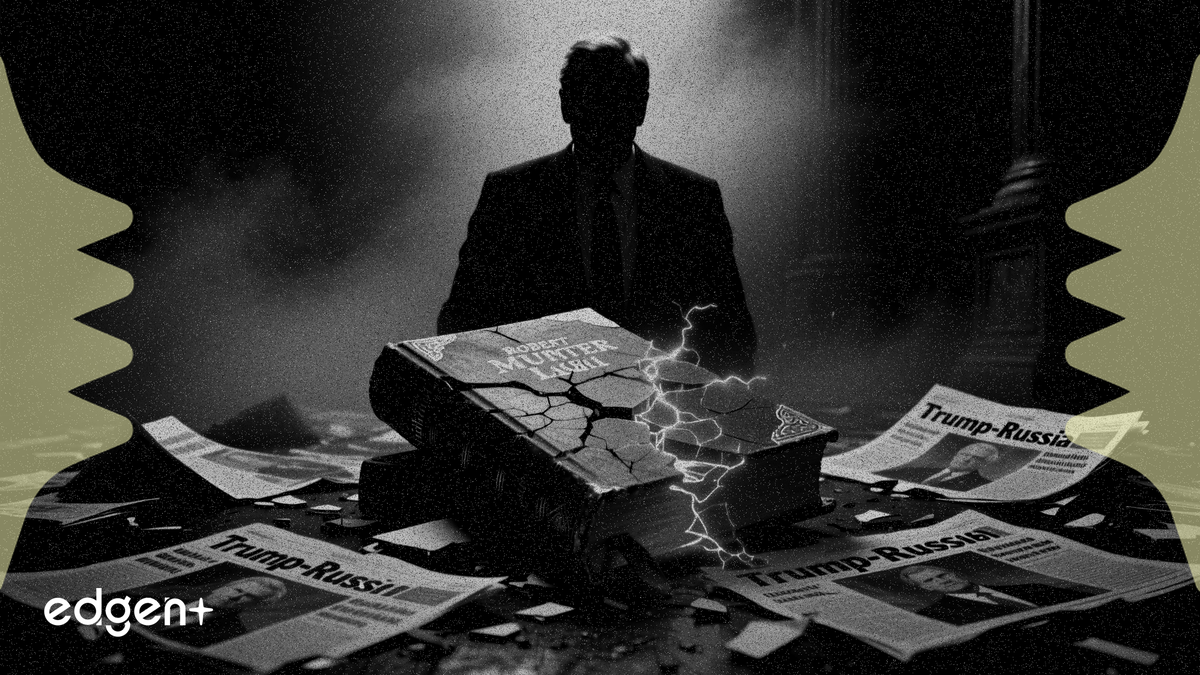
Mueller Dies at 81, Leaving a Contested Legacy
Robert S. Mueller III, the former FBI director whose career in public service was ultimately defined by his role as special counsel investigating Russian interference in the 2016 election, died on Friday, March 20, 2026. His family confirmed he passed away at age 81 after a battle with Parkinson's disease. Mueller's long career included serving as a decorated Marine in Vietnam and leading the FBI with discipline in the wake of the 9/11 attacks.
However, his legacy is inextricably linked to the 2017-2019 special counsel probe. The investigation found that Russia interfered in the election in a "sweeping and systematic fashion" but stated it "did not establish that members of the Trump Campaign conspired or coordinated with the Russian government." The report's ambiguous conclusion on obstruction of justice—stating that it “does not conclude that the President committed a crime, it also does not exonerate him”—fueled years of political debate and cemented his final chapter as his most contentious.
2019 Report's Impact Muted by Political Maneuvering
When Mueller submitted his final report in March 2019, its public reception was immediately shaped by then-Attorney General William Barr. Barr released a four-page summary that presented the findings in a light favorable to President Trump, who declared it a "Total EXONERATION." This initial framing dominated the news cycle, effectively neutralizing the report's more damaging details before the full, redacted document was released.
Critics argue that Mueller was politically outplayed. Commentator Rachel Maddow asserted that Mueller was "wildly outmaneuvered" and his findings were ultimately "submarined" by Barr's strategic handling of the report's release. This view holds that a failure of political strategy, not investigative rigor, allowed the White House to control the narrative and blunt the report's impact on public opinion and the political landscape.
Questions Over Health Cloud Final Investigation
Adding another layer to the investigation's legacy are questions about Mueller's health during the probe. His family later disclosed his multi-year struggle with Parkinson's disease, and former Attorney General Barr noted he was shocked by Mueller's "diminished capacity" in a March 2019 meeting. This has fueled speculation about how much control a declining Mueller had over his team of prosecutors.
This context has been used by critics to question the entire foundation of the probe, with The Wall Street Journal's editorial board calling his decision to lead it a "tragedy" that marred his long record of service. The deep acrimony surrounding the investigation persists, highlighted by former President Trump's reaction to his death: "Good, I’m glad he’s dead." This starkly illustrates the polarization that Mueller's final public act both navigated and intensified.
 Edgen Stock·Mar 23 2026, 04:23