
The U.S. Army is betting $2.2 billion that portable nuclear microreactors can keep military bases running off-grid by 2028.
The U.S. Army is betting $2.2 billion that portable nuclear microreactors can keep military bases running off-grid by 2028.
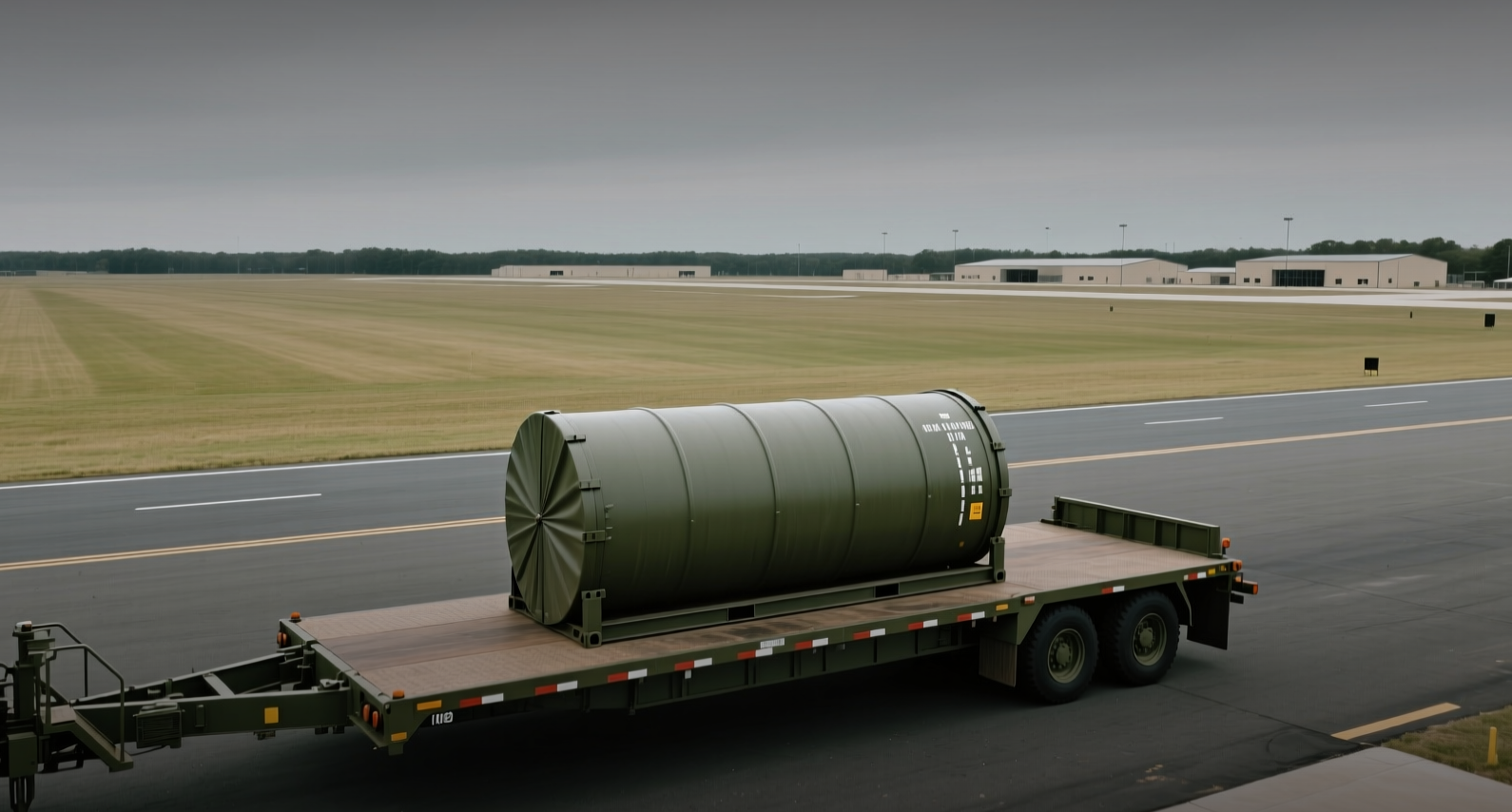
Radiant Industries secured a binding agreement worth up to $750 million to deploy 15 of its 1-MWe Kaleidos portable microreactors across U.S. Army installations, the largest award under the Pentagon's $2.2 billion Janus Program. The California-based startup was one of five companies selected to build, own, and operate commercial microreactors at domestic bases, with at least one unit targeted for operation by Sept. 30, 2028.
"The U.S. Army is a savvy customer. They have the world's top nuclear experts and know what to look for in a partner," Tori Shivanandan, president and chief operating officer at Radiant, said.
Radiant's first three-unit deployment is slated for Fort Benning, Georgia, with additional units going to other military installations. Each Kaleidos unit is factory-built and arrives as a sealed, fueled package transportable by land, sea, or air. The reactor requires no cooling water, operates up to five years between refuelings, and carries a 20-year design life. Radiant will handle fueling, refueling, and spent-fuel storage at its own 300,000-square-foot R-50 campus in Oak Ridge, Tennessee, allowing installations to return to greenfield condition within two years of reactor removal.
The contract is one of the largest ever issued by the Defense Innovation Unit and follows Radiant's exclusive one-year access to the Idaho National Laboratory's DOME test facility, where the Kaleidos design is being prepared for full-power testing. The company also holds a parallel award under the Air Force's Advanced Nuclear Power for Installations initiative to deploy a unit at Buckley Space Force Base in Colorado.
The Army's Janus Program, initiated by executive order in 2025, will distribute up to $2.2 billion through fiscal year 2031 across five vendors using a milestone-based payment model — companies receive government funding only after hitting specific technical goals. The other selectees include BWXT Advanced Technologies at Fort Campbell, Kentucky, with its 20-MWe BANR reactor; General Atomics Electromagnetic Systems at Fort Hood, Texas, with the roughly 5-MWe GA-TES; Antares Nuclear at Fort Bragg, North Carolina, with its R1 heat-pipe reactor; and Westinghouse Government Services at Fort Drum, New York, with the eVinci microreactor.
The competitive field spans a wide range of technical approaches. BWXT is the only vendor that self-supplies its TRISO fuel from its NRC-licensed Lynchburg, Virginia, facility, and it has authorized more than $25 million to double output there. General Atomics' GA-TES uses uranium-zirconium hydride fuel drawn from its TRIGA research reactor heritage, the only Janus design not using TRISO particle fuel. Antares, which achieved criticality with its Mark-0 test reactor at INL in June, has a combined federal contract book approaching $1 billion across the Army, Air Force, and Space Force programs.
Radiant's fuel pathway separates enriched uranium supply from reactor-ready fuel fabrication. DOE-allocated HALEU (uranium enriched to 19.75 percent, versus 3 to 5 percent for conventional reactors) will support Kaleidos deployments, and Standard Nuclear will fabricate that material into TRISO particle fuel under a binding multi-metric-ton agreement extending through 2031.
The Army projects more than 20 total nuclear microreactors across Pentagon installations when private capital is included, with the government expecting the majority of funding to come from the private sector. For Radiant, the Janus award feeds directly into the same product it is building for commercial customers, including a signed agreement with Equinix for 20 Kaleidos units to power data centers.
"Operating on military installations first gives us the reliability track record to unlock commercial deployments, and the resulting, much larger commercial volume drives down costs, letting the government buy at scale for less," Mike Starrett, chief commercial officer at Radiant, said.
The Army does not expect all five vendors to deliver reactors by 2028. "We have a very practical pathway to delivering at least one of these reactors on or by September 30, 2028," Dr. Jeff Waksman, principal deputy assistant secretary of the Army for Installations, Energy and Environment, said. "If a company is not performing, we can pull future milestones."
The broader advanced nuclear sector is drawing parallel interest from big tech. Data center operators facing multi-year grid interconnection queues are evaluating microreactors as a behind-the-meter power source, and Radiant's Equinix agreement points to commercial demand beyond defense. BWXT is also pursuing a Wyoming commercial TRISO facility and has a letter of intent from Tata Chemicals Soda Ash for up to eight BANR units. For investors, the Janus awards give advanced nuclear startups a government-backed revenue path that reduces technology risk, potentially accelerating the sector's move from pilot projects to commercial order books.
This article is for informational purposes only and does not constitute investment advice.
