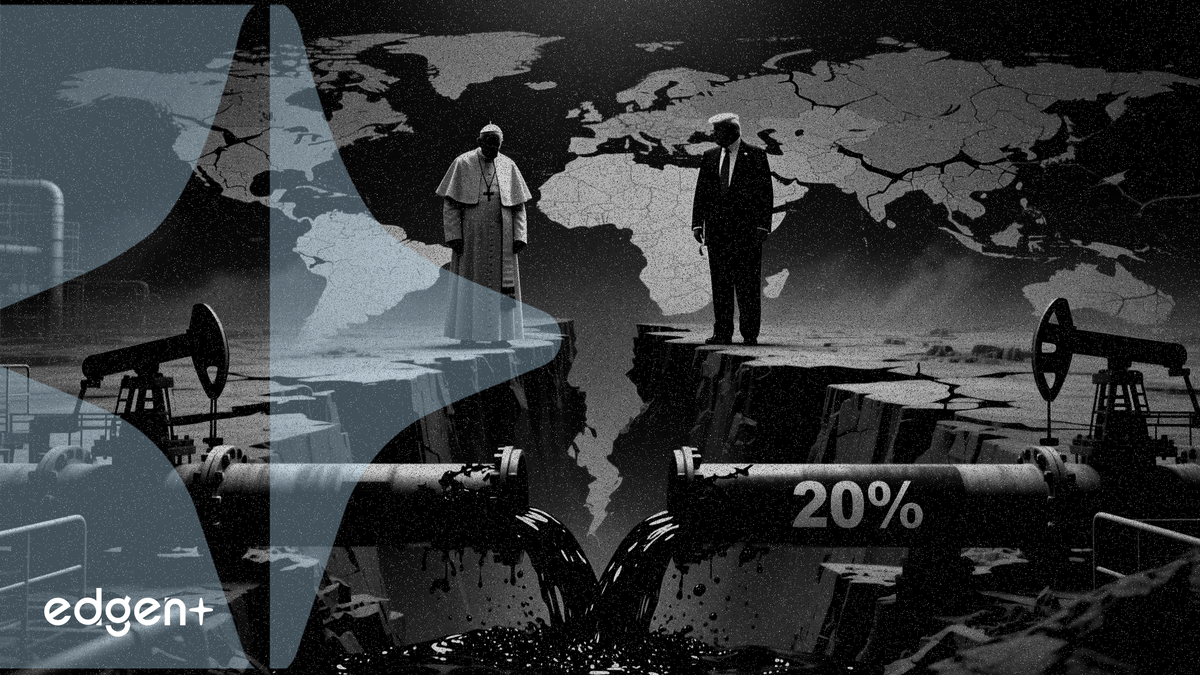
Pope Challenges Trump's Aggressive Foreign Policy
The conflict between the world’s two most prominent American leaders intensified as Pope Leo XIV, the Chicago-born pontiff, escalated his public opposition to President Trump's foreign policy. In a January address, the Pope stated, "War is back in vogue," directly rebuking the Trump administration's military intervention in Venezuela, its oil blockade of Cuba, and the escalating war with Iran. The Pope frames his opposition as a moral defense of international law, which he calls "the foundation of all peaceful civil coexistence."
The ideological divide became clear after the Pope's March 15 call for a ceasefire in Iran. President Trump explicitly rejected the appeal, stating, "You don’t do a ceasefire when you’re literally obliterating the other side." This schism extends to domestic policy, where the administration's crackdown on immigration has alienated Catholic constituencies and prompted U.S. bishops to file an amicus brief in February to halt an order ending birthright citizenship.
Iran War Sparks Energy Crisis, Halting 20% of Global Oil
U.S. overconfidence following a swift military intervention in Venezuela in January 2026 led to a severe miscalculation of Iran's response to subsequent conflict. Following joint U.S.-Israeli strikes that began on February 28, Iran retaliated by effectively closing the Strait of Hormuz, a critical chokepoint for approximately 20% of the world's daily oil supply. Rather than using a conventional naval blockade, Iran deployed cheap drones to create a high-risk environment for shipping.
The strategy proved devastatingly effective. Insurers declared the transit unsafe, and tanker traffic through the strait dropped to zero. Analysts are now calling it the biggest energy crisis since the 1970s oil embargo. Despite Director of National Intelligence Tulsi Gabbard's March 18 testimony that Iran's military is "largely degraded," the regime has demonstrated its continued ability to disrupt global markets and attack allied interests.
Iran's Asymmetric Strategy Leverages Economic Pain
Iran's wartime strategy does not require a conventional military victory; instead, it aims to make the conflict economically unbearable for the United States and its allies. By prolonging the disruption to global energy markets, Tehran seeks to force a new regional settlement. This approach of asymmetric warfare, using low-cost technology to inflict high-cost damage, appears to draw lessons from Ukraine's defense against Russia.
Iran's surviving leadership has laid out maximalist demands for peace, including a "new protocol" for the Strait of Hormuz that considers Iran's interests and potential war reparations. To fracture the U.S.-led coalition, Iran has selectively allowed passage for vessels from neutral countries like India and Turkey while punishing American allies. This economic coercion is designed to ensure the regime's survival by tying its stability to that of the entire global economy.
 Edgen Stock·Mar 23 2026, 04:26