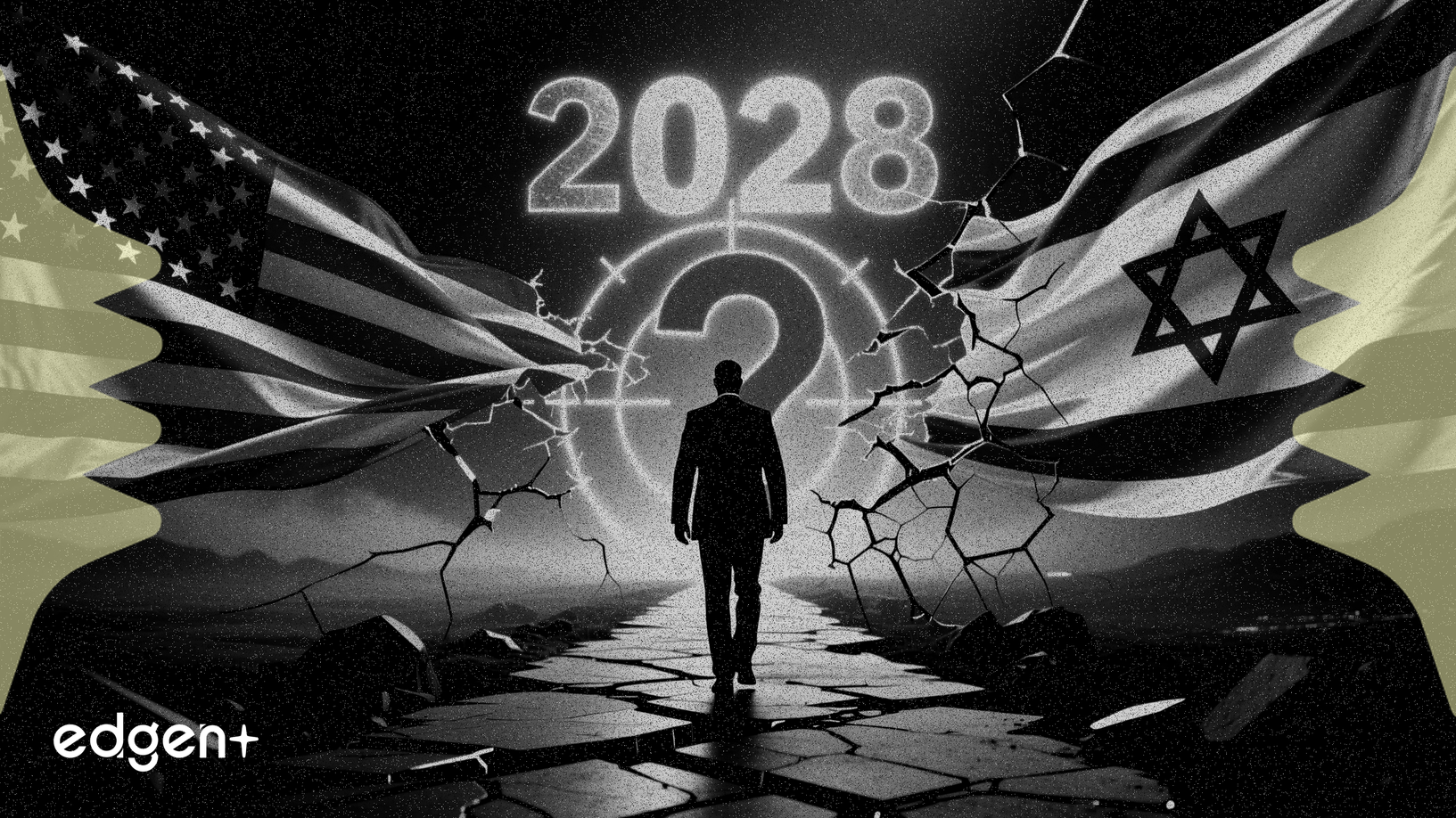
Newsom Questions US Aid as Public Support for Iran War Sits at 40%
California Governor Gavin Newsom is leveraging the ongoing US-Iran conflict to carve out a distinct foreign policy stance, openly questioning the future of American military aid to Israel. During a recent book tour for his memoir, "Young Man in a Hurry," Newsom stated that the actions of Israel's current leadership are walking the U.S. down a path where reconsidering military support is a necessary "consideration." He amplified his critique by referencing commentary about Israel becoming "sort of an apartheid state."
These remarks, which prompted a critical letter in the March 13, 2026, Wall Street Journal, land in a complex political environment. The U.S. and Israel are jointly engaged in a war with Iran that began on February 28, yet public sentiment is deeply divided. While 73% of Israelis support the military action, a mere 40% of Americans approve, a historically low figure for a major conflict. This divergence provides a backdrop for Newsom's calculated statements as he eyes a potential 2028 presidential run.
A Calculated Pivot Toward a Shifting Democratic Base
Newsom's strategic positioning reflects a significant shift within the Democratic party's base, which has become more critical of the Israeli government. According to polling, 77% of Democrats believe Israel has committed "genocide" in Gaza, and Newsom's commentary appears tailored to this evolving viewpoint. Tariq Habash, a former Biden administration official, noted that Newsom is "doing what he needs to do" to align with a base that recognizes the need to shift U.S. policy toward Israel and Palestine.
The governor's team has sought to manage the fallout by framing the critique as targeting Prime Minister Benjamin Netanyahu's leadership, not Israel itself. A spokesperson for Newsom highlighted the governor's nuanced position, stating he is separating the nation of Israel from its current government's policies. Despite this, the comments prompted outrage from some Democrats, with one member of Congress questioning if it was "really worth throwing Jews under the bus to advance your political ambitions?" For investors, this infighting signals potential instability in the long-standing bipartisan consensus on U.S. foreign policy in the Middle East.
 Edgen Stock·Mar 13 2026, 07:49