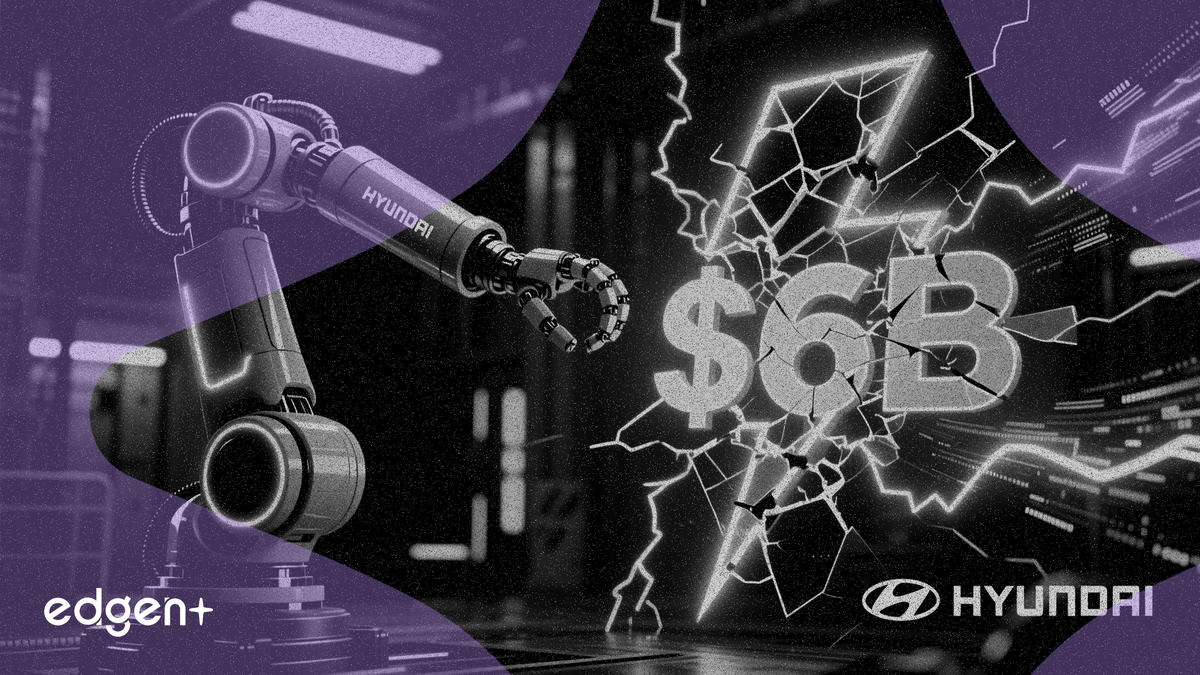
Hyundai Commits $6 Billion to Challenge Robotics Leaders
South Korean automaker Hyundai Motor Group is directly entering the humanoid robotics race with a new $6 billion investment. The capital will fund a new high-tech facility in South Korea designed to build robots developed in-house, including a solar-powered hydrogen production facility and a data center to support its AI capabilities. This strategic push builds on Hyundai's 2021 acquisition of Boston Dynamics, whose bipedal Atlas droid was showcased at CES in January 2026.
Hyundai plans to begin its production launch in 2028, with a target of manufacturing 30,000 Atlas robots annually at its Metaplant in Georgia, USA. The initial deployment will focus on parts sequencing within the plant. By 2030, the company aims for the Atlas robots to handle more complex assembly work, demonstrating a clear roadmap from development to large-scale industrial application.
Tesla Retools for Optimus Production by End of 2026
In response to the shifting landscape, Tesla is accelerating its own pivot toward robotics and AI. The company is winding down production of its flagship Model S and Model X vehicles at its Fremont factory to reallocate manufacturing space for its Optimus Gen 3 humanoid robot. Initial production is scheduled to begin toward the end of 2026, with a commercial release planned for 2027.
Tesla’s Optimus leverages the same AI and computer vision systems developed for its Full Self-Driving (FSD) software, potentially accelerating its development timeline. The company is targeting a price point between $20,000 and $30,000 per unit, with initial use cases centered on repetitive tasks within its own automotive assembly lines. The robot is a central part of Elon Musk's long-term strategy, which includes a milestone of shipping 1 million Optimus units.
Automakers Vie for a Projected $5 Trillion Robotics Market
The simultaneous moves by Hyundai and Tesla redefine the competitive arena for global automakers, shifting the battleground from electric vehicles to physical AI. This new frontier is attracting significant attention, with Morgan Stanley analysts projecting the humanoid robotics market could expand to $5 trillion by 2050. Goldman Sachs offers a more near-term forecast of 250,000 units deployed globally by 2030.
For investors, this pivot requires a fundamental re-evaluation of companies once viewed purely as automakers. Tesla’s strategy hedges against potential declines in automotive demand, but it also introduces the high risks associated with being a first mover in a nascent technology. With other established manufacturers like BMW, Mercedes-Benz, and Toyota also exploring robotics, the industry is entering a transformative period where success will depend as much on AI and software integration as on traditional manufacturing prowess.
 Edgen Stock·Mar 20 2026, 08:14