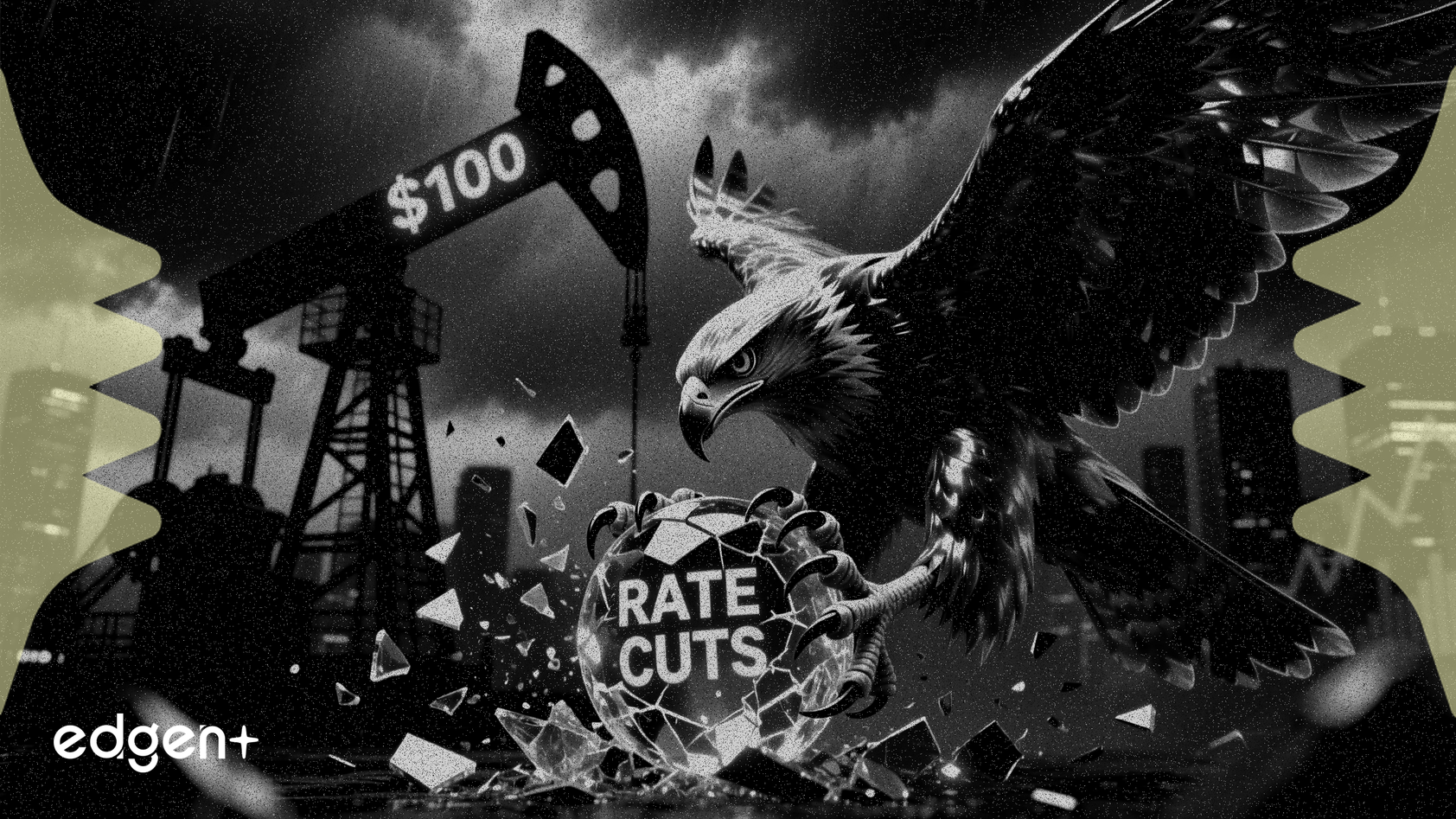
Fed Abandons Rate Cut Talk as $100 Oil Ignites Inflation Fears
The Federal Reserve's upcoming policy meeting signals a significant pivot from debating the timing of rate cuts to questioning whether any will occur in 2026. The central bank is widely expected to hold its policy rate steady in the 3.50% to 3.75% range. This strategic pause is driven by escalating geopolitical tensions in the Middle East, which have pushed crude oil prices past $100 a barrel and disrupted roughly 20% of the global oil supply via the Strait of Hormuz.
The renewed inflation risk has forced a rapid recalibration of market expectations, which had previously anticipated multiple rate cuts this year. Data from CME FedWatch now indicates a 99% probability of a rate hold at the March meeting. Futures markets suggest any potential easing has been pushed back to October or December at the earliest, a stark contrast to the three rate reductions delivered in the second half of 2025.
Dot Plot Becomes Main Event as February Jobs Data Shows -92,000 Loss
With a rate hold all but certain, investors will scrutinize the Fed's updated Summary of Economic Projections (SEP), particularly the "dot plot" which charts individual officials' rate forecasts. The release has become the meeting's main event, given the wide divergence in forecasts from major financial institutions. JPMorgan now projects no cuts in 2026, while Morgan Stanley anticipates two, highlighting profound market uncertainty.
The Fed must weigh conflicting economic signals. The U.S. labor market showed clear weakness in the February jobs report, which revealed a net loss of 92,000 jobs and an increase in the unemployment rate to 4.4%. This slowdown contrasts with persistent inflation, which ran at a 2.4% annual pace in February before the full impact of the recent energy price spike was felt. Citing these pressures, Goldman Sachs has already revised its year-end PCE inflation forecast upward to 2.9%.
Treasury Yields Climb Toward 4.7% as Markets Price In 'Higher for Longer'
The bond market is already reacting to the potential for a more hawkish Fed. The U.S. 2-year Treasury yield, which is highly sensitive to short-term rate expectations, has climbed toward 4.7%, signaling that investors are pricing in a "higher for longer" interest rate regime. This indicates that tighter financial conditions are expected to persist well into the third quarter.
This environment presents a critical test for risk assets, including Bitcoin, which is currently trading around $71,834. The cryptocurrency has historically displayed a "sell the news" pattern, falling after seven of the eight FOMC meetings in 2025. The new dot plot and Fed Chair Jerome Powell's commentary during his 14:30 UTC-5 press conference will be decisive factors, potentially steering Bitcoin's next move and setting the tone for broader markets.
 Edgen Stock·Mar 17 2026, 22:31