ZEC rose nearly 17% to an intraday high of $979 on Thursday, lifting Zcash hashrate to 91% of its record.
coinwarz.com data shows the network's computational power peaked Aug. 28 at 27.9 GSol/s at block height 3,463,689, up from the 27.87 GSol/s Bitcoin.com News reported Aug. 25. Zcash runs the Equihash proof-of-work algorithm, where miners solve computational puzzles measured in gigasolutions per second — one GSol/s equals 1 billion solutions a second.
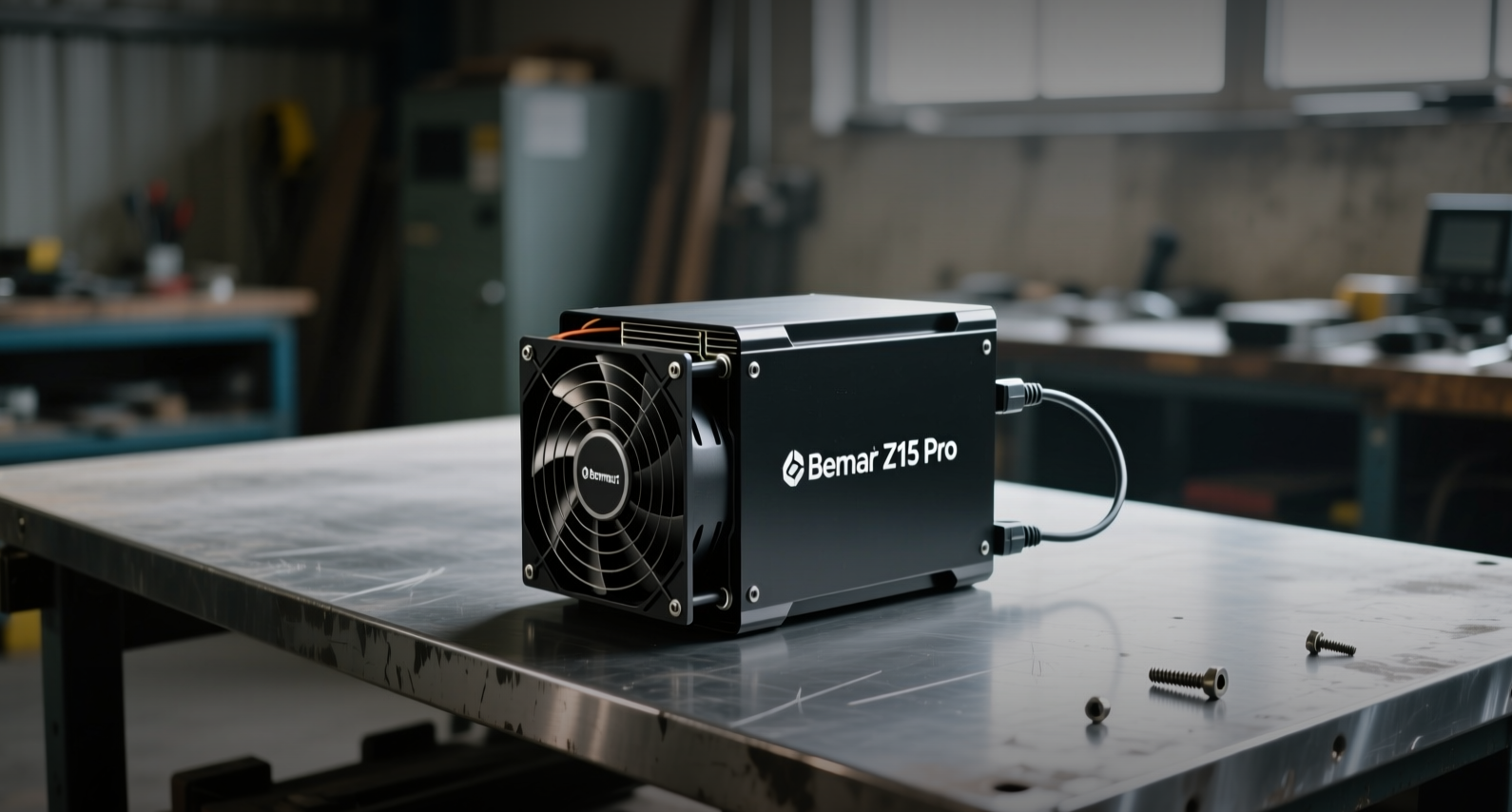
The dollar gains span multiple timeframes, with ZEC up 64.7% over two weeks, 88.1% over 30 days and roughly 353% over six months, according to the report. That run has made Zcash mining the most profitable proof-of-work algorithm today, with Bitmain's Antminer Z15 Pro generating an estimated $59.09 a day at $0.10 per kilowatt-hour, per asicminervalue.com. The Z15 Pro, which produces 840 KSol/s, is sold out on Bitmain's shop at its $4,999 list price, with resellers asking a premium.
The cycle — higher prices lift mining revenue, drawing in hashpower that pushes the network toward record security — hinges on ZEC holding its gains. If the token's price reverses, much of that added capacity can exit as quickly as it arrived, because the profitability that attracted miners is priced off the current dollar value of block rewards.
The Z15 Pro's daily take dwarfs the older Z15, which produces 420 KSol/s and earns an estimated $29.25 a day to rank fourth among ASICs, while the mid-range Z15K at 525 KSol/s brings in $35.14. The third most profitable machine mines monero (XMR), another privacy token that has rallied, showing the draw is revenue rather than any privacy thesis. Zcash's hashrate boom tracks the price trajectory, with the network adding capacity as miner conviction in ZEC's direction builds.
For operators, the economics are straightforward: at current prices the Z15 Pro recovers its $4,999 list price in roughly 85 days before electricity, a payback that has kept demand strong even as Bitmain's inventory runs dry. The same price sensitivity that pulled hashpower in works in reverse — a sharp drop in ZEC would push marginal operators below breakeven and unwind the hashrate gains that now underpin the network's security budget. Whether the expansion holds depends on ZEC sustaining levels near $979 in the coming weeks, with the 88.1% 30-day gain leaving little room for a pullback before mining margins compress.
This article is for informational purposes only and does not constitute investment advice.