

XPeng's MONA L03 starts at 123,800 yuan ($17,100) in China and €35,600 in Europe, bringing Ferrari-inspired design and camera-only autonomous driving to the mass market.
XPeng's MONA L03 starts at 123,800 yuan ($17,100) in China and €35,600 in Europe, bringing Ferrari-inspired design and camera-only autonomous driving to the mass market.
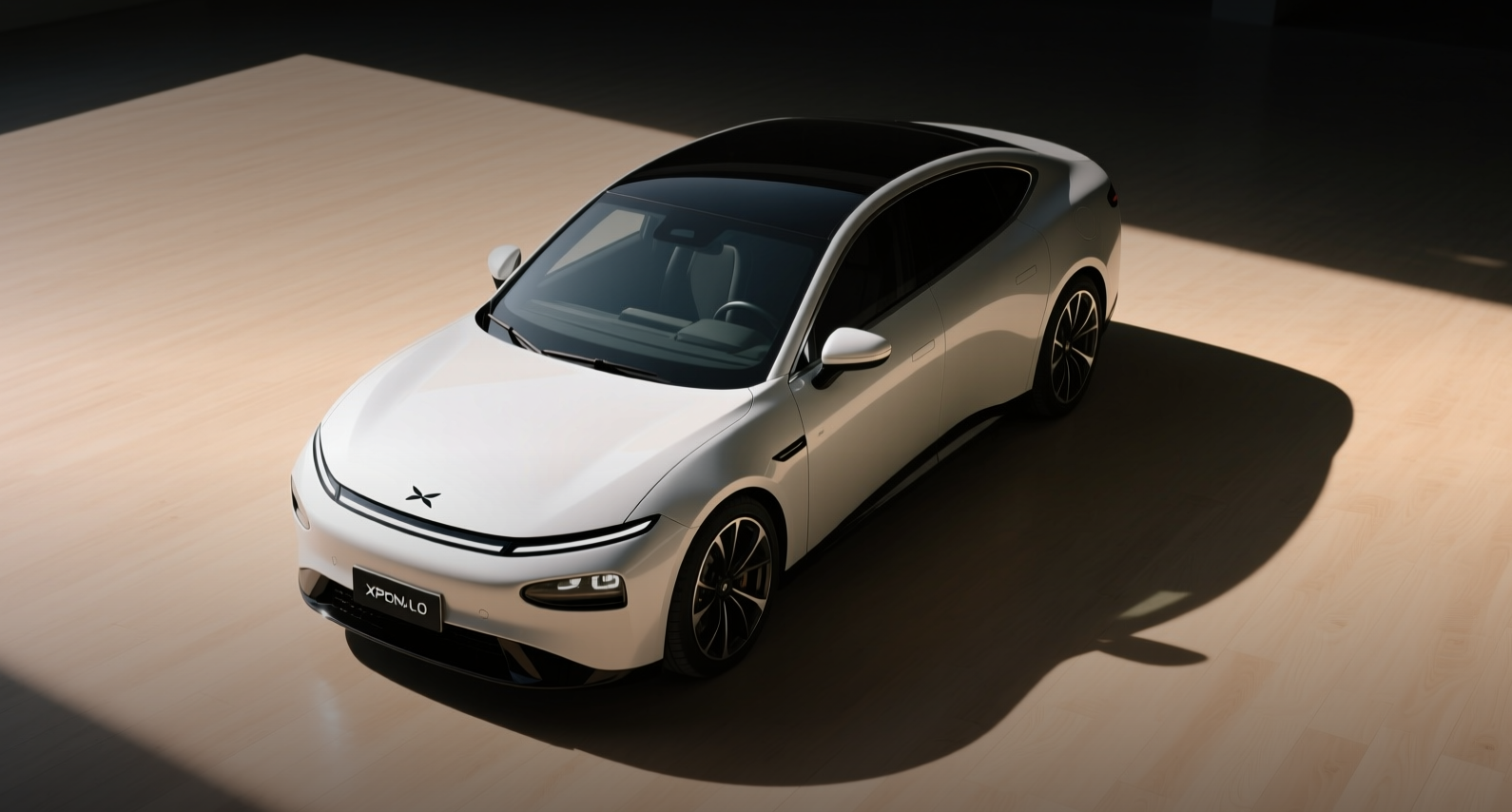
XPeng's MONA L03, priced from 123,800 yuan ($17,100) in China and €35,600 ($40,000) in Europe, brings a 320-mile WLTP range and camera-only autonomous driving to the mass EV segment, directly challenging Tesla's Model Y and Volkswagen's ID.4.
"This is the company's mass-market play, priced to sit below its G6 Tesla Model Y competitor and to sell in volume," Rafik Ferrag, head of creative design at XPeng, said at the Munich launch event.
The L03 achieves a 0.228 drag coefficient and can charge from 10% to 80% in 20 minutes. Top variants hit 60 mph in 4.5 seconds, while the base model takes 7.5 seconds. The Ultra trim features L2++ hands-off navigation powered by XPeng's trio of Turing 7-nanometer AI chips, though the company confirmed the vehicle lacks the hardware redundancy for future L4 autonomy. The global version launches in 60 countries across Europe, Latin America, the Middle East, and Asia-Pacific.
XPeng shares face a pivotal test as the L03 enters a price war with BYD's Seagull and Dolphin models in China while competing against the Volkswagen ID.4 and Tesla Model Y in Europe. The company's decision to bring its latest VLA 2.0 intelligent driving system to global markets — rather than older technology — sets it apart from other Chinese exporters.
Ferrari DNA at a Mass-Market Price
The L03's exterior bears a resemblance to the Ferrari Luce, a similarity explained by XPeng's design chief JuanMa López, who led Ferrari exterior design from 2010 to 2018 and shaped models including the LaFerrari and SF90 Stradale. The interior features heated and cooled massage seats, 256-color ambient lighting, a 15.6-inch 2.5K central screen, and a 27-inch head-up display — equipment typically found in vehicles priced two segments higher.
"Twenty years ago, it was impossible for an entry-level car to afford the technology or even the decorative elements that a luxury car has. Today, that's no longer true," Ferrag said. "Our goal as designers is to reach the top level."
Camera-Only Autonomy vs. Lidar Rivals
XPeng joins Tesla in the no-lidar camp for autonomous driving, relying on cameras and compute power rather than the lidar sensors used by BYD, Zeekr, and Nio. Xianming Liu, XPeng's senior director of engineering, said the L03's camera system and Turing chips are sufficient for L2++ capabilities, but the vehicle cannot reach L4 autonomy because it lacks six levels of hardware redundancy required for full self-driving.
The VLA 2.0 system, tested on Munich streets ahead of the launch, impressed reviewers with smooth driving behavior in low-light conditions, according to CleanTechnica's first-hand account. European regulations permitting hands-off driving are expected to take effect by the end of 2026, with XPeng planning an over-the-air update to activate the feature in 2027.
Investment Implications
XPeng's L03 launch represents a bet on volume over margin in the world's most competitive EV market. The 123,800 yuan starting price undercuts BYD's Seal, which starts at 179,800 yuan, and positions the L03 directly against the BYD Dolphin and Volkswagen ID.3. In Europe, the €35,600 price tag undercuts the Tesla Model Y by roughly €10,000.
The company delivered about 190,000 vehicles in 2025, ranking outside China's top 10 by volume. Success of the L03 — targeting 60 countries — could meaningfully close that gap. XPeng trades at roughly 1.2 times forward sales, a discount to BYD's 1.8 times, reflecting the market's skepticism about its ability to scale profitably.
This article is for informational purposes only and does not constitute investment advice.
