

Xiaomi's aggressive SkyNomad EREV pricing reshapes China's family SUV market, with Wall Street split on whether volume gains can offset margin pressure.
Xiaomi's aggressive SkyNomad EREV pricing reshapes China's family SUV market, with Wall Street split on whether volume gains can offset margin pressure.
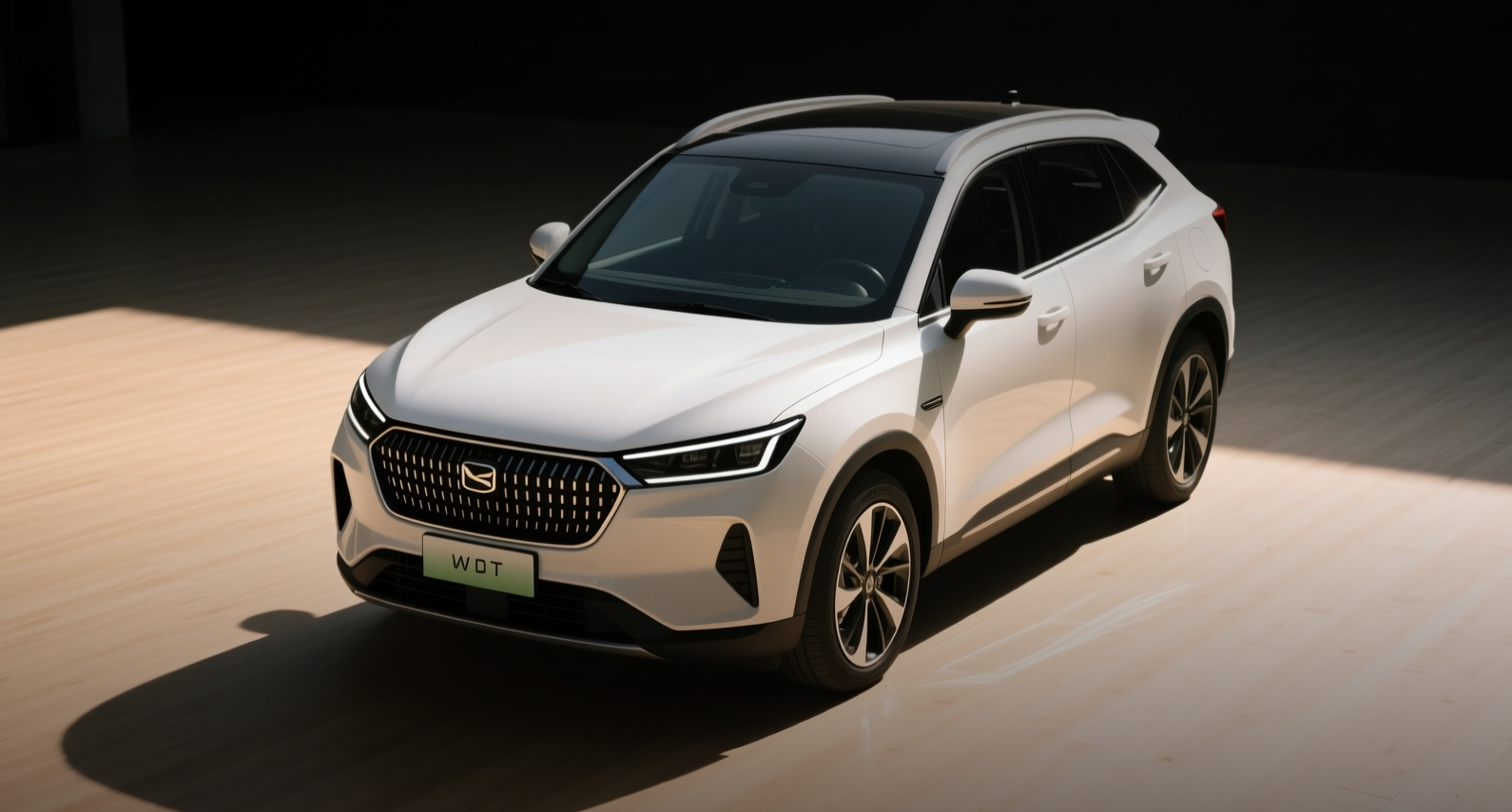
Xiaomi opened preorders for its SkyNomad N70 Max and N90 Max EREV SUVs at 259,900 yuan ($38,410) and 299,900 yuan ($44,320), undercutting rivals as it chases a 550,000-unit annual delivery target.
"Six seats are not enough for families," Xiaomi CEO Lei Jun said at the launch event in Beijing. "If we compare a vehicle to a house, we can freely arrange our space and decorate."
The N90 Max, a seven-seat flagship built on Xiaomi's new Kunlun architecture, packs a 76-kWh ternary lithium battery from CALB paired with a 1.5-liter turbo range extender, delivering 464 km of CLTC electric range and 1,705 km combined. The five-seat N70 Max offers 505 km of electric range and 1,461 km combined. Both Max trims feature air suspension, CDC dampers, lidar, and NVIDIA DRIVE AGX Thor compute rated at 700 TOPS. Xiaomi sourced batteries from Sunwoda and CALB rather than CATL or BYD to control costs.
Xiaomi delivered 180,055 vehicles in the first half, just 34 percent of its 550,000-unit target, requiring average monthly sales of about 61,000 in the second half. Nomura estimates the SkyNomad series must deliver roughly 39,100 units per month from September through December to close the gap, a ramp the bank called overly aggressive.
Pricing Reshapes the Family SUV Segment
The N90 Max at 299,900 yuan undercuts Li Auto's L9 (509,800 yuan), AITO's M9 (479,800 yuan), and Zeekr's 9X (450,000-plus yuan) by wide margins while roughly matching ONVO's L90 Pro at 265,800 yuan. The N70 Max at 259,900 yuan sits just 10,000 yuan above Li Auto's L6 at 249,800 yuan and well below Tesla's Model Y L at 339,000 yuan.
Morgan Stanley expects standard and Pro trims to push the N70 series into the 200,000-250,000 yuan band and the N90 series into 250,000-300,000 yuan when they launch after September. Deutsche Bank sees the SkyNomad line competing directly with mid-tier brands including BYD, Leapmotor, XPeng, Geely, Lynk & Co, Chery, and Volkswagen, while also pressuring premium brands like Li Auto, Tesla, Zeekr, and AITO.
The Kunlun platform's defining feature is a 2.9-meter flat floor running at a 2.95-degree angle, with six seat rails forming a 2+2+3 layout where second- and third-row seats slide nearly freely fore and aft. The front seats rotate 180 degrees, the center armrest converts into a table, and second-row seats offer zero-gravity recline with footrests. A Camping Edition adds a pop-up roof, rooftop bed platform, tent attachment point, and detachable table. Xiaomi positions the cabin as "a studio for one, a cafe for two, a lounge for three, a playground for the whole family."
The range extender produces 112 kW, supports 92-, 95-, and 98-octane gasoline, and achieves fuel consumption as low as 5.7 liters per 100 km. Xiaomi claims 15 minutes of charging adds 285 km of electric range, and the engine requires service only every three years or 30,000 km — maintenance cycles designed to align EREV ownership with pure EVs.
Margin Pressure and Cannibalization Risks
Citi flagged four metrics for investors to track: final pricing at September launch, order conversion rates, production ramp speed, and vehicle gross margins. The bank noted that the 76-kWh battery, dual motors, range extender, air suspension, lidar, and complex multi-mode seating create a heavy bill of materials that aggressive pricing directly compresses.
Nomura warned that the N70 Max's dimensions (4,960 mm length, 2,950 mm wheelbase) and five-seat layout overlap heavily with Xiaomi's own YU7 EV (4,999 mm, 3,000 mm), with price bands colliding directly — YU7 standard at 233,500 yuan and Pro at 279,900 yuan. The bank expects the N70 series to cannibalize some YU7 sales.
Xiaomi's stock (1810.HK) faces increased volatility as investors weigh delivery momentum against margin compression. July weekly order intake has been soft — 5,400, 5,600, 7,400, and 5,700 units across four weeks per Thinkercar data — making the SkyNomad launch a critical test for the second half. Deliveries begin in September.
This article is for informational purposes only and does not constitute investment advice.
