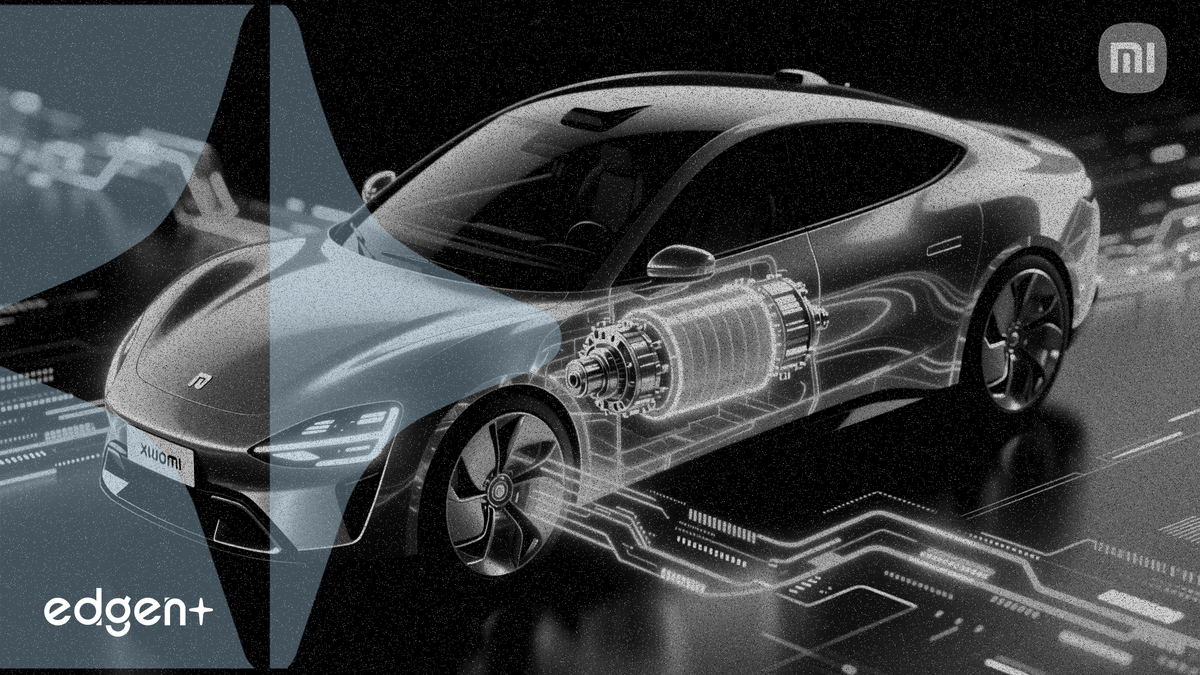
Xiaomi s'apprête à internaliser une plus grande partie de sa chaîne d'approvisionnement en véhicules électriques, en créant une nouvelle filiale pour fabriquer des composants clés tels que des moteurs et des batteries.
Le géant technologique chinois Xiaomi accélère son intégration verticale sur le marché concurrentiel des véhicules électriques, en créant une nouvelle filiale en propriété exclusive avec un capital social de 10 millions de RMB pour développer et fabriquer des moteurs, des batteries et d'autres pièces automobiles.
Cette initiative intervient alors que le premier véhicule électrique de Xiaomi, la berline SU7, gagne du terrain sur le marché, en s'appuyant sur la technologie clé de ses partenaires. « En Chine, certains modèles de SUV électriques Xiaomi SU7 intègrent notre EliteSiC M3e de 1 200 volts, permettant de meilleures performances et la plus longue autonomie de cette catégorie », a déclaré Hassane El-Khoury, président et PDG d'onsemi, lors de la récente conférence téléphonique sur les résultats de l'entreprise.
La nouvelle entité, Beijing Xiaomi Jingxu Technology, est détenue indirectement à 100 % par Xiaomi Communications, selon les registres d'entreprises chinois. Le capital social de 10 millions de RMB (1,4 million de dollars) est un point de départ pour l'entreprise, dont le champ d'activité comprend officiellement la fabrication de moteurs, la fabrication de batteries et la fabrication de pièces et d'accessoires automobiles. Cela suit une tendance des constructeurs de VE cherchant à mieux contrôler leur technologie de base et leurs chaînes d'approvisionnement.
En investissant dans ses propres capacités de fabrication, Xiaomi vise à réduire sa dépendance vis-à-vis des fournisseurs tiers, réduisant potentiellement les coûts de production et sécurisant son approvisionnement en composants critiques dans un marché mondial volatil. Cette intégration verticale pourrait être cruciale pour améliorer les marges bénéficiaires et rivaliser avec des acteurs établis comme Tesla et BYD à long terme, d'autant plus qu'une guerre des prix féroce continue de définir le paysage des VE en Chine.
Un pari stratégique pour le contrôle de la chaîne d'approvisionnement
La décision de fabriquer des composants de base en interne est une voie bien connue des leaders du secteur des véhicules électriques. Des entreprises comme Tesla et BYD ont démontré les avantages significatifs de l'intégration verticale, de l'efficacité des coûts et de la résilience de la chaîne d'approvisionnement à la capacité d'innover rapidement sur la technologie de base. Pour Xiaomi, un nouveau venu dans l'industrie automobile, la création de Jingxu Technology est une étape fondamentale pour imiter ce modèle réussi.
Bien que l'investissement initial de 10 millions de RMB soit modeste, il signale une intention stratégique claire à long terme. Le contrôle de la production de composants à haute valeur ajoutée comme les moteurs électriques et les packs de batteries est essentiel pour gérer la nomenclature et protéger les marges, un défi majeur pour tous les acteurs du marché hyper-concurrentiel chinois.
Tirer parti des partenariats tout en construisant son indépendance
La marche de Xiaomi vers l'indépendance ne signifie pas qu'elle abandonne ses partenaires actuels. La collaboration de l'entreprise avec la firme de semi-conducteurs onsemi en est la preuve. Le PDG d'onsemi a souligné que le chiffre d'affaires de son entreprise en Chine a augmenté de 23 % d'un trimestre à l'autre au deuxième trimestre, porté par la demande de carbure de silicium provenant des nouvelles rampes de VE comme celle de Xiaomi.
Cela indique que, dans un avenir prévisible, Xiaomi poursuivra probablement une double stratégie : s'appuyer sur la technologie de pointe de fournisseurs établis pour les véhicules de la génération actuelle tout en développant simultanément ses propres capacités internes pour les futurs modèles. Cette approche permet à Xiaomi de rivaliser sur la performance aujourd'hui tout en construisant une base de fabrication plus autonome et rentable pour demain. La création de Jingxu Technology est la première étape concrète de ce voyage à long terme.
Cet article est à titre informatif uniquement et ne constitue pas un conseil en investissement.