

Key Takeaways: More than 300 companies converged on Beijing this week as China's robotics industry pivoted from stage demonstrations to factory-floor deployment.
Key Takeaways: More than 300 companies converged on Beijing this week as China's robotics industry pivoted from stage demonstrations to factory-floor deployment.
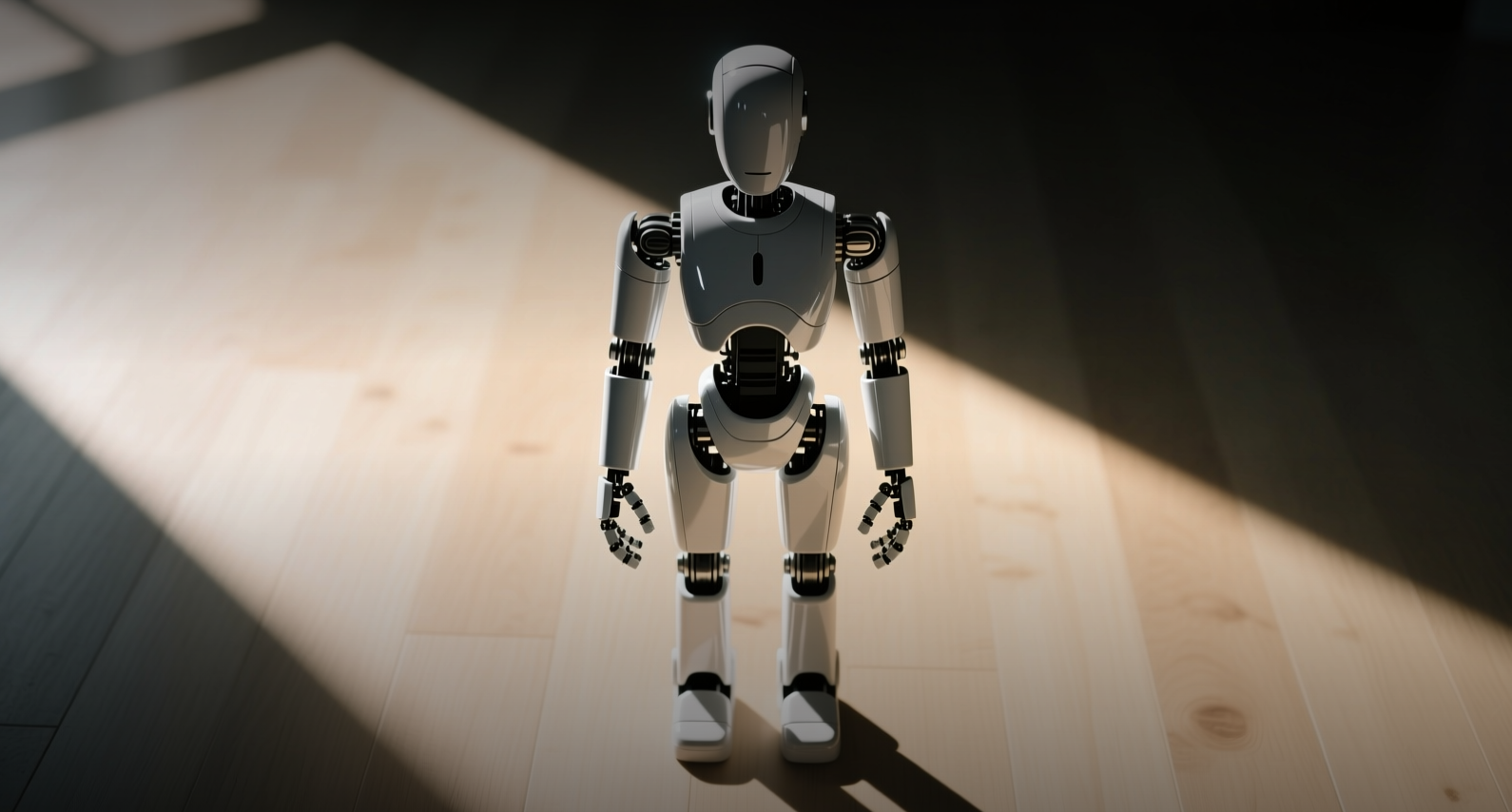
More than 300 companies converged on Beijing this week as China's robotics industry pivoted from stage demonstrations to factory-floor deployment.
Global humanoid robot shipments nearly quadrupled to 19,100 units in the first half, as 300-plus firms at Beijing's World Robot Conference showcased machines moving from demos to factory floors.
"We are seeing the industry shift from capability demonstration to industrial validation," Yu Chao, founder and CEO of Lumos Robotics, said at the conference. "Companies are now discussing task success rates, continuous working hours, deployment cycles, cost, and ROI."
Xiaomi returned to the show after a four-year gap, unveiling a new humanoid robot standing 1.70 meters tall and weighing 66 kilograms with 66 degrees of freedom, half concentrated in the hands. The prototype ran four hours on a real factory production line with a 90 percent success rate, according to Xiaomi Robotics general manager Xiang Diyun. Chery's Mojia Robotics division live-streamed smart police robots on duty across 22 cities simultaneously.
The event marks a commercial inflection point: Unitree shares soared nearly six-fold in their Shanghai trading debut, while Lumos Robotics and Chery's robotics unit are considering stock market listings. Global humanoid shipments nearly quadrupled to 19,100 units in H1, per Smart Analytics Global data, though analyst Georg Stieler estimates 50-70 percent of units produced this year may end up in "data factories" collecting training data rather than performing productive work.
Xiaomi's return follows years of internal debate about the technology's practical value. "After our first robotics project in 2021, we kept asking ourselves: what is this actually for?" Xiang said. "That's why we made no technical announcements after 2023. But R&D investment kept increasing every year. In March, the robot ran four hours on a real factory production line with a 90 percent success rate. Lei Jun called it an 'internship,' and we saw a genuine opportunity for industrial application."
The robot's factory trials included tightening nuts with dual-sided coordination, where success rates improved from 90.2 percent to 98 percent during testing. It then moved to final assembly tasks such as folding center console side covers and handling material boxes, achieving a 90 percent success rate — the first time the robots handled long-duration tasks involving flexible components. Xiaomi President Lu Weibing said the robot will not be developed as a standalone product but will integrate into the company's "human, car, and home" strategy spanning smart factories, mobility, and household applications.
Automakers enter the field
Chery's robotics division, Mojia Robotics, showcased smart police robots live-streaming road patrols from 22 cities. Zhang Guibing, Chery's executive vice president and Mojia Robotics general manager, said the company sees 70 percent technology overlap between automotive and robotics, particularly in supply chain and manufacturing management.
"A large number of robot companies appeared almost overnight," Zhang said. "But from the perspective of industry development, there is a positive side. It allows everyone to compete fully. In the end, this will help deepen the industry's technology and capabilities."
Zhang estimated humanoid robots could take about a decade to mature before rapid adoption. The exhibition floor reflected the industry's pivot: rather than robots that sing or dance, exhibitors demonstrated machines making mooncakes, sorting parcels, restocking pharmacy shelves, and patrolling power distribution rooms. Several manufacturers have replaced five-finger dexterous hands with simpler two-finger grippers and bipedal designs with wheeled bases to cut costs and accelerate deployment.
Realman, exhibiting for the sixth consecutive year, showed its RealBOT robot completing restocking and medication retrieval in a 24-hour smart pharmacy and performing inspection rounds in power distribution rooms. Zhang Qinfeng, Realman's intelligent solutions lead, said the industry has hit three milestones: ChatGPT's arrival in 2023 gave embodied AI models generalization capability, 2025 was widely considered the year of embodied AI, and 2026 is now the year of robot deployment.
The brain gap
While hardware has become a solvable engineering problem thanks to China's supply chain advantages, the "brain" — the embodied AI model that enables robots to understand and act in real environments — remains the critical bottleneck, according to Moke Robotics CEO Chi Xiaowei.
"Hardware is basically considered a solvable engineering problem now," Chi said. "The brain is the most important and most lacking piece for robots to land in real scenarios."
CloudMinds' chief product officer Duan Yanbiao noted that the industry's biggest change from last year is that instead of developing specific functions for specific scenarios, companies now use models to reorganize and plan hardware capabilities across different applications. "If an elevator breaks down in a hotel, or all robots are occupied, the model will send a work order to a human," Duan said.
Super Dimension Power, which develops embodied AI models for cross-domain deployment, collects data from hotels, restaurant kitchens, nursing homes, and supermarkets. Co-founder Zheng Cunyuan said the data requirements for physical AI are less than commonly assumed. "Someone with good technical taste and luck may have already accumulated high-quality data. Give them two to three months, and they could unlock the golden key."
Xiaomi trades on the Hong Kong Stock Exchange, while Unitree's Shanghai listing has become a bellwether for the sector. The conference runs through Aug. 23.
This article is for informational purposes only and does not constitute investment advice.
