
Oil markets shed their geopolitical risk premium in a single session as traders priced in an imminent US-Iran agreement.
Oil markets shed their geopolitical risk premium in a single session as traders priced in an imminent US-Iran agreement.
Oil markets shed their geopolitical risk premium in a single session as traders priced in an imminent US-Iran agreement.
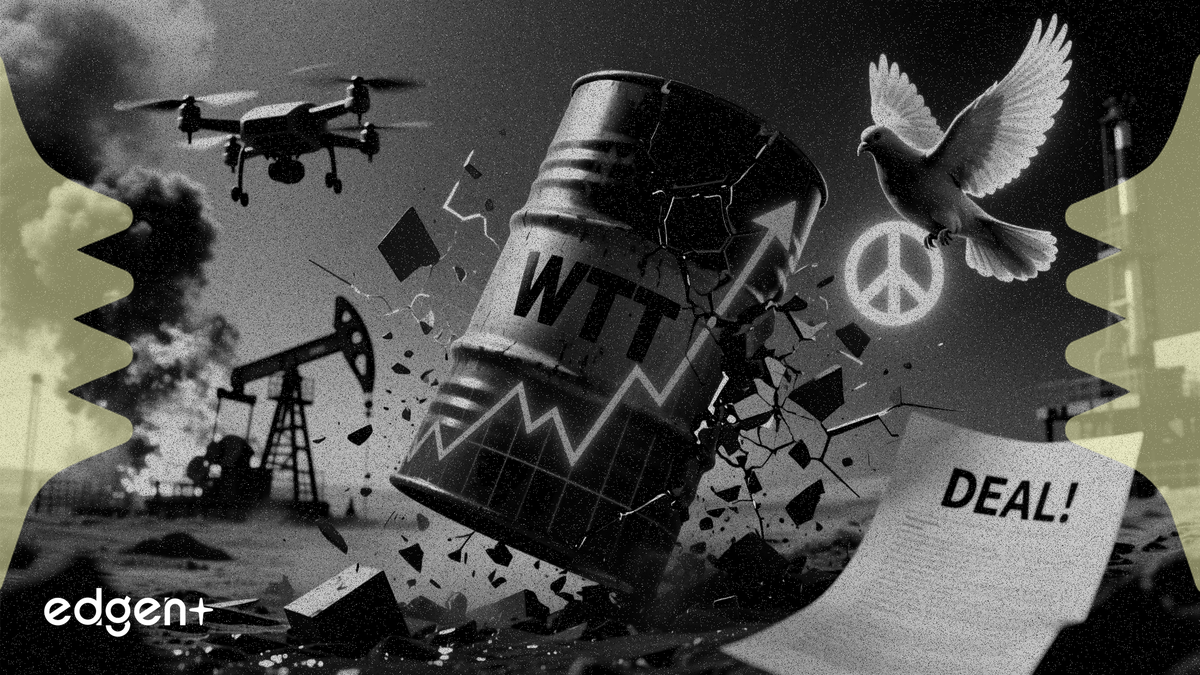
WTI crude tumbled 5% to settle at $78.42 a barrel on Thursday after President Trump canceled planned military strikes on Iran, citing progress toward a comprehensive peace deal. The selloff marked the largest single-day decline for the US benchmark since March.
"The market is rapidly unwinding the risk premium that built up over the past two months of hostilities," said Helima Croft, head of global commodity strategy at RBC Capital Markets. "A deal that removes the threat to Strait of Hormuz traffic fundamentally changes the supply calculus."
Brent crude fell 4.8% to $82.15 a barrel, its biggest one-day drop since early March. The move rippled across the energy complex, with RBOB gasoline futures sliding 4.2% and ULSD diesel contracts losing 3.9%. Trump announced on Truth Social that "final points and concepts of a potential deal have been approved by all parties involved," including the US, Israel, Saudi Arabia, and Gulf states, with a signing ceremony to be announced shortly.
The price collapse removes roughly $4 a barrel in geopolitical premium that had been embedded since early March, when the US-Iran conflict escalated. If a deal is finalized, analysts at Goldman Sachs estimate Brent could test $75, a level not seen since before the war began. The World Bank on Thursday cut its global growth forecast to 2.5% for 2026, citing the conflict's impact on energy markets — a projection that now looks conservative if supply normalizes.
The cancellation of strikes marked a sharp reversal from earlier Thursday, when Trump told Fox News the US would hit Iran with "bigger, more powerful" strikes and threatened to seize Kharg Island, Iran's main oil export terminal handling about 90% of its crude shipments. Hours later, he called off the operation, saying a naval blockade would remain in full force until the transaction is finalized.
Iran's top military commander, General Ali Abdollahi, warned that any renewed US attacks would trigger "a harsher response than before" and plunge the region into wider instability. But the market focused on the diplomatic breakthrough, with Qatari and Pakistani mediators shuttling between Washington and Tehran.
The precise contours of the agreement have not been disclosed. Iran's semi-official Fars News agency quoted a source close to the negotiating team denying that new talks were underway, while Treasury Secretary Scott Bessent said Gulf countries would be compensated for damages "with funds extracted from Iranian Accounts." A key Iranian demand throughout negotiations has been the lifting of sanctions and release of frozen assets — a concession the US has not publicly addressed.
The naval blockade of Iranian ports, imposed shortly after the fragile April ceasefire, will remain in effect until a signing, Trump said. That blockade has already disrupted oil flows: US Central Command said it struck three oil tankers this week attempting to transport Iranian crude, including the Palau-flagged Settebello, where three Indian mariners were killed.
The potential deal comes as oil markets were already facing demand headwinds. The World Bank lowered its global growth forecast to 2.5% for 2026, the lowest since the pandemic, with headline inflation averaging 4%. Lower energy costs would provide a tailwind for central banks wrestling with sticky inflation, potentially reducing the need for further rate hikes.
For oil producers, the calculus is more complex. OPEC+ members, which had maintained production cuts through the conflict, now face the prospect of Iranian barrels returning to a market already grappling with weakening demand. Iran was producing roughly 3.2 million barrels a day before sanctions tightened, and a deal could release significant volumes.
"The speed of the move tells you how much positioning had built up on the long side," said Amrita Sen, founder of Energy Aspects. "If a deal is signed, the next 10% could come just as fast."
This article is for informational purposes only and does not constitute investment advice.
