

Nvidia faces direct congressional scrutiny as Senator Warren summons CEO Jensen Huang to testify on China AI chip export controls.
Nvidia faces direct congressional scrutiny as Senator Warren summons CEO Jensen Huang to testify on China AI chip export controls.
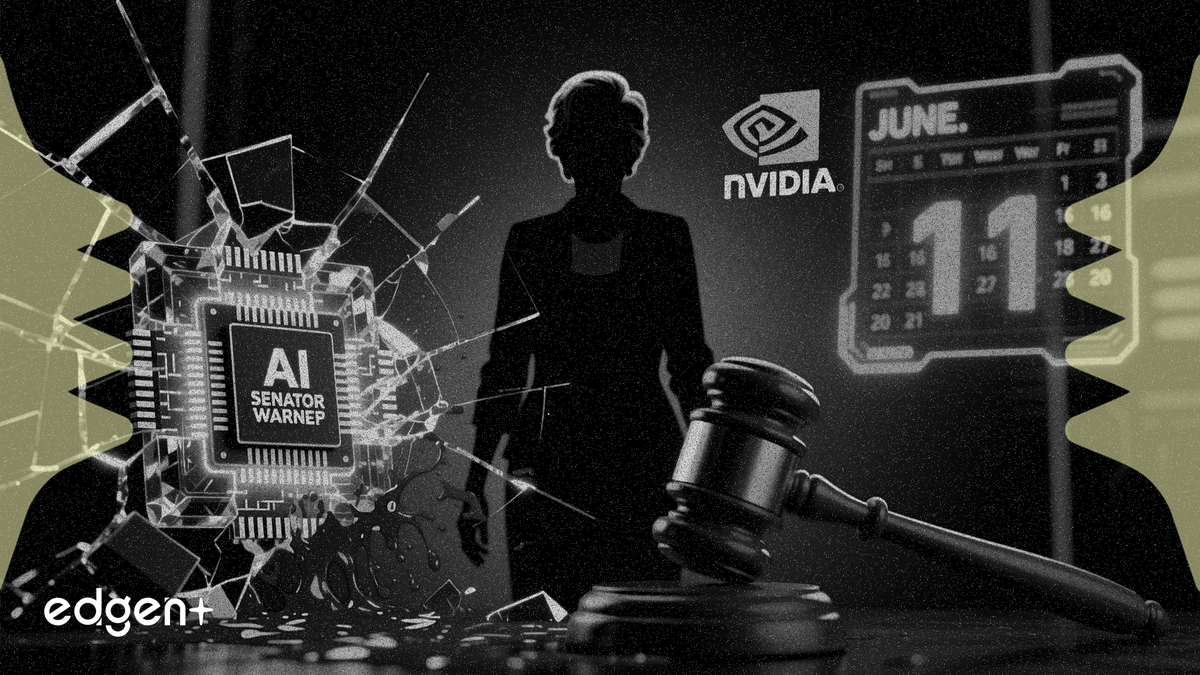
Senator Elizabeth Warren invited Nvidia Chief Executive Jensen Huang to testify before the Senate Banking Committee on June 11, sharpening scrutiny of the chipmaker's China sales and the role of U.S. export controls in the global AI boom.
"Appearing as a witness will give you an opportunity to testify about Nvidia's views on U.S. export control laws and regulations and Nvidia's business in China," Warren wrote in a letter first obtained by CNBC, asking Huang to confirm his attendance by Monday.
The hearing comes as both the Biden and Trump administrations have moved to restrict China's access to advanced AI chips, while Nvidia has argued that overly broad limits could damage U.S. competitiveness and push customers toward foreign alternatives. Warren previewed her concerns on CNBC's "Squawk Box," saying she is worried U.S. companies are profiting from technology sales that could weaken national security. "The Chinese, in effect, buy our stuff, and American companies make a profit doing that," Warren said. "But it certainly undermines our long-term security."
The stakes are significant for Nvidia, which commands a $5.2 trillion market capitalization as the world's most valuable chipmaker. Any new restrictions on its China business — which accounted for roughly one-fifth of its data center revenue in recent years — could pressure the company's growth trajectory and reshape competition in the AI semiconductor market globally.
The Senate push coincides with a separate effort by Republicans on the House Energy and Commerce Committee, who are calling for an investigation into what they say are China's efforts to impede U.S. AI and data-center development. The bipartisan nature of the scrutiny underscores how AI chip export controls have become a rare area of agreement between the parties, even as they differ on the scope and severity of restrictions.
Warren has also sought to broaden the AI debate beyond China and national security. In the same CNBC interview, she warned that AI could cause major disruption for workers and called for an excise tax on data centers to help pay for health care, child care, education and job training. "We're talking about enormous disruption in ways that we can't anticipate," Warren said. "Now is the moment to get ahead of that."
The hearing would give senators a rare chance to question Huang directly on Nvidia's China strategy and export-control posture, just weeks after he accompanied President Donald Trump to China for a high-stakes summit with Chinese President Xi Jinping. That trip highlighted the delicate balance Nvidia must strike between complying with U.S. national security objectives and maintaining access to the world's second-largest economy.
The current U.S. export control framework restricts the sale of advanced AI semiconductors and chipmaking equipment to China, with specific caps on chip performance and interconnect speed. The Commerce Department's Bureau of Industry and Security oversees the rules, which have been tightened in successive rounds since October 2022. Nvidia has responded by developing modified chips for the Chinese market that fall below the performance thresholds — a workaround that Warren and other lawmakers have criticized as undermining the policy's intent.
This article is for informational purposes only and does not constitute investment advice.
