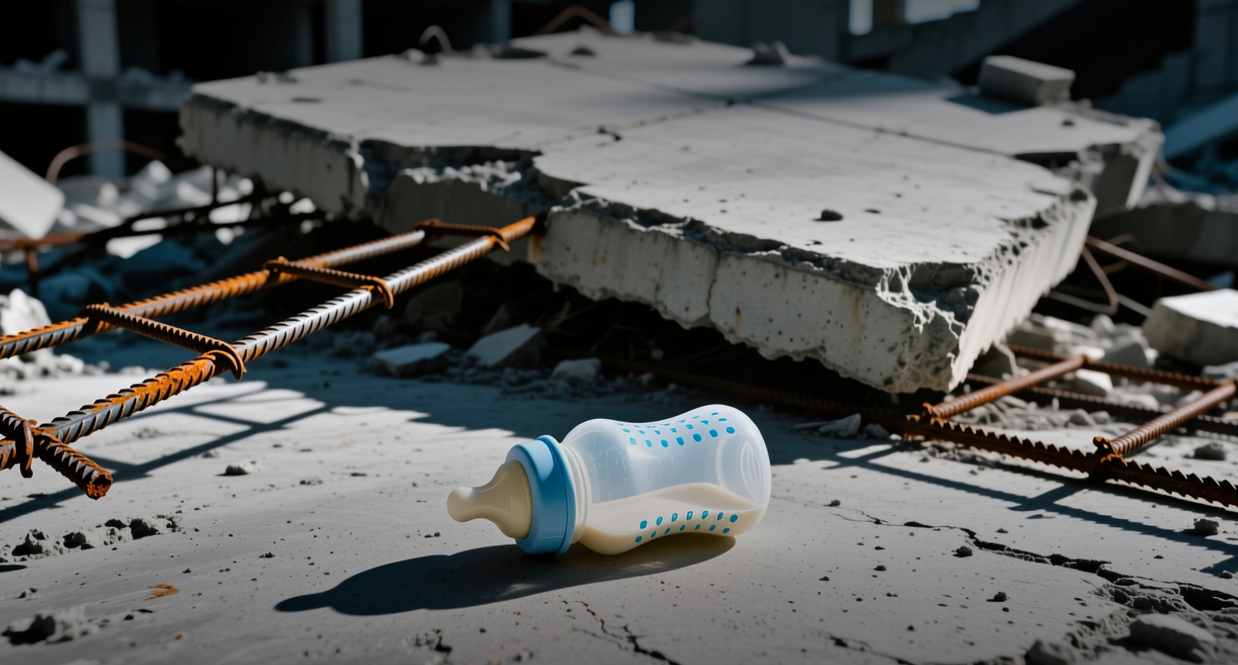
Venezuela is racing to find 50,000 people missing after twin earthquakes killed at least 2,595, as poor construction and a slow government response compound the disaster.
Venezuela's government has confirmed at least 2,595 dead and 50,000 missing after twin earthquakes struck its Caribbean coast, as families blame shoddy construction and bureaucratic delays for compounding one of the deadliest natural disasters in the Americas in over a century.
"Today I feel like I have no energy left," Alberto Sánchez, a 37-year-old motorcycle taxi driver who spent four days digging through rubble for his girlfriend and her family, said.
The quakes, which hit June 24 with magnitudes of 7.2 and 7.5, flattened government-built high-rises in Caraballeda and surrounding areas of La Guaira state, about an hour's drive from Caracas. The U.S. Geological Survey's modeling estimated the likely death count would reach the thousands. More than 3,100 people were injured, according to the government.
The disaster has exposed years of alleged government negligence in public housing construction, with residents saying buildings used styrofoam as mortar between concrete slabs — a practice that may have caused entire 12-story towers to collapse into heaps. International rescue teams from Colombia, Mexico, the Dominican Republic and the U.S. have arrived but faced delays in receiving accreditation from acting President Delcy Rodríguez's government, while families continue digging through rubble with their bare hands.
The collapsed buildings were part of a series of government housing projects called the Caribbean Victors, built near Los Cocos beach in Caraballeda. Residents said walls were already cracking before the quakes and rebar was exposed in some columns — signs of what they called shoddy construction. "I used to say that these apartments are toy houses, made of styrofoam," said Janett Noriega, a retiree searching for six relatives.
The government didn't respond to calls and emails seeking comment. Over the weekend, thousands of armed Venezuelan soldiers and police were deployed across the coastal towns, but it was teams of firefighters and rescue workers from Venezuela, Colombia, Mexico, the Dominican Republic and the U.S. who crawled through slabs of concrete in search of survivors. The mayor of Medellín, Colombia, said firefighters sent from his city were held up for hours by airport authorities in Venezuela. A unit of Spanish volunteers said it was disbanding after having waited two days at an airport in Spain for accreditation.
A Race Against Time
Search and rescue teams have been working to save survivors trapped under the rubble. A newborn baby was found alive with his mother after surviving for 32 hours under a collapsed building, hailed as a miracle. A security guard was rescued from rubble eight days after the quakes. But the critical 72-hour window for rescuing people still trapped has passed, and hopes of finding more survivors are fading.
For families like Jennifer Fajardo's, the wait has been agonizing. The 42-year-old security operations manager at a Caracas university has been searching for her twin 19-year-old daughters and two granddaughters, all of whom shared an apartment in a building that collapsed. "I haven't slept. I'm running from hospital to hospital, to the morgues to see if they're there — but nothing," Fajardo said. A sign of hope came when the family dog, Yogi, emerged from a hole in the rubble, seemingly unscathed.
Deportees Caught in the Disaster
Among the missing are more than 100 Venezuelans who were deported from the United States hours before the quakes struck. A deportation flight from Miami carrying 146 people, including 19 women and seven children, landed on June 24, according to ICE Flight Monitor. The deportees were transported to a hotel in La Guaira, one of the worst-hit areas.
Ninoska Gutierrez, one of the deportees, described crawling out of the rubble of the collapsed hotel. "I had a beam on top of me, trapping me. I couldn't feel my legs," she told CNN. She walked for two miles to find help, escaping with only scrapes and bruises. Lisbeth Portillo, 58, said she escaped from the destroyed hotel with about 20 other deportees. "I was born again; God gave me a second chance," she said. "I am traumatised."
The Department of Homeland Security said in a statement: "This flight safely reached Venezuela and all illegal aliens on board were returned home. When an individual is no longer in ICE custody, ICE is no longer responsible for them."
The disaster represents one of the deadliest earthquakes in the Americas in over a century and poses a severe test for acting President Delcy Rodríguez's government, which faces mounting criticism over its response. With power and phone lines still down in affected areas and the official death count expected to rise, the humanitarian toll — and its political consequences — are only beginning to emerge.
This article is for informational purposes only and does not constitute investment advice.