The US struck southern Iran even as negotiators in Doha worked to finalize a deal to reopen the Strait of Hormuz and end a three-month war.

The US struck southern Iran even as negotiators in Doha worked to finalize a deal to reopen the Strait of Hormuz and end a three-month war.
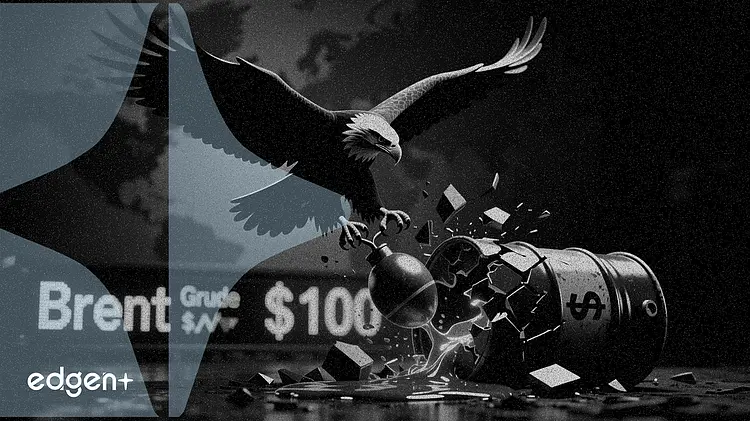
The US military struck Iranian missile sites and mine-laying boats near Bandar Abbas on Monday, testing a fragile ceasefire even as Brent crude held below $100 a barrel on optimism that a diplomatic resolution remains within reach.
"The straits have to be open. They're going to be open one way or the other," Secretary of State Marco Rubio told reporters in Jaipur, India. "What's happening there is unlawful, it's illegal, it's unsustainable for the world."
Brent crude futures traded near $96.30 a barrel Tuesday, recovering after a 7% drop Monday on reports that a draft agreement would require Iran to reopen the waterway within 30 days. S&P 500 futures rose 0.3% as investors weighed diplomatic progress against the risk of renewed escalation.
The Strait of Hormuz handles about a fifth of global oil supply, and its effective closure since late February has pushed US gasoline prices above $4 a gallon in every state for the first time in four years. A failure to reach a deal could send Brent back above $100 and deepen what is already the highest inflation reading in three years.
The strikes, which CENTCOM described as "self-defense" actions, came as a high-level Iranian delegation including Foreign Minister Abbas Araghchi and Parliament Speaker Mohammad Bagher Ghalibaf arrived in Doha for talks with Qatari mediators. Iran's Central Bank Governor Abdolnaser Hemmati also joined, signaling that discussions over frozen Iranian assets remain a key sticking point.
Iranian state media reported that the IRGC had downed a US MQ-9 drone over the Persian Gulf using a new air defense system called "Arash the Archer." The Pentagon did not immediately confirm the loss.
Deal Terms Take Shape
The draft memorandum under discussion includes a 60-day ceasefire extension, Iran's immediate reopening of the Strait of Hormuz with a 30-day timeline for restoring normal traffic, and a commitment by Iran to dispose of its stockpile of highly enriched uranium — estimated at about 440 kilograms of material enriched to 60% purity, a short technical step from weapons-grade. In exchange, the US would lift its naval blockade of Iranian ports and begin sanctions relief.
Trump said on Truth Social that negotiations were "proceeding nicely" but warned that failure would mean a return to "shooting, but bigger and stronger than ever before." He also linked any deal to the expansion of the Abraham Accords, calling on Saudi Arabia and Qatar to normalize relations with Israel as part of the settlement.
Iran's foreign ministry spokesman Esmaeil Baghaei acknowledged progress but cautioned that "frequent changes in positions and contradictions" by the US side had created obstacles. "To say that this means the signing of an agreement is imminent — no one can make such a claim," he said.
Market Stakes and Political Fallout
The war has exacted a heavy economic toll. US gasoline prices have surged more than 50% since the Feb. 28 start of Operation Epic Fury, with the national average topping $4 a gallon for the first time since 2022. Inflation reached a three-year high in April, and Trump's disapproval rating hit 58.3% — higher than its peak after the Jan. 6, 2021, Capitol riot, according to RealClearPolitics polling averages.
The last time oil prices spiked above $100 on Middle East supply disruptions — following the 2022 Russian invasion of Ukraine — Brent remained above that threshold for four months before retreating. A similar duration this time would keep pressure on central banks to maintain restrictive policy, complicating the Federal Reserve's path toward rate cuts.
This article is for informational purposes only and does not constitute investment advice.