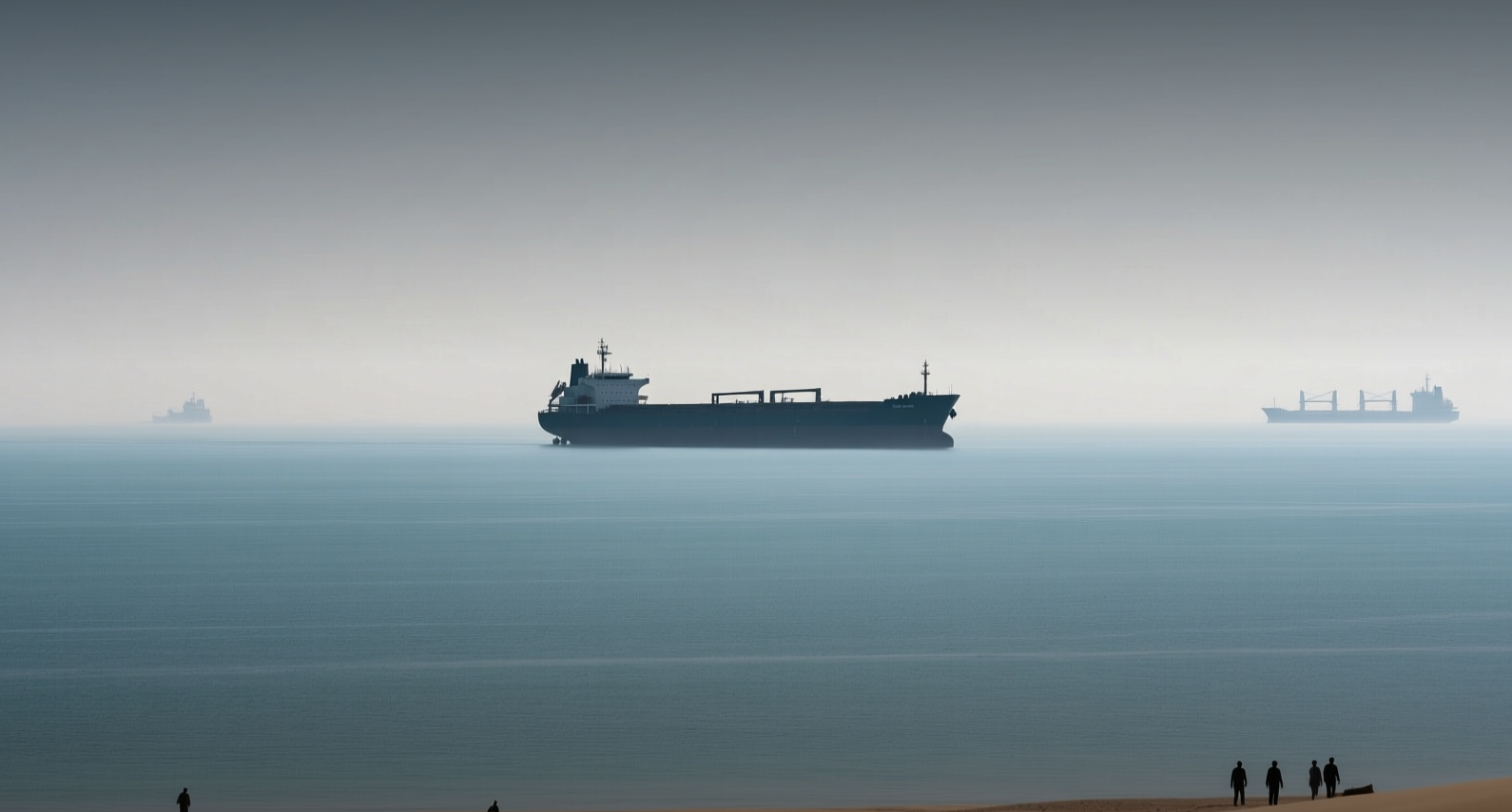
For the first time since the conflict erupted in February, Washington has taken aim at Iran's ability to move oil rather than merely produce it. US Central Command disabled three crude carriers on Sept 5 — one off Kharg Island, Iran's primary export hub, another near the port of Jask, and a third in the Gulf of Oman — in direct retaliation for ballistic missile fire from the Islamic Revolutionary Guard Corps at two American warships.
"Let the message to the IRGC be clear: If you shoot at two of our ships, we will impose an even higher economic cost — taking out three of yours," Admiral Brad Cooper, commander of US Central Command, said in a statement. CENTCOM added that it would "destroy Iran's limited and exposed oil fleet if necessary."
The unladen carrier M/T Kylo was struck in multiple critical locations in the Gulf of Oman to render it inoperable after its crew was directed to abandon ship, CENTCOM said. Iranian media reported explosions near Kharg Island's anchorage, with the Tasnim news agency saying four US projectiles hit a tanker there and that no casualties were reported. The action follows a week of US strikes on IRGC air-defense positions, mine-laying units and radar sites, and comes as the Navy has redirected 87 commercial vessels, disabled three and boarded two enforcing a blockade that began in mid-April.
The shift from facility strikes to targeting tankers in transit reframes the market's central question from how much Iranian crude production is lost to whether the Strait of Hormuz — which carries about one-fifth of global oil supply — remains navigable. WTI crude rose roughly 9 percent over three consecutive sessions to about $91 a barrel, while Brent settled at $96.28 on Friday, its highest since July 24.
From Production Losses to Transit Risk
Since the US blockade began in April, oil markets have priced Iranian supply losses as a contained problem: Iran's exports were already curtailed, and spare capacity elsewhere could absorb the shortfall. Targeting tankers in the strait changes that math. The waterway carried about 20 percent of global crude before the conflict, and the latest exchange — the IRGC claimed Sept 6 it struck a US aircraft carrier and destroyer with ballistic missiles — suggests neither side is stepping back.
The escalation timeline shows how quickly the conflict has moved from infrastructure to transport. US strikes on Aug 30 hit IRGC air-defense and radar installations. By Sept 3, CENTCOM reported it had redirected 87 commercial vessels, disabled three and boarded two in blockade enforcement. On Sept 4, Iranian media reported anti-ship missile fire toward vessels in the strait. The Sept 5 tanker strikes and Sept 6 IRGC retaliation complete a cycle in which both sides are now targeting the other's ability to move oil through the waterway.
Iran's economy is showing the strain of the blockade and repeated strikes. The rial fell to 228,000 tomans per dollar on the open market Sept 5, while year-on-year inflation stood at 89 percent in August, with food and beverage prices up more than 127 percent. Central Bank Governor Abdolnasser Hemmati has pledged up to $2 billion in intervention, but the currency has continued to slide since crossing the 200,000-toman mark in late August. A group of Iranian lawmakers warned on Aug 31 that persistent volatility in currency, gold and coin markets had "increased uncertainty among the public and economic actors."
The military escalation also carries domestic political weight in Washington. Trump said Sept 4 the war was "small potatoes" for the United States, but opinion polls show the conflict has become increasingly unpopular with Americans ahead of November midterm elections. The State Department separately approved a $5 billion sale of bombs and equipment to Saudi Arabia on Sept 4, deepening US military commitments across the region.
Shipping Insurance and the Next Escalation Point
If CENTCOM expands strikes to international commercial fleets, war-risk premiums for Gulf shipping would rise sharply, forcing vessel rerouting and raising logistics costs across the region. The last comparable episode was the 2019 tanker attacks near the strait, when war-risk insurance for the Gulf jumped several-fold within weeks before stabilizing. Shipping underwriters typically quote war-risk premiums as a percentage of hull value per voyage; a sustained campaign against tankers would push those rates up across the entire Gulf, not just for Iranian-flagged vessels.
The key watch points are whether CENTCOM systematically widens its tanker targeting and whether commercial carriers see material changes in insurance rates and routing decisions. The June 17 interim agreement between Tehran and Washington collapsed under renewed strikes in late August, and no new negotiation window is visible. If the conflict continues on its current trajectory, the geopolitical premium in crude prices could persist well beyond the current $91-$96 range. If either side seeks an off-ramp, that premium would unwind quickly — but the tanker strikes suggest the US military is pursuing a deliberate economic-pressure strategy against Iran's remaining export capacity.
This article is for informational purposes only and does not constitute investment advice.