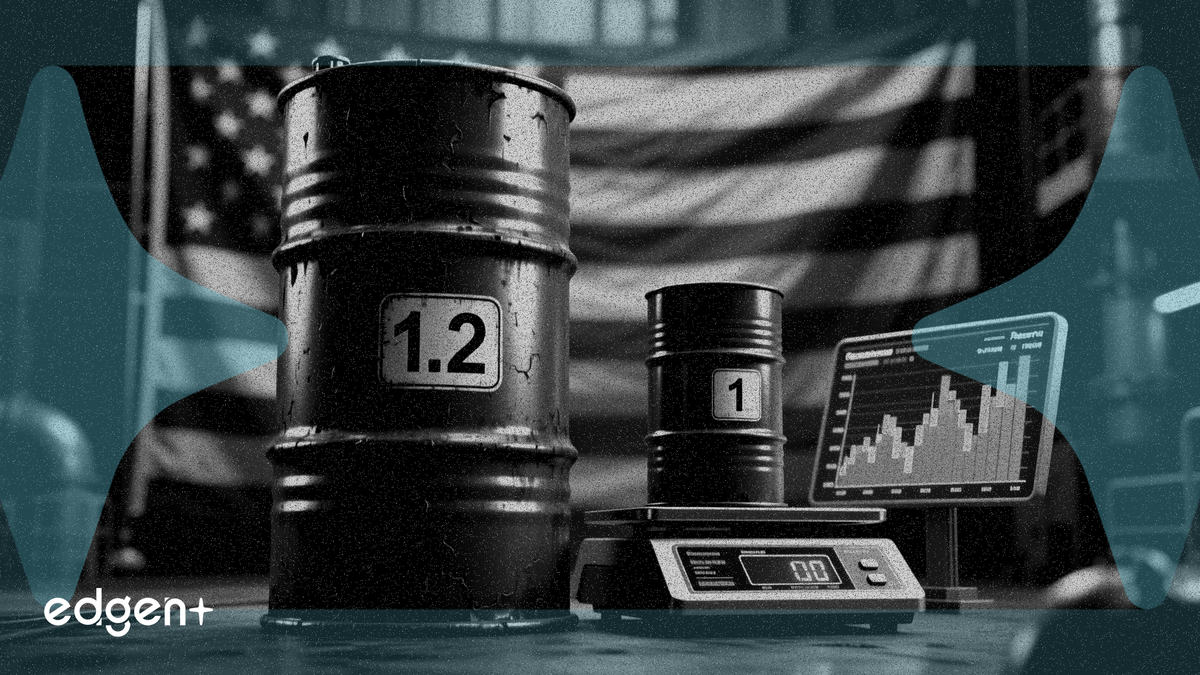
The U.S. government will over-refill its emergency oil stockpile, buying back 1.2 barrels of crude for every barrel released, a move designed to bolster long-term energy security while navigating short-term price pressures.
"We're releasing oil now, and for each barrel we're releasing, we're going to get at least 1.2 barrels of oil back into the reserve," Energy Secretary Chris Wright said Friday at an event in Sabine Pass, Texas. "We'll leave it fuller than when we started."
The announcement comes as the Trump administration taps the Strategic Petroleum Reserve (SPR) to counter high gasoline prices, which Wright linked to the ongoing conflict with Iran. The policy aims to end Iran's nuclear ambitions, a goal Wright called "simply essential," despite causing "some short-term disruption" to fuel costs. He asserted that gasoline prices "will come right back down." This strategy, however, faces scrutiny as data shows a significant portion of the released oil is not destined for domestic consumers. Nearly half of the emergency crude, or about 13 million barrels, has been exported to Europe and other regions, according to Kpler Ltd. data cited by Bloomberg.
The policy signals strong future demand for crude to refill the SPR, potentially supporting long-term prices even as the administration seeks to lower them at the pump. Separately, Wright made a bullish case for American natural gas, stating the country could "easily" double its exports without affecting domestic consumer prices. "There's just an enormous, simply astounding amount of natural gas," he said, noting the U.S. currently exports about 20 percent of its production. This highlights a dual strategy of using strategic reserves to manage immediate oil price concerns while positioning the U.S. as a dominant player in the global gas market. The focus on bolstering reserves is a global trend, with nations like India partnering with the UAE to expand their own strategic crude and gas stockpiles to guard against future supply shocks.
This article is for informational purposes only and does not constitute investment advice.