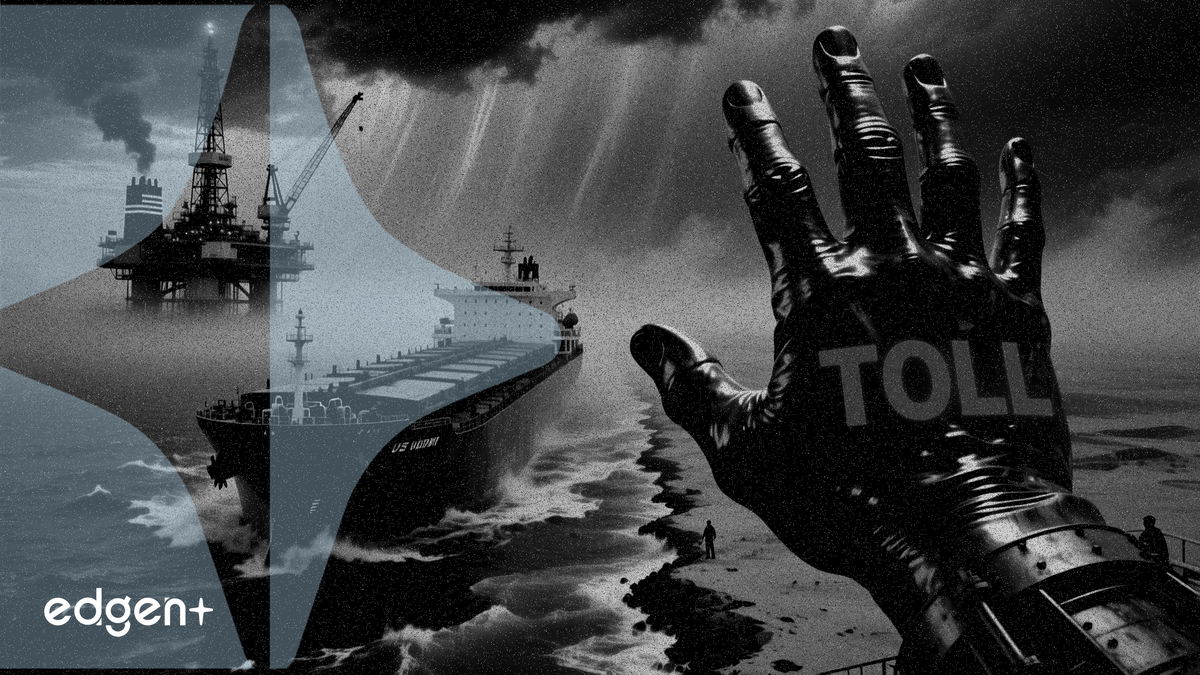
U.S. oil executives are lobbying the Trump administration to reject any Iranian proposal for a toll on the Strait of Hormuz, a move they warn would set a dangerous precedent for global trade and worsen the ongoing energy crisis.
Back
U.S. oil executives are lobbying the Trump administration to reject any Iranian proposal for a toll on the Strait of Hormuz, a move they warn would set a dangerous precedent for global trade and worsen the ongoing energy crisis.

(P1) Top U.S. oil industry executives are pressuring the Trump administration to reject any form of transit fee for the Strait of Hormuz, as the closure of the critical waterway by Iran threatens to remove 16 million barrels of oil per day from global markets. With Brent crude holding above $100 per barrel, leaders from ExxonMobil, Chevron, and other major producers are scheduled to meet with President Trump on Thursday to discuss the crisis.
(P2) "Turning the Strait of Hormuz into an Iranian canal is extremely dangerous in itself, but it also has the potential to become a precedent that undermines the principle of freedom of the seas," said Daniel Yergin, Vice Chairman of S&P Global, in a statement.
(P3) The effective closure of the strait, a chokepoint for about one-fifth of the world's oil and LNG supply, has already pushed U.S. gasoline prices nearly $1 a gallon higher than a year ago. The disruption, combined with damage to regional energy infrastructure, has created the worst threat to global energy security in history, according to the International Energy Agency.
(P4) The core industry fear is that allowing Iran to charge a toll would inspire other nations to levy similar fees on strategic waterways they control, fundamentally destabilizing the principles of free navigation and adding a new layer of volatility to energy markets. The dispute is a central issue in upcoming U.S.-Iran negotiations, following a U.S. naval blockade of Iranian ports this week designed to force Tehran back to the table.
American petroleum leaders are unified in their message that the only solution to the global energy crisis is the complete and unconditional reopening of the strait. The American Petroleum Institute, the industry's largest lobby group, warned that a toll would "establish a troubling precedent for international waterways, harming global energy markets."
The pressure campaign follows a period of uncertainty over the administration's position. President Trump shocked executives last week by publicly suggesting the U.S. and Iran could jointly charge transit fees, an idea he later retracted on social media. A White House spokesperson has since clarified the administration's stance, stating, "The Strait of Hormuz is an international waterway, and we will not allow Iran to charge for passage."
In parallel with diplomatic pressure, the White House is urging domestic producers to ramp up drilling to alleviate high prices. Energy Secretary Chris Wright and Interior Secretary Doug Burgum held a call with producers to encourage increased output. "They’re all leaning in because they’re getting a price signal that this is a time to invest,” Burgum said after the meeting.
However, producers have shown caution, hesitant to commit significant capital amid market uncertainty and futures markets that indicate lower prices ahead. Executives have pointed to structural impediments like permitting delays and regulatory restrictions on gas flaring as barriers to rapidly increasing production, suggesting policy reforms could unlock more supply.
The administration's hardline approach of blockading Iranian ports, intended to cripple the nation's estimated $139 million in daily oil export revenue, has drawn a mixed international response. Key U.S. allies like the United Kingdom and Spain have refused to support the blockade, and China, the destination for roughly 90 percent of Iran's oil, has called the move "dangerous and irresponsible." The situation leaves the global economy in a precarious position, caught between a U.S. strategy of maximum economic pressure and the risk of a prolonged energy shock.
This article is for informational purposes only and does not constitute investment advice.