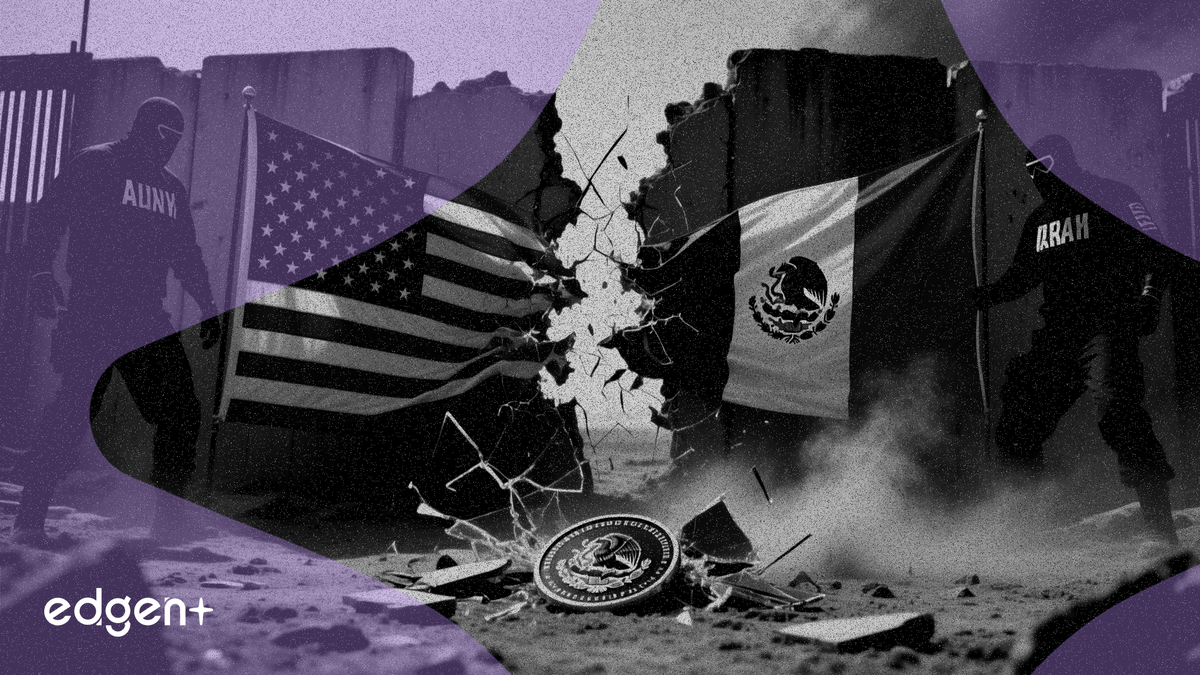
A deadly anti-cartel operation that killed two US intelligence officers and two Mexican officials has ignited a diplomatic firestorm between the United States and Mexico, threatening to destabilize relations and disrupt trillions of dollars in bilateral trade. The incident raises questions about the future of security cooperation and could introduce significant volatility for the Mexican peso and US firms with heavy exposure to the country.
"Some sympathy from Mexico for the dead agents 'would be well worth it,' especially given that they defended Mexicans as well as Americans," White House press secretary Karoline Leavitt said, responding to reports of President Trump's displeasure with the Mexican government's reaction.
The deaths occurred during the weekend of April 25-26, 2026, when a vehicle carrying the four officials crashed and exploded during a raid on a suspected drug lab in the state of Chihuahua. The incident immediately sent ripples through financial markets, with the iShares MSCI Mexico ETF (EWW) dropping 2.5% in pre-market trading on Monday as investors weighed the potential for escalating tensions. The Mexican peso fell over 1.5% against the US dollar, its sharpest single-day drop in three months.
The fallout jeopardizes the vast economic partnership between the two countries, with bilateral trade in goods and services exceeding $860 billion in 2023, according to the U.S. Census Bureau. The stability of this relationship is critical for numerous sectors, from automotive manufacturing to agriculture, and the introduction of geopolitical risk could lead to a re-evaluation of investment flows into Mexico.
Diplomatic Fallout
The official response from Mexico's leadership has exacerbated the crisis. President Claudia Sheinbaum expressed ignorance of the joint operation and indignation at the presence of American agents on Mexican soil, a stance that has been met with sharp criticism from Washington. The Mexican government has summoned Chihuahua's governor, María Eugenia Campos Galván of the opposition party, to testify in Mexico City, accusing her of inviting the American agents without federal approval.
This public friction comes despite what has been described as quiet, expanded security cooperation under the Sheinbaum and Trump administrations. The incident highlights the delicate and often contradictory nature of the US-Mexico relationship, where behind-the-scenes collaboration on security coexists with public political posturing. The last major public dispute over US agents in Mexico occurred in 2021, leading to a temporary suspension of joint operations and a spike in border-related trade disruptions.
Market and Economic Implications
The immediate market reaction underscores the potential for significant economic disruption. Beyond currency and equity markets, the crisis could impact the cost of capital for Mexico and for US companies that rely on cross-border supply chains. U.S. companies with significant operations in Mexico, particularly in the manufacturing and automotive sectors, could face increased operational risks and supply chain disruptions if border tensions escalate.
The situation puts the Trump administration in a difficult position. While it has pursued a more aggressive stance on Western Hemisphere security, it is also aware of the Mexican economy's reliance on the US market and remittances. The question for investors and policymakers is whether the current dispute will be contained through diplomatic channels or if it will spiral into a more protracted conflict involving trade restrictions or other punitive measures. The next few weeks will be critical, as any further escalation could have far-reaching consequences for North American economic stability.
This article is for informational purposes only and does not constitute investment advice.