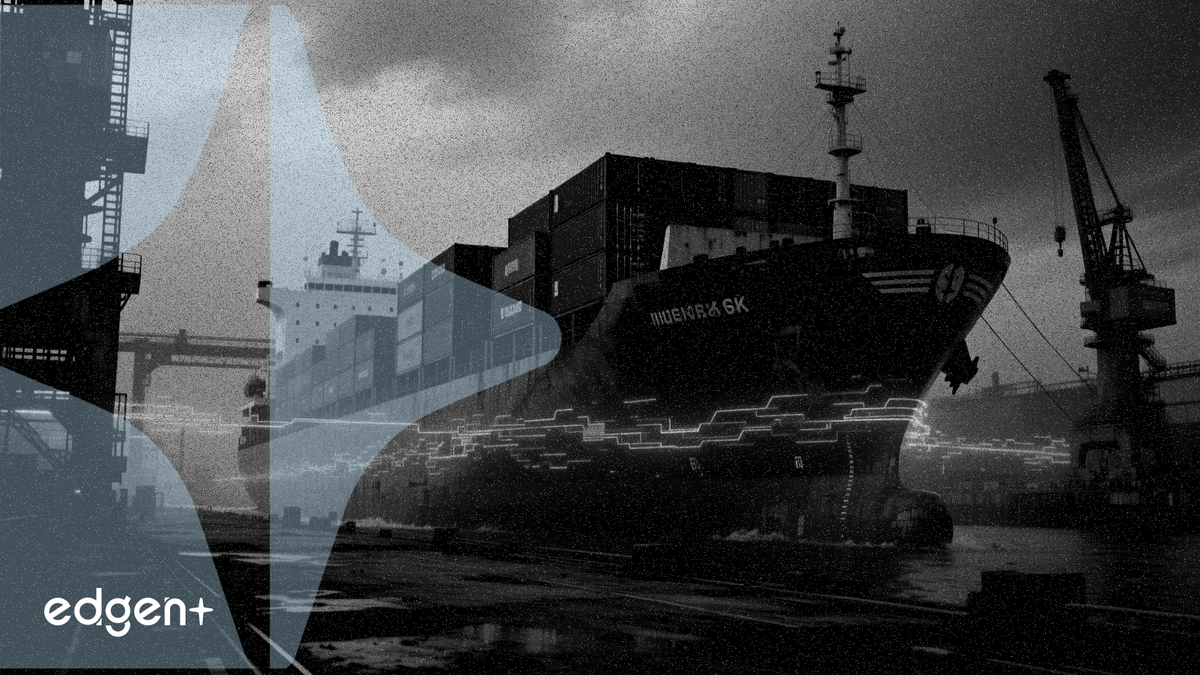
The commander of US Central Command (CENTCOM), Brad Cooper, confirmed on April 17 that the US military's maritime blockade against Iran-linked vessels is ongoing and will continue indefinitely until President Trump orders it lifted. The operation involves comprehensive surveillance of every Iranian port, utilizing assets such as MQ-9 Reaper drones and P-8 maritime patrol aircraft to ensure no vessel is missed. "We are watching every single Iranian ship in every single port. No exceptions," Cooper stated, emphasizing the US military's capacity to maintain this presence "for as long as it takes."
The blockade officially began at 10:00 am ET on April 13, targeting all maritime traffic entering or exiting Iranian ports in the Arabian Gulf and the Gulf of Oman [3]. CENTCOM has clarified that the measure does not have a defined geographic boundary and will not impede neutral vessels transiting the Strait of Hormuz to non-Iranian destinations. As of April 16, US forces had already directed 10 merchant vessels to return to Iranian ports, and CENTCOM announced that no vessels had successfully breached the blockade [4, 1].
This sustained military pressure is designed to cripple Iran's economy, which is heavily reliant on oil exports. The US Treasury Department has announced it will not renew a 30-day sanctions waiver set to expire on April 19 and is preparing new economic sanctions, described by Treasury Secretary Scott Bessent as the "financial equivalent" of a bombing campaign [1, 4]. A successful blockade is estimated to cost the Iranian regime around $435 million per day. The pressure is compounded by Iran's limited onshore oil storage capacity of just 13 days, after which it would be forced to shut down oil fields, risking long-term damage [1].
While the blockade tightens, a diplomatic track remains tentatively open. Pakistan has emerged as a key mediator, hosting initial talks and pushing for a second round in Islamabad before a fragile ceasefire expires [4]. A senior Iranian source indicated that April 17-19 are being kept open for possible talks, though no date is confirmed. However, significant sticking points remain, including Iran's nuclear enrichment program and the status of the Strait of Hormuz [1, 4].
Tensions remain exceptionally high. Iranian Supreme Leader Adviser Mohammad Mokhber warned that Iran will "open new fronts" in response to the blockade, with officials reportedly pressuring Houthi allies to "close" the Bab al Mandeb Strait [1]. In response, President Trump issued a stark warning on social media, stating that any Iranian "fast-attack" ships approaching the blockade would be "immediately ELIMINATED" [2].
The conflict's economic fallout is already being felt within Iran, where a nationwide internet blackout now exceeding 46 days is costing the economy an estimated $37 million to $80 million daily, further straining the government's ability to finance post-war reconstruction [1].