
A high-stakes military operation and a presidential ultimatum have pushed the U.S. and Iran closer to a direct conflict, sending shockwaves through global energy markets.
A high-stakes military operation and a presidential ultimatum have pushed the U.S. and Iran closer to a direct conflict, sending shockwaves through global energy markets.
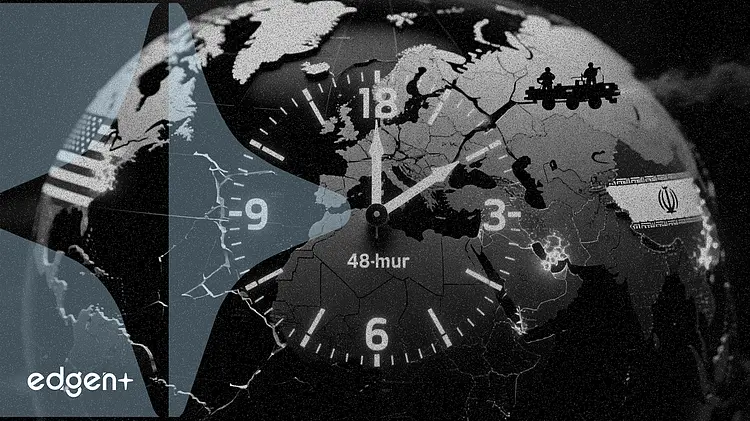
A daring U.S. special operations mission rescued a downed F-15E pilot deep inside Iranian territory on April 5, an escalation that prompted President Donald Trump to issue a 48-hour ultimatum for Iran to reopen the Strait of Hormuz, a chokepoint for 21 percent of global oil supplies.
"We have rescued the seriously wounded, and really brave, F-15 Crew Member/Officer, from deep inside the mountains of Iran," President Trump announced on social media, confirming the high-stakes operation.
The rescue involved approximately 100 special-operations forces and dozens of aircraft, including B-1 bombers that dropped nearly 100 2,000-pound bombs to suppress Iranian forces. The operation’s complexity was underscored by the U.S. military’s decision to destroy two of its own MC-130J transport planes and two MH-6 helicopters to prevent their technology from falling into Iranian hands. The escalating conflict has already pushed the average price for gasoline in the U.S. above $4 a gallon.
The events significantly heighten geopolitical risk, with the market now pricing in a greater probability of a wider conflict that could disrupt global energy flows. All eyes are on the Tuesday 8:00 p.m. Eastern Time deadline for Iran to reopen the Strait of Hormuz, after which Trump has threatened to strike Iranian power plants and bridges.
The crisis began on April 3 when an F-15E Strike Eagle was shot down over southwestern Iran. While one of the two crew members was rescued shortly after, the second, an Air Force colonel, was missing for nearly two days. The subsequent search and rescue operation was a complex undertaking, involving not just the military but also a deception campaign by the CIA to mislead Iranian forces.
According to U.S. officials, the rescued airman had hidden in a mountain crevice, injured and with only a handgun for defense, as Iranian Revolutionary Guard Corps members and local militias closed in. The U.S. deployed MQ-9 Reaper drones to strike the Iranian search parties, buying crucial time for the rescue team.
The successful extraction, while a tactical victory for the U.S., came at a cost. Two HH-60G/W helicopters were reportedly damaged by ground fire in an initial rescue attempt. The decision to later scuttle four special operations aircraft highlights the significant risks involved in the mission.
Following the rescue, President Trump issued a direct and aggressive ultimatum to Tehran. "Open the F***in' Strait, you crazy bastards, or you'll be living in Hell - JUST WATCH!" he posted on social media. He later formalized the demand, giving Iran a 48-hour deadline to reopen the Strait of Hormuz.
The threat of a full-scale military confrontation has rattled global markets. The Strait of Hormuz is a critical artery for global oil shipments, and its closure has already contributed to a spike in energy prices. Brent crude, the international benchmark, is trading near its highest levels in months, and further escalation could see prices climb higher.
Iranian officials have struck a defiant tone in response to Trump's threats. A spokesman for Iran's president called the ultimatum an act of "sheer desperation and anger," while the country's mission to the U.N. accused Trump of inciting "war crimes."
The international community is watching nervously. Diplomatic efforts are underway, with envoys from Egypt, Pakistan, and Turkey reportedly submitting a ceasefire proposal. However, with the U.S. and Iran trading threats and military strikes, the path to de-escalation appears narrow. The last time tensions in the Strait of Hormuz reached a similar peak in 2019, oil prices jumped by over 10 percent in a single day.
This article is for informational purposes only and does not constitute investment advice.