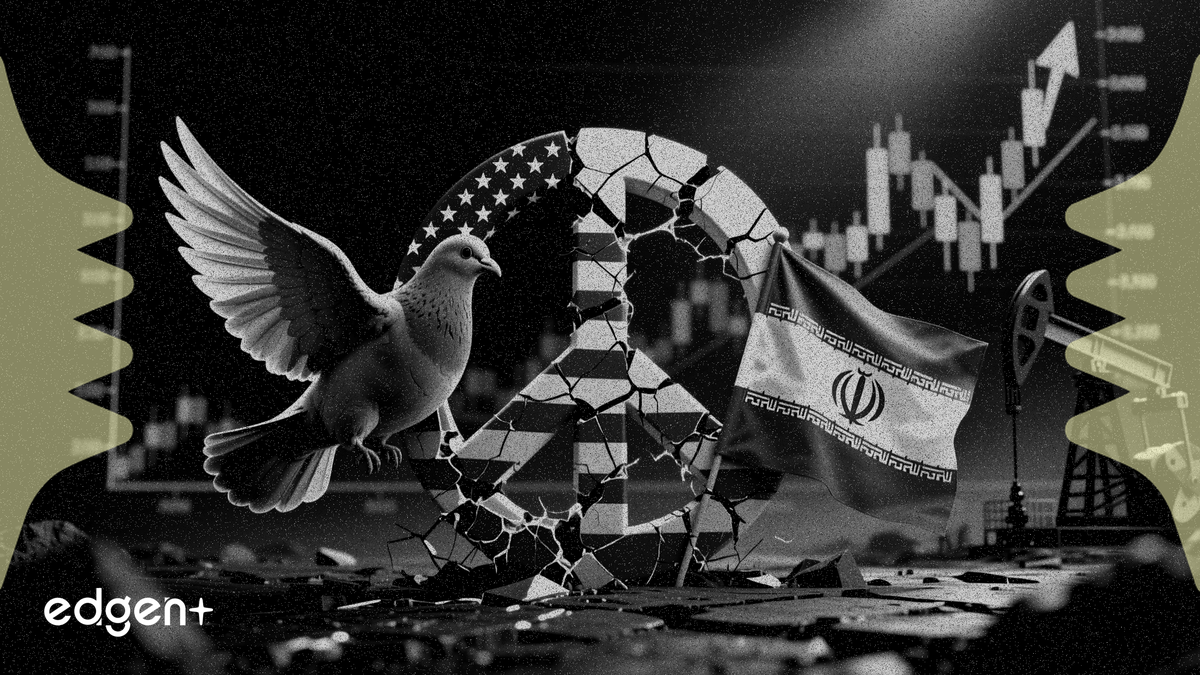
Hopes for a lasting US-Iran detente faded Monday as negotiations stalled over five core disagreements, sending crude oil prices over 2% higher.
Peace talks between the United States and Iran have stalled, erasing recent optimism for a swift resolution to the conflict and pushing Brent crude prices up more than 2% to over $92 a barrel. The negotiations, hosted by Pakistan, broke down over five key conditions, including the future of Iran's nuclear program and a demand for $270 billion in war compensation.
"Too much time wasted on traveling, too much work! Besides which, there is tremendous infighting and confusion within their ‘leadership,’" former US President Donald Trump said on Truth Social after canceling a US delegation's trip to Islamabad. "If they want to talk, all they have to do is call!!!"
The breakdown in talks immediately rippled through global markets. Brent crude, the international benchmark, jumped 2.1% to $92.30 a barrel, its highest since March. The cost of insuring ships transiting the Strait of Hormuz, a critical chokepoint for global oil supplies, also rose.
The impasse leaves billions of dollars in assets and the stability of global energy markets in limbo. At stake is the release of approximately $20 billion in frozen Iranian assets and the potential for a significant de-escalation of military posture in the Middle East, which would directly impact the 21% of global oil trade passing through the Strait of Hormuz.
Five Conditions Deadlock Talks
The negotiations, which began after a tenuous ceasefire was agreed to on April 8, hit a wall over a handful of intractable issues. According to reports from Al Jazeera, the five main obstacles are:
- Nuclear Program: The U.S. is demanding a complete and permanent halt to Iran's nuclear activities. Tehran has only offered temporary restrictions.
- Uranium Stockpile: Iran's possession of approximately 400 kilograms (880 pounds) of highly enriched uranium remains a primary sticking point. The White House has insisted the entire stockpile be placed under U.S. control, a proposal Tehran has rejected.
- Strait of Hormuz: Iran refuses to lift restrictions on shipping through the vital waterway until the United States eases sanctions on its ports. Washington has stated sanctions will not be lifted until a final agreement is signed.
- Frozen Assets: Tehran is demanding the unfreezing of an estimated $20 billion in assets held in foreign banks as a condition for a long-term deal.
- War Compensation: Iran is seeking $270 billion from the U.S. and Israel to compensate for damages incurred during the recent conflict.
Diplomatic Fallout
The diplomatic back-and-forth intensified over the weekend. President Trump abruptly canceled the planned trip for his negotiators, including son-in-law Jared Kushner and special envoy Steve Witkoff, to Pakistan. "I just cancelled the trip... Too much time wasted on traveling," he said, adding that Iran's leadership was in disarray.
Interestingly, Trump claimed that within 10 minutes of his cancellation, Iran submitted a "much better" paper, though he provided no details. This suggests that while official talks have stalled, back-channel communications may still be active. The last formal round of negotiations, led by Vice President JD Vance, ended without a deal on April 12 after 21 hours of talks.
The failure to secure a deal keeps geopolitical risk elevated in the Middle East. The recent ceasefire has been tested by fraying security in Lebanon, and the lack of a diplomatic path forward could encourage renewed hostilities. For now, the world watches and waits to see if the two sides will return to the negotiating table or if the fragile peace will collapse entirely.
This article is for informational purposes only and does not constitute investment advice.