
U.S. military strikes on Iranian positions near the Strait of Hormuz triggered a risk-off shift in markets Wednesday, pulling stock futures from record levels.
U.S. military strikes on Iranian positions near the Strait of Hormuz triggered a risk-off shift in markets Wednesday, pulling stock futures from record levels.
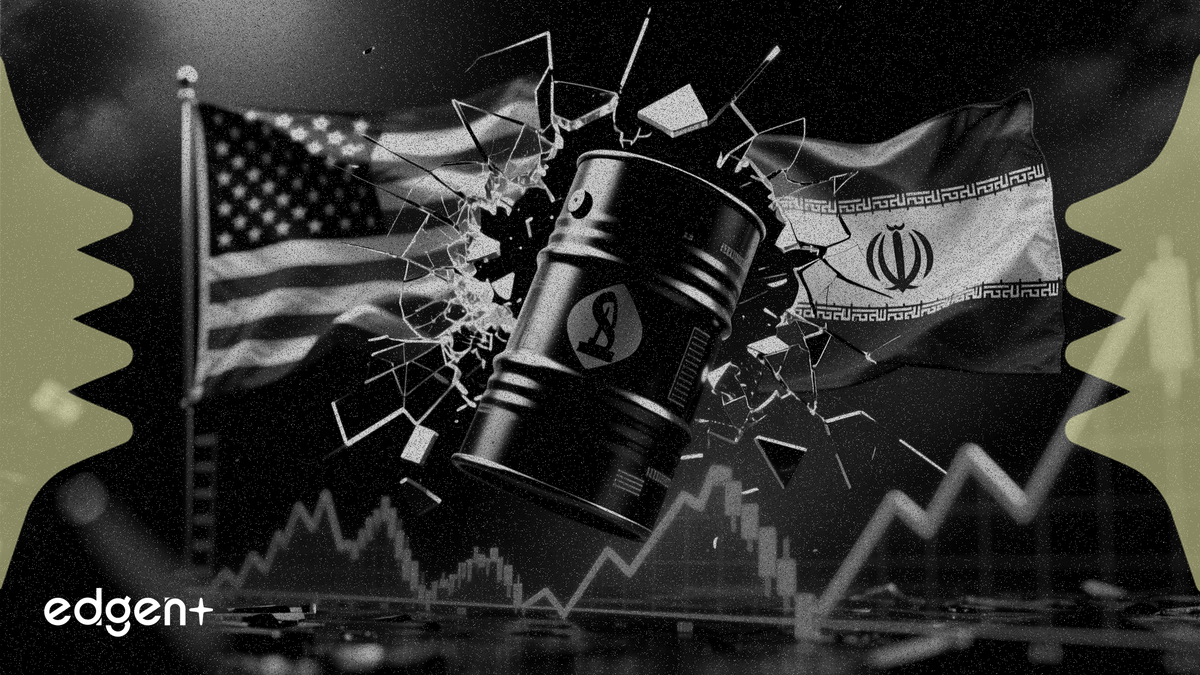
U.S. military strikes on Iranian positions near the Strait of Hormuz triggered a risk-off shift in markets Wednesday, pulling stock futures from record levels.
U.S. stock futures fell and bonds declined Wednesday after American forces struck Iranian targets near the Strait of Hormuz, dousing optimism that a nuclear deal was imminent. The S&P 500 futures slipped after the broad index closed at a record 7,548 Tuesday, when a tech rally led by Micron Technology's 19% surge pushed the Nasdaq Composite to an all-time high.
"You got yields higher, like 4.50% on the 10-year Treasury, and you have inflation expectations higher in a curve that's actually gotten flatter throughout the year," said Drew Pettit, U.S. equity strategist at Citi. "All of that doesn't set you up for a higher sustainable multiple at this point."
The Dow Jones Industrial Average fell 118 points, or 0.23%, in the prior session. Brent crude climbed about 1.3% to $96.20 a barrel following the strikes, while West Texas Intermediate rose 1.2% to $90.64. The moves reversed some of the previous session's 5% oil rout, which had been driven by Iranian state TV reports claiming a draft memorandum of understanding with the U.S. — a report the White House called a "complete fabrication."
The Strait of Hormuz handles about 21% of global oil trade. With 109 commercial vessels already diverted under the U.S. blockade and Iran's onshore oil storage capacity dwindling to an estimated 20 million to 22 million barrels — down from roughly 120 million — the economic pressure on both sides is intensifying. Former U.S. Energy Secretary Dan Brouillette said Iran is about four to six weeks from a "point of no return" on storage capacity, warning that shutting in production could endanger the country's long-term economic stability.
Diplomacy vs. Escalation
President Donald Trump said Wednesday that Iran is "negotiating on fumes" and accused Tehran of trying to "outwait" him until the midterm elections. War Secretary Pete Hegseth said the U.S. is prepared to "finish the job" if talks fail. Iran's Islamic Revolutionary Guard Corps warned its forces are "lying in wait with full magazines," while the country's supreme leader, Mojtaba Khamenei, would need to approve any final deal through secret courier networks while remaining in hiding as a designated target.
The last time U.S.-Iran tensions escalated to direct military engagement was in early 2020, when a U.S. drone strike killed Qassem Soleimani. Brent crude spiked above $70 a barrel within days, while the S&P 500 fell about 3% over the following week before recovering. The current standoff carries higher stakes: Iran's uranium enrichment at 60% purity — close to weapons-grade — and a naval blockade that has effectively closed the world's most important oil chokepoint.
Cross-Asset Ripple
Asian markets reflected the renewed uncertainty Wednesday. Japan's Nikkei 225 rose 1.49% to a fresh record, while South Korea's Kospi jumped 4.84%. Hong Kong's Hang Seng index was flat, and the mainland CSI 300 added 0.27%. The dollar weakened after the Iranian state TV report on a potential deal, though it recovered some ground as the White House denied the claims.
Citi's Pettit set a year-end S&P 500 target of 7,700, implying a modest 2% gain from current levels, suggesting limited upside even before the latest geopolitical twist. Goldman Sachs raised its 2026 year-end target to 8,000 from 7,600 on continued earnings strength, but the fresh military engagement introduces a risk factor not fully priced into either forecast.
This article is for informational purposes only and does not constitute investment advice.
