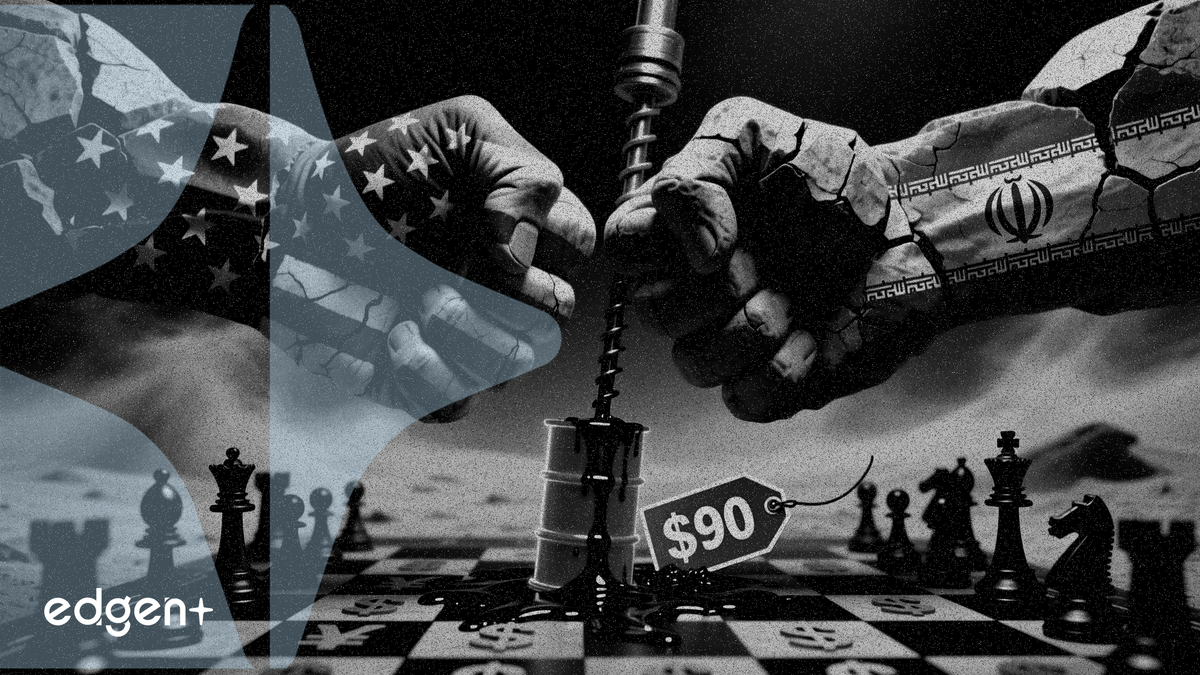
US-Iran negotiations remain deadlocked over the handling of $24 billion in frozen Iranian assets, keeping Brent crude above $94 a barrel as traders weigh the risk of a breakdown that could keep the Strait of Hormuz partially closed.
"The market is currently focused on whether there's any concrete progress or setbacks in US-Iran negotiations, the tone and substance of statements from both sides, and actual physical tanker movements through the waterway," Tim Waterer, chief market analyst at KCM Trade, said.
Brent crude futures fell 53 cents to $94.45 a barrel Tuesday, while West Texas Intermediate lost 56 cents to $91.60, paring some of the previous session's 5 percent gains. Both benchmarks have lost more than 16 percent in May as hopes for a peace deal waxed and waned. US crude exports climbed to a record 5.6 million barrels per day in May as Asian and European refiners sought alternatives to Middle Eastern supply, ship tracking estimates showed Monday.
The $24 billion tranche at the center of the impasse sits primarily in Qatari accounts, representing what Iranian officials view as the most accessible portion of an estimated $100 billion or more in total frozen assets. Iran is demanding $12 billion released through controlled channels as a precondition for signing a memorandum of understanding, a mechanism designed to address Washington's concern that cash could flow to sanctioned entities. The Trump administration has rejected any broad sanctions relief or asset releases before a formal agreement, creating a standoff that has rippled through oil markets.
The Strait of Hormuz remains the ultimate leverage point
Iran has effectively halted nearly all non-Iranian shipping through the waterway since the war began, choking off about a fifth of global oil and liquefied natural gas flows and driving prices up by 50 percent or more. Mohsen Rezaei, a top military adviser to Iran's Supreme Leader Ali Khamenei, described the strait as a powerful deterrent under Tehran's control, saying it should remain open to commerce but not serve as a platform for military pressure.
Shipping executives meeting in Athens on Monday said any peace deal would need to offer clear rules allowing vessels to resume normal business through the strait. A fragile ceasefire mediated by Pakistan took effect in April after US and Israeli strikes on Iran triggered retaliatory attacks and the temporary closure of the waterway, but negotiations toward a broader agreement remain fragile.
The last time a similar asset-release mechanism was used, in a 2023 prisoner swap that unlocked about $6 billion in frozen Iranian funds through Qatari accounts, it drew fierce criticism from Republican lawmakers who argued it amounted to paying ransom. That political reality makes any current administration deeply reluctant to repeat the playbook, even as Iran's negotiating position hardens.
If negotiations produce even a partial asset release, it would signal a warming of relations that could eventually bring Iranian oil exports back to global markets, putting downward pressure on prices. If talks collapse entirely, the opposite applies, with the added risk of military escalation that could further disrupt Gulf shipping lanes. President Donald Trump said Monday he expected a deal to extend the ceasefire and reopen the Strait of Hormuz "over the next week," though his administration has offered no timeline for resolving the asset dispute.
This article is for informational purposes only and does not constitute investment advice.